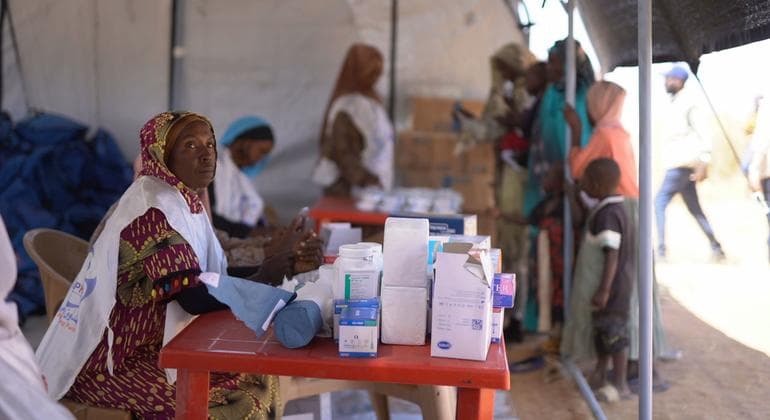
Drone strike kills 64 at East Darfur hospital, WHO says
Key Takeaways
- At least 64 people killed, including 13 children, in East Darfur hospital strike.
- 89 wounded; pediatric, maternity, and emergency departments damaged, hospital non-functional.
- WHO verified the attack and urged de-escalation to protect civilians and health workers.
Hospital Attack Details
A devastating drone strike on Al-Daein Teaching Hospital in East Darfur's capital has killed at least 64 people, including 13 children, two female nurses, one male doctor, and multiple patients, according to the World Health Organization (WHO).
“A battle of narratives between the camps”
The attack, which occurred on Friday night, also injured 89 others, including eight healthcare workers, and rendered the hospital non-functional due to extensive damage to its pediatric, maternity, and emergency departments.
This tragedy represents the latest in a growing pattern of attacks on healthcare facilities in Sudan's nearly three-year civil war, with the WHO reporting that the total number of fatalities from such attacks has now surpassed 2,000 people across 213 verified incidents.
Attribution Claims
Sudanese rights group Emergency Lawyers attributed the strike to an army drone, claiming it was a massacre and potential war crime, while the Sudanese Armed Forces denied responsibility and accused the paramilitary Rapid Support Forces (RSF) of similar attacks against civilian infrastructure.
The RSF, which dominates the vast Darfur region, conversely blamed the Sudanese Army for what it called a 'systematic pattern of targeting innocent civilians and civil facilities, foremost among them health care facilities.'

This blame game comes amid the complex power dynamics of Sudan's conflict, where the RSF controls western Darfur while the army maintains control of the east, center, and north, with East Darfur's capital El-Daein being regularly targeted by army attacks as they attempt to push the paramilitaries back toward their strongholds.
Healthcare Attack Patterns
The attack on Al-Daein Teaching Hospital exemplifies the escalating targeting of healthcare infrastructure throughout Sudan's brutal civil war, which began in April 2023.
“For its part, the United Nations Office for the Coordination of Humanitarian Affairs in Sudan expressed extreme dismay at the attack, which was reported to have killed dozens”
The WHO's Surveillance System for Attacks on Health Care has documented a dramatic increase in the deadliness of such incidents, with 65 attacks in 2025 alone causing 1,620 deaths – accounting for 82 percent of reported deaths from attacks on healthcare worldwide.
This represents a stark escalation from 2023 (64 attacks causing 38 deaths) and 2024 (72 attacks causing 200 deaths).
Near-daily drone strikes have become a hallmark of the conflict, particularly in regions like South Kordofan, killing dozens at a time and causing widespread destruction of civilian infrastructure including homes, schools, markets, and healthcare facilities.
Humanitarian Crisis
The escalating violence has created what the UN describes as the world's largest displacement and hunger crises, with tens of thousands of people killed and more than 11 million forced from their homes, while over 33 million people now require humanitarian assistance.
International condemnation has grown, with UN rights chief Volker Turk expressing being 'appalled' after more than 200 civilians were reported killed by drone attacks within just an eight-day period.

The UN humanitarian office in Sudan declared itself 'appalled by the attack,' while WHO Director-General Tedros Adhanom Ghebreyesus issued a desperate call for peace, stating 'Enough blood has been spilled. The time has come to de-escalate the conflict in Sudan and ensure the protection of civilians, health workers, and humanitarians.'
The WHO is now working with local partners to expand capacity at remaining health facilities and dispatch emergency medical supplies, though aid agencies warn that Sudan's already dire humanitarian situation could deteriorate even further without immediate intervention.
Regional Spillover
The conflict has also begun to spill across Sudan's international borders, creating regional tensions and complicating humanitarian efforts.
“Though the WHO counts and verifies attacks on health care, it does not attribute blame as it is not an investigative agency”
In the east, there are widespread reports that Ethiopia is providing logistical help to the RSF, allowing it to mobilize on Ethiopian territory.

More dramatically, the war crossed Sudan's western border into Chad when a drone strike killed 19 people on the Chadian side of Tiné, a border town.
Chadian President Mahamat Idriss Déby condemned the strike as an 'outrageous and excessive aggression' against his country, ordered the closing of the border, and told his army to prepare a possible retaliatory strike.
The Sudanese military has accused Chad of allowing the RSF to use the country as a weapons supply route, highlighting how the internal conflict is increasingly drawing in neighboring states and threatening to destabilize the entire region.
More on Sudan

Drone Strike in Goma Kills French UN Aid Worker; M23 Blames Congolese Forces, Kinshasa Denies
10 sources compared
M23 Rebels Accuse Congolese Army of Drone Strikes That Kill French Aid Worker in Goma
10 sources compared

Chad Shuts Border With Sudan After RSF Cross-Border Attack Kills Chadian Soldiers, Civilians
21 sources compared
UN Fact-Finding Mission Finds RSF Siege of El-Fasher Bears Hallmarks of Genocide
33 sources compared