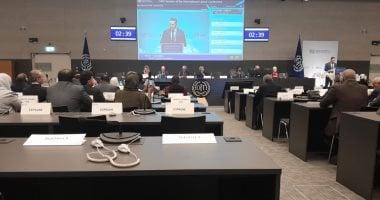
Egyptian Delegation Withdraws From ILO Geneva As Israeli Representative Begins Speaking
Key Takeaways
- Egyptian delegation and Arab delegations withdrew as Israeli speaker began at Geneva International Labour Conference.
- Withdrawal occurred during the 114th session of the International Labour Conference.
- Ahmed Al-Dubiki, head of the Health Sciences Syndicate, announced the withdrawal.
Diplomatic protest at ILO
At the 114th session of the International Labour Conference in Geneva, Ahmed Al-Dubiki, head of the Health Sciences Syndicate and a member of the Egyptian Trade Union Federation delegation, said the Egyptian delegation and a group of Arab delegations in the conference’s main hall withdrew as soon as it was announced that the Israeli representative would begin speaking at the plenary session.
“Authorities label them as 'Israeli Arabs”
Al-Dubiki said the withdrawal coincided with Israel’s speech and came “as a protest step expressing outright rejection of Israeli practices against the workers and the Palestinian people,” while reaffirming a unified Arab stance within international forums.

He added that yesterday’s plenary session saw broad protests by delegations of Palestine, Lebanon, Syria, and Egypt, including “collective and organized rhythmic banging on the tables as soon as the Israeli representative rose to the podium.”
Al-Dubiki linked the day’s withdrawal to a prior voting outcome in the ILO session, saying Palestine was granted broad procedural powers by an overwhelming majority of 394 votes in favor with only 17 votes against.
He said the withdrawal “sends a clear message to the international community” that the legitimate rights of the Palestinian people “cannot be marginalized.”
Arab states and Iran retaliation
In coverage of the Iranian response, Revolution Permanente described Israel as benefiting from “unprecedented military support of imperialist powers” and also from certain Arab countries during the coordinated response to Iranian retaliation.
The outlet said the United States provided Israel with “several destroyers and a substantial aerial fleet,” while Jordan, Qatar, and Saudi Arabia contributed by providing strategic intelligence and, in some cases, taking part in air interception operations.

It further claimed that Arab governments feared that assisting Israel would “directly involve them in the conflict and expose them to Tehran's retaliation,” and said that after discussions with the United States, the United Arab Emirates and Saudi Arabia secretly agreed to share intelligence.
Revolution Permanente also described Jordan as accepting that the United States and other countries could use its airspace and keeping its aviation on alert to assist with intercepting Iranian missiles and drones, “according to some senior American officials.”
The article framed the regional dynamics as a test of how far Arab governments would go publicly, noting that Saudi Arabia, Jordan, and Qatar fear that a broader war with Iran will force them to publicly take a side.
Discrimination and political stakes
France Palestine Solidarité argued that Israeli authorities label Arab citizens as “Israeli Arabs,” while many present themselves as “Palestinians of Israel,” describing a process of “Israelization” alongside “Palestinianization” over the last 75 years.
“During the Iranian response, Israel was able to benefit from the unprecedented military support of imperialist powers but also from certain Arab countries”
The group said Israel has 1,957,270 Arabs, or 21.1% of the Israeli population, including 362,000 residents of East Jerusalem who have not acquired Israeli citizenship, and it cited poverty figures that “45.3% of Arab families (and 57.8% of children) live below the poverty line.”
It also pointed to the 19 July 2018 Nation-State Law, quoting Article 1: “Only the Jewish people have the right to national self-determination in Israel.”
In parallel, Haaretz examined how the Gaza Strip, Lebanon, and the West Bank are shaping Arab citizens’ political calculations, with Prof. As'ad Ghanem saying, “the most critical is the Jewish far right's rise to power.”
Haaretz also quoted Rawya Handaqlu, director of Eilaf, saying the issues of personal security and political persecution may impact elections “in two opposite directions,” with despair potentially depressing turnout while existential concerns could motivate people to vote.
More on Gaza Genocide
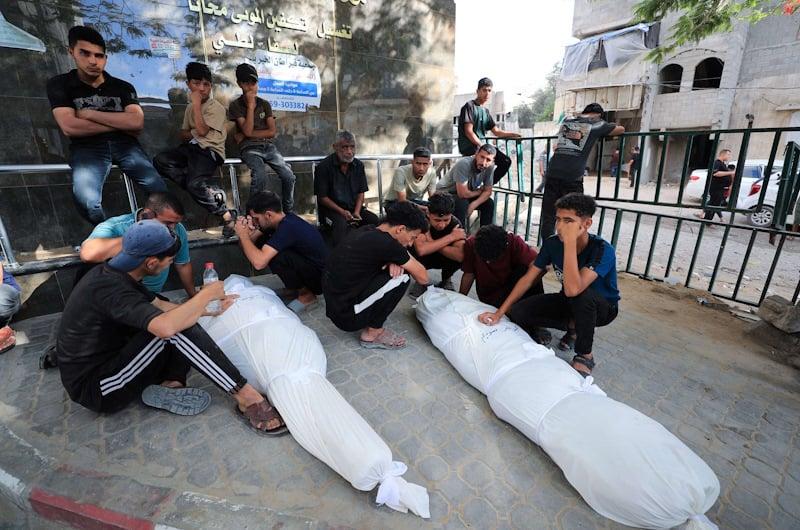
Israeli Forces Kill Three-Year-Old Palestinian Boy Rayan Abu Al-Ajeen in Central Gaza
11 sources compared

Israeli Drone Kills Nurse Mohammed Al-Habil and His Son in Gaza City
12 sources compared
Israel Plans To Control 100% Of Gaza, Squeezing Hamas, Netanyahu Says
11 sources compared
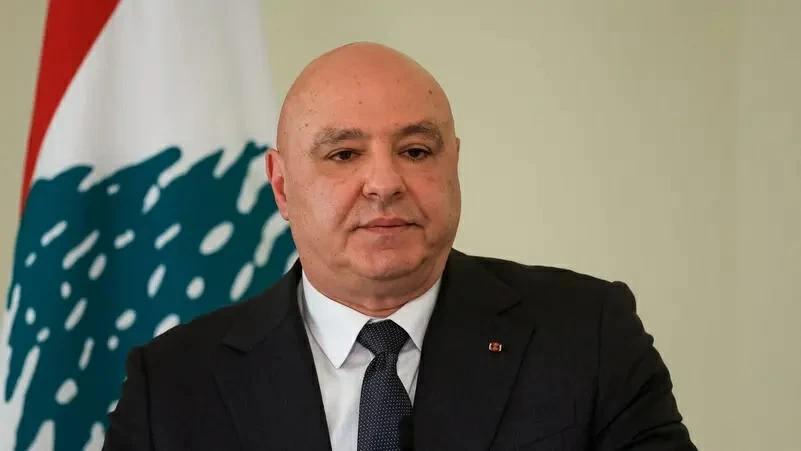
Iran Negotiator Mohammad Baqer Qalibaf Questions US Peace Commitment After Israel Attacks Beirut
10 sources compared