
Egypt’s Sinai Rock Shelter Preserves Nearly 10,000 Years of Human Drawings and Inscriptions
Key Takeaways
- Preserves nearly 10,000 years of drawings, inscriptions, and daily-use debris.
- Creates a continuous record of repeated use across millennia.
- Roughly 100 meters long (about 330 feet) rock shelter.
A 10,000-year record
A sandstone rock shelter in Egypt’s Sinai Peninsula has been documented as preserving nearly 10,000 years of human drawings, inscriptions, and daily-use debris in one place, with researchers describing it as a continuous record that “compresses distant eras into a shared surface.”
“Researchers have documented a single rock shelter in Egypt’s Sinai Peninsula that preserves nearly 10,000 years of human drawings, inscriptions, and daily-use debris in one place”
The site is located along the eastern edge of the Umm Arak Plateau, where “a sandstone overhang stretches for more than 330 feet and narrows into a low, protected interior.”
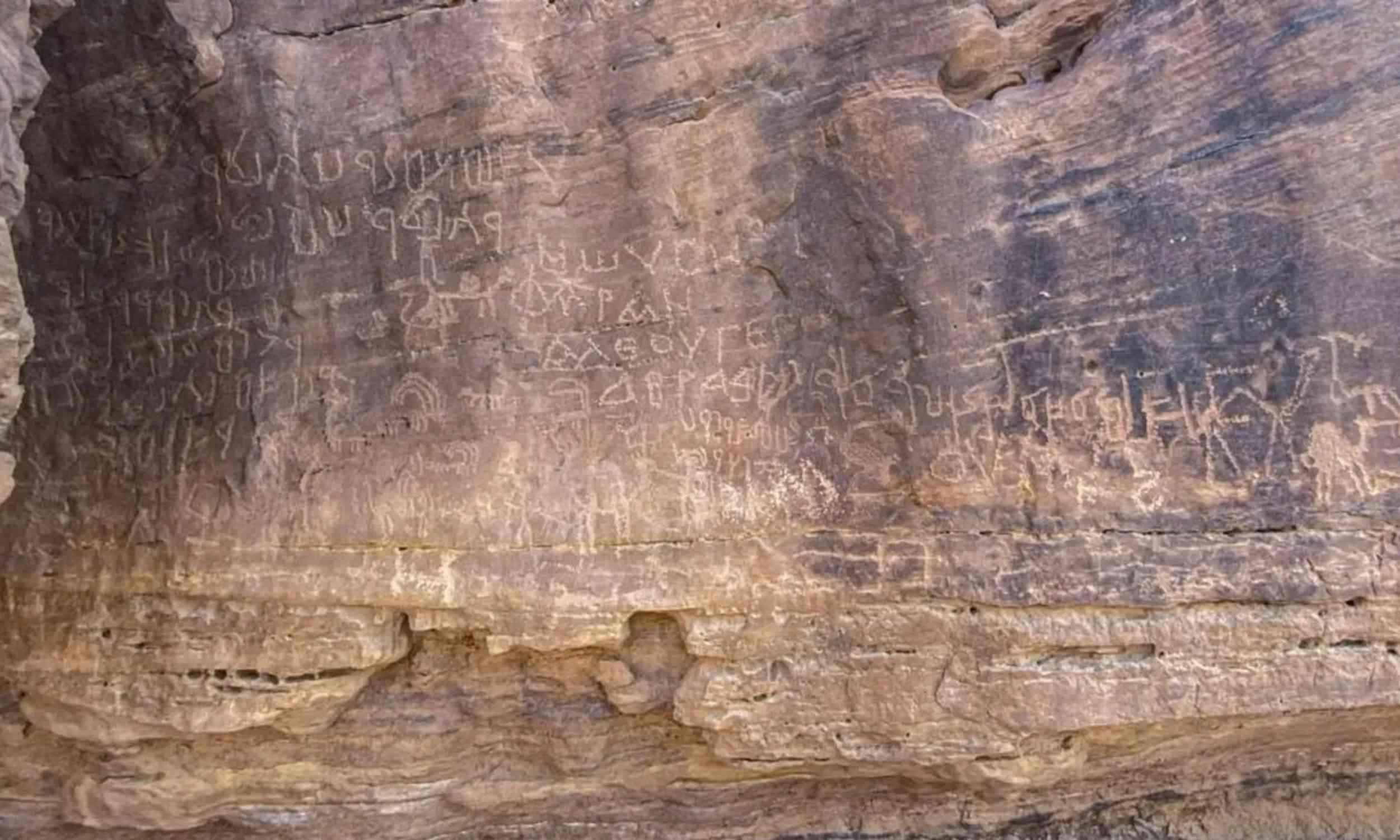
Egypt’s Supreme Council of Antiquities recorded “dense layers of red paintings, gray figures, and carved inscriptions within the same confined space,” leaving overlapping marks that span from early prehistoric images to later written scripts.
Near the entrance, the oldest images were painted in red and “tentatively dated between 10,000 and 5,500 B.C.,” and later makers added camels, horses, weapons, and different scripts.
The shelter’s ceiling functions as what archaeologists call “a palimpsest – a surface repeatedly rewritten over time,” because one phase does not erase the next but accumulates on top of it.
Researchers say pottery fragments point to visits during Egypt’s Middle Kingdom and the Roman period, pushing the record “into the third century A.D.”
Why Umm Arak kept drawing
Multiple accounts connect Umm Arak’s long sequence of use to its position near Serabit el-Khadim and to the practical value of the plateau’s eastern edge.
The shelter sits “roughly three miles from Serabit el-Khadim,” described as “a well-known ancient site that housed turquoise mines and a temple dedicated to the goddess Hathor.”

One explanation in the reporting is that the overhang’s position “overlooking a broad plain to the north” made it “a practical stop for people already moving through this landscape for work, worship, or long-distance travel.”
The Times of India places the shelter “in proximity to the ancient mining centres of Serabit el-Khadim,” and says researchers established a chronology of rock art “from the work of Epipaleolithic hunter-gatherers (approximately early Holocene), through medieval travellers, all the way to today.”
Earth adds that “Sinai long worked as a cultural corridor between Africa and western Asia,” and that Umm Arak “carries that traffic in miniature.”
In that framing, the repeated return is not treated as accidental because the plateau offers a lookout and rest-stop function, while the changing marks show visitors arriving with different habits and technologies.
Living traces and layered scripts
Beyond images on the ceiling, the reporting describes material evidence inside the shelter that points to routine use rather than only brief artistic visits.
“A significant archaeological discovery in Egypt's Sinai Peninsula has uncovered a vast rock shelter measuring 100 metres long that served as a continual record of humankind's activities for the past 10,000 years”
Earth says “More than pictures survived in the shelter, including flint tools, pottery fragments, animal droppings, hearth traces, and low stone partitions,” and it links those remains to daily life by stating that “Flint tools, hearth traces, and penned animals show the shelter held routine life, not just passing artists.”
The Indian Defence Review similarly lists “Flint tools, hearth traces, animal droppings, pottery fragments, and low stone partitions” as objects recovered inside the shelter, and it characterizes the combined evidence as suggesting “that the site was used for routine living, not merely by passing artists pausing to mark a surface.”
The sources also describe how the shelter’s record extends through multiple writing traditions, including Nabataean and Arabic.
Earth says “Some carvings belong to Nabataean, an ancient script tied to caravan peoples, while others were written in Arabic,” and it adds that “Arabic texts show that people still recognized the place in early Islamic centuries and likely beyond.”
The Times of India reports that the shelter’s later carvings include “Nabataean writing” and “the image of camels and horses,” and it also notes “various ‘Wusum’ (tribal identification) and geometric markings on the rocks at Wadi Batin from the 6th to 15th centuries CE.”
Voices from tourism and research
The accounts include direct statements that frame the discovery as evidence of long-term continuity and succession in the region.
Earth quotes Sherif Fathy, Egypt’s minister of tourism and antiquities, saying, “These provide further evidence of the succession of civilizations that have inhabited this important part of Egypt over the millennia.”
The Indian Defence Review also attributes the discovery’s broader significance to the layered material record, describing how “Gray paintings, documented at the site for the first time during this survey,” indicate that additional groups kept returning to add their own marks.
It further describes the role of local guidance, saying “The shelter might not have been found without Sheikh Rabie Barakat, a resident of theSerabit el-Khadimarea, who guided surveyors to the Umm Arak site.”
Earth similarly identifies “Sheikh Rabie Barakat – a resident of the Serabit el-Khadim area in Egypt’s Sinai Peninsula” as guiding surveyors, and it ties that local involvement to long-term stewardship by stating that “long-term protection will depend on local involvement in access and care.”
In the Times of India, the archaeological team is identified as coming from Egypt’s Supreme Council of Antiquities, which “discovered many different styles of artwork that were created by these various groups.”
Protection risks after visibility
The reporting also emphasizes conservation concerns tied to the Sinai environment and the consequences of making the shelter public.
“A sandstone overhang in Egypt's Sinai Peninsula preserves nearly 10,000 years of human drawings, inscriptions, and debris, compressing distant eras onto a single shared surface”
The Indian Defence Review warns that “South Sinai sandstone does not survive by chance,” and it describes a conservation study at Wadi Nasib finding that “the same environment can cause rock surfaces to peel, fracture, and weaken over time.”
It lists the mechanisms of erosion as “Wind, salts, cracking, and human contact steadily erode what remains,” and it says that once the Umm Arak shelter has been made public, “visibility will help raise awareness, but it will also accelerate the risk of damage.”
Earth similarly states that “South Sinai sandstone art does not last by accident, because wind, salts, cracking, and human damage steadily wear surfaces away,” and it adds that “Once people know the Umm Arak shelter exists, visibility will help protection but can also speed damage.”
The Indian Defence Review frames the tension as turning documentation into urgent prevention, stating that “this tension turns documentation from an act of record-keeping into one of urgent prevention, requiring management plans to follow quickly on the heels of discovery.”
Across the accounts, the need for management is linked back to local involvement, with Earth saying “long-term protection will depend on local involvement in access and care.”
More on Africa

Pope Leo XIV Condemns Tyrants Spending Billions on Wars in Cameroon After Trump Attacks
14 sources compared

Pope Leo XIV Condemns Tyrants, Warns Against Using Religion To Justify Violence In Bamenda
12 sources compared

Pope Leo XIV Blasts Tyrants Exploiting Africa Amid Trump Feud in Cameroon
21 sources compared

Former Nigerian Oil Minister Diezani Denies Taking Bribes in London Court
13 sources compared