
Elon Musk Unveils Terafab Chip Facility for Tesla and SpaceX
Key Takeaways
- Terafab consolidates all chip development stages for Tesla, SpaceX, and xAI.
- Facility to be built near Tesla’s Austin headquarters, adjacent to the Gigafactory.
- Aims to close the silicon supply gap for AI and robotics.
Terafab Overview
Elon Musk has unveiled ambitious plans for Terafab, a comprehensive chip manufacturing facility that will consolidate all stages of chip development including testing and packaging under one roof.
“According to Musk’s announcement, the Terafab will integrate efforts from Tesla, SpaceX, and xAI”
Musk announced the project from the Seaholm Power Plant in Austin, Texas, describing it as a critical necessity for Tesla and SpaceX's artificial intelligence and robotics needs.

The announcement represents a significant milestone in Tesla's AI infrastructure expansion and positions the companies as leaders in AI-driven innovation.
Musk stated that the facility is essential because 'semiconductor manufacturers aren't making chips quickly enough' for his companies' needs, emphasizing the urgency and strategic importance of this vertical integration initiative.
Chip Production Focus
The Terafab facility will produce two distinct types of specialized chips designed for specific applications.
The first chip type is engineered for Tesla's autonomous vehicles and Optimus humanoid robots, with production volumes expected to significantly exceed those of vehicles themselves.
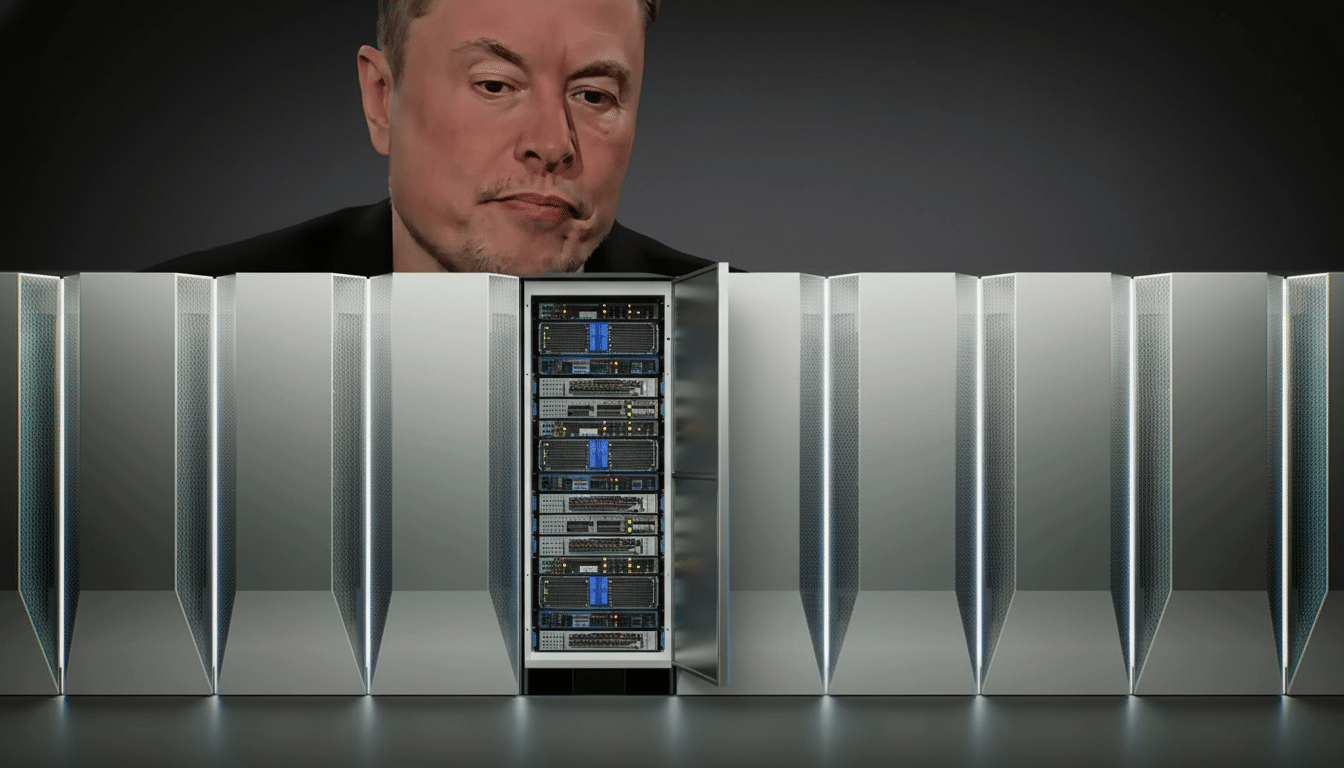
The second type, the D3 chip, is specifically tailored for space environments to support solar-powered AI satellites.
Musk envisions these space-based AI systems operating on solar energy, potentially reducing costs below terrestrial AI computing.
This dual approach addresses both terrestrial autonomous systems and extraterrestrial applications, reflecting Musk's broader vision for AI across multiple domains while maintaining specialized requirements for different environments.
Implementation Challenges
Implementing the Terafab presents significant technical and logistical challenges that require careful planning and strategic approach.
“Elon Musk has outlined a plan to manufacture chips for SpaceX and Tesla, revealing a project dubbed “Terafab” that he indicated would be located near Tesla’s Austin headquarters”
The facility would face substantial infrastructure requirements, including the need for stable electricity and millions of gallons of ultrapure water, placing additional strain on local utility grids.
Industry analysts suggest that while a full-stack leading-edge fab represents the most ambitious path, a more plausible near-term strategy might involve a hybrid approach.
This hybrid strategy could involve continuing to source wafers from established foundries while building domestic capability in advanced packaging, assembly, and testing.
This approach could give Tesla and SpaceX tighter control over thermal design, memory bandwidth, and system-level integration without immediately tackling the most complex aspects of bleeding-edge lithography technology.
Vision and Scale
Musk's Terafab initiative represents a bold vision extending beyond conventional semiconductor manufacturing into broader technological and societal transformation.
The facility aims to achieve extraordinary computing capacity targets, supporting 100-200 gigawatts of annual compute capacity on Earth and a terawatt in space.
These ambitious goals dwarf typical single-campus deployments and would imply a sweeping buildout across design, packaging, and data center operations.
Musk's vision includes establishing an industrial base on the moon to unlock petawatts of AI compute capacity and envisions 'free trips to Saturn in a post-scarcity economy.'
While these long-term goals may represent more of a 'north star' than immediate procurement plans, they signal Musk's intent to push the boundaries of what's technologically possible and potentially reshape the semiconductor industry's trajectory.
Strategic Impact
The Terafab project carries both significant opportunities and substantial risks for Tesla and SpaceX's business strategy and the broader semiconductor industry.
“Elon Musk recently outlined ambitious plans for a chip-building collaboration between his companies Tesla and SpaceX”
On the opportunity side, vertical integration through Terafab could secure critical supply chains, tailor performance specifically to autonomy and space use cases, and reduce dependence on constrained third-party roadmaps.
It may also open a path to differentiated architectures tightly coupled to Tesla's and SpaceX's software stacks.
However, semiconductor manufacturing presents considerable challenges, with common issues including cost overruns, yield shortfalls, and delays that even established manufacturers struggle with.
Musk's well-known history of setting aggressive timelines adds execution risk to an already unforgiving industry.
The bottom line is that if Terafab materializes at scale—even as an advanced packaging and specialized-process hub—it could fundamentally reshape how Tesla and SpaceX source and deploy computational resources.
More on Technology and Science

OnlyFans owner Leonid Radvinsky dies at 43 after cancer battle
32 sources compared

UN Warns 2025 Heat Record Will Endure for Thousands of Years
14 sources compared

Kona Low Storms Strike Oʻahu and Maui, Hawaii Faces Worst Flooding in 20 Years
24 sources compared

Hawaii's Worst Flooding in 20 Years Threatens Dam, Prompts Evacuations as More Rain Looms
11 sources compared