Europe21 April, 20267 min read
European Court Of Justice Strikes Down Hungary’s 2021 Anti-LGBTQ Law For Breaching EU Values
ECJ ruled Hungary's 2021 anti-LGBTQ law breaches EU law and fundamental EU values. Law framed as child protection bans LGBTQ content from minors and restricts discussion.

EU court ruling
The European Court of Justice ruled on Tuesday that Hungary’s 2021 anti-LGBTQ law breached EU rules, finding that the legislation violated the bloc’s fundamental values and providing what multiple outlets described as an early test for Hungary’s incoming government. France 24 reported that the court found Hungary’s 2021 anti-LGBTQ law breached EU rules and that the judgment “provides a test for Hungary’s new leader Peter Magyar,” after Viktor Orban’s “16-year domination” ended with a landslide victory in an April 12 election. The BBC said the ECJ ruling was unprecedented because it found Hungary’s anti-LGBTQ laws violated EU rules and “infringe its values of equality and minority rights,” and that it broke the founding values of Article 2 of the EU Treaty.
Al Jazeera said the ECJ found the Hungarian legislation ran “contrary to EU law ‘on a number of separate levels’,” and described the ruling as a “landmark.” The Guardian said the court set up “an early test for the incoming government when it takes power next month,” and described the judgment as the first time the ECJ found a member state guilty of breaking EU law based exclusively on breaching the bloc’s fundamental values in Article 2.

In the court’s own statement, as quoted by France 24, the “law is contrary to the very identity of the Union as a common legal order in a society in which pluralism prevails,” and Hungary “cannot validly rely on its national identity as justification for adopting a law which is in breach of the values referred to above.” The ruling also came with a clear compliance expectation: the Guardian reported the court “expected Hungary to comply without delay,” and it ordered Budapest to pay its costs and those incurred by the European Commission, which brought the case.
What the law did
Across the reporting, the Hungarian measure is described as a 2021 “child protection” law that restricted or banned LGBTQ-related content for minors, including in schools and in media accessible to children. The BBC said the laws “banned so-called promotion of homosexuality or gender change to under-18s,” and described the court’s finding that the Hungarian law interfered with rights including “a ban on discrimination based on sex and sexual orientation, respect for private and family life and freedom of expression and information.” The Guardian reported that the 2021 law “bans content about LGBTQ+ people from schools and primetime TV,” and said it was “at odds with a society based on pluralism and fundamental rights.”
Al Jazeera said Orban insisted the legislation was aimed at toughening punishments for child abuse, but it was amended to ban the “promotion of homosexuality” to under-18s, and it said the legislation led to the banning of books, plays and films. Courthouse News described the law as rewriting education, media and advertising laws to bar content portraying or “promoting” homosexuality or gender transition for under-18s, and it quoted the court’s language that the law “results in the stigmatization and marginalization of non-cisgender or non-heterosexual persons, solely on the ground of their gender identity or sexual orientation.”
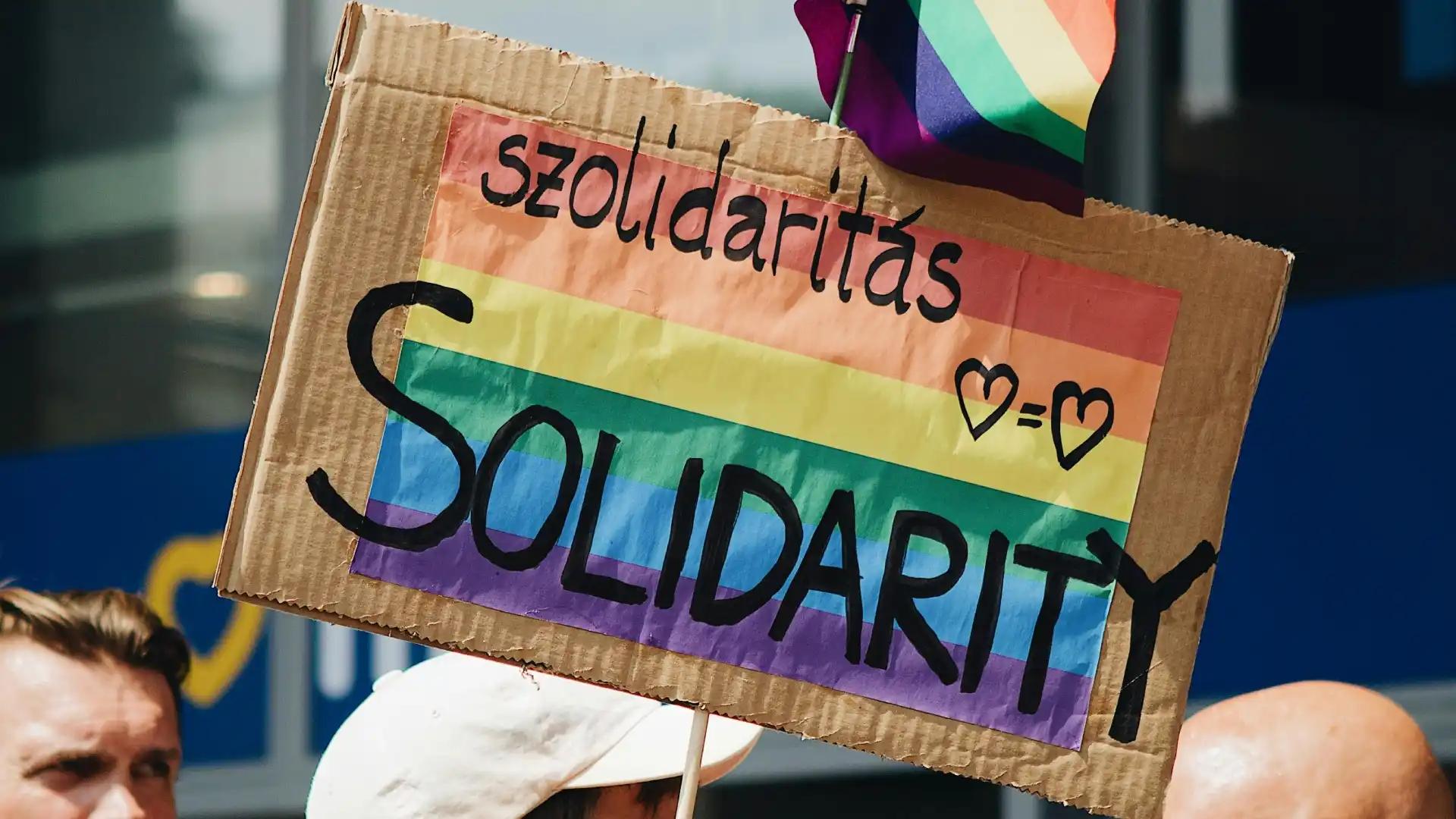
The Washington Blade provided the statutory language of the 2021 law, stating: “It shall be forbidden to make accessible to persons who have not attained the age of 18 years advertisement that depicts sexuality in a gratuitous manner or that propagates or portrays divergence from self-identity corresponding to sex at birth, sex change or homosexuality.” Euronews similarly said the law banned “the depiction or promotion of homosexuality and gender reassignment,” and reported that Hungarian media outlets and publishers were required to remove TV series, films and books that portrayed homosexuality.
Reactions and stakes
The ruling triggered reactions from EU institutions and rights advocates, while also placing immediate pressure on Hungary’s incoming leadership to implement the decision.
France 24 reported that the European Commission in Brussels welcomed the ruling as a “landmark” and said it was now up to the Hungarian government to implement the decision, adding that it would be for Hungary’s new parliament set to take oath in early May to repeal the law.
The BBC quoted a European Commission spokeswoman, Paula Pinho, saying: “It’s up to the... Hungarian government to abide by the ruling and once that is done the issue is solved.”
The Guardian quoted Tineke Strik, a Dutch Green MEP overseeing the European parliament’s work on the rule of law in Hungary, saying it was up to the incoming government to ensure “the full restoration of the rights of this community is front and centre in its plans to reinstate the rule of law. Anything less than that would render those reforms non-credible.”
The Guardian also quoted Eszter Polgári of the Háttér Society describing the judgment as “a milestone for protecting human rights in the European Union” and “a historic victory for LGBTQI people in Hungary,” and it quoted Katrin Hugendubel of ILGA Europe saying: “Hungary cannot enter a post-Orbán era without repealing this legislation, including the Pride ban.”
POLITICO.eu reported that the EU executive can now take further action and seek financial penalties if Hungary fails to comply, and it quoted Commission spokesperson Eva Hrncirova saying: “Now the ball in on the Hungarian side of the court, it’s now for the Hungarian government to implement the decision.”
France 24 said Magyar was “desperate to unblock some 18 billion euros in funds that were frozen by Brussels under Orban's rule,” while Al Jazeera said Magyar was “desperate to unblock some 18 billion euros ($21bn) in funds frozen by Brussels.”
Diverging frames
While all outlets described the ECJ ruling as a challenge to Hungary’s anti-LGBTQ policy, they framed its significance differently—ranging from a legal test of EU values to a broader political turning point for Hungary’s new leadership. France 24 emphasized the court’s finding that Hungary’s outgoing government violated European law and said the judgment provides “a test for Hungary’s new leader Peter Magyar,” tying the ruling to the need to unblock “some 18 billion euros” in frozen funds. The Guardian highlighted the court’s reasoning about pluralism and fundamental rights and said the judgment “paves the way for future cases against EU member states that systematically flout basic values on democracy and the rule of law,” while also quoting the court’s statement that Hungary could not rely on national identity.
BBC coverage foregrounded the ruling’s symbolism and legal novelty, describing it as “unprecedented” and quoting John Morijn saying: “You cannot equate what is totally natural - that 10% of the population loves the same sex - with egregious crime.” Courthouse News framed the decision as a signal that the law “doesn’t just regulate content, it sidelines it,” and it quoted the judges’ language that the law “results in the stigmatization and marginalization” and makes an association between non-cisgender or non-heterosexual people and pedophilia.
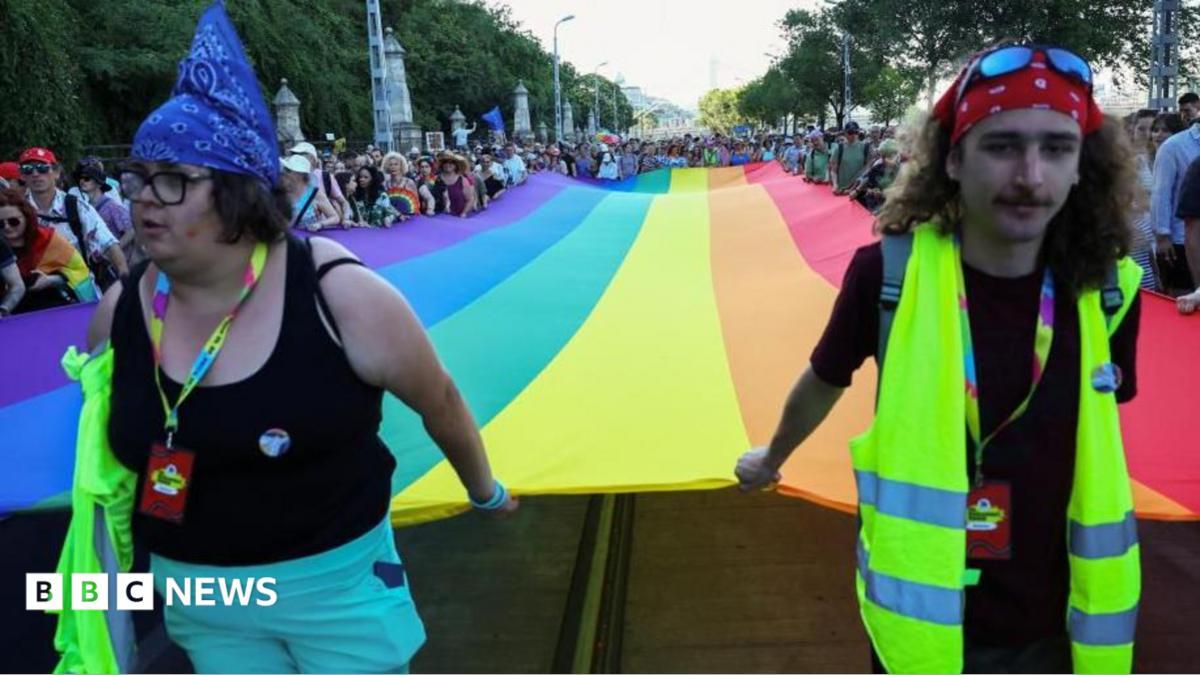
POLITICO.eu framed the ruling as a blow to Viktor Orban’s legacy and described the EU executive’s next steps, saying the court ordered Budapest to scrap the legislation and that the Commission can seek financial penalties if Hungary fails to comply. Al Jazeera, meanwhile, emphasized the court’s “landmark” nature and the political context of Orban’s defeat, while also quoting the incoming leader’s victory speech that Hungary wants to be a country where “no one is stigmatised for loving differently or in a different way than the majority.”
Next steps and broader EU
The ruling’s immediate operational consequence is that Hungary must implement the ECJ decision, and multiple outlets tied that to the timing of Hungary’s political transition and the EU’s enforcement tools.
France 24 said the European Commission welcomed the ruling as a “landmark” and that it was now up to the Hungarian government to implement the decision, adding that it would be for Hungary’s new parliament set to take oath in early May to repeal the law.
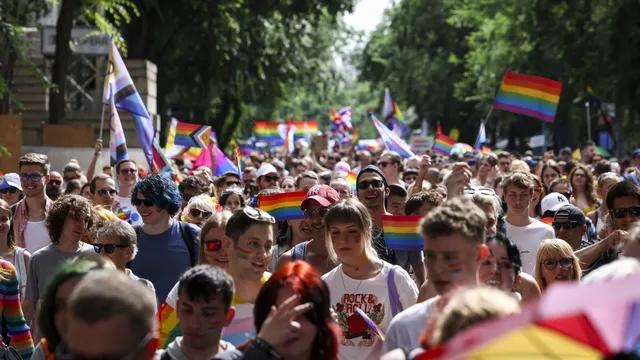
The BBC reported that the Commission said it would take up the issue with the new government once it was in place, and it quoted Paula Pinho saying: “It’s up to the... Hungarian government to abide by the ruling and once that is done the issue is solved.”
POLITICO.eu said the EU executive can seek financial penalties if Hungary fails to comply, and it quoted Commission spokesperson Eva Hrncirova saying: “Now the ball in on the Hungarian side of the court, it’s now for the Hungarian government to implement the decision.”
The Guardian said the court “expected Hungary to comply without delay” and ordered Budapest to pay its costs and those incurred by the European Commission, which brought the case.
Beyond the immediate repeal question, the Guardian said the judgment “paves the way for future cases” against member states that systematically flout values, and BBC said the ruling could have wider legal implications because it meant the Commission could in future go to a member state over the rule of law with a similar warning.
France 24 also described the EU’s diplomatic posture, saying the EU sent “a delegation of officials to Budapest last week to kick off talks with the incoming government” to hit the ground running once it takes power next month.