Full story
Bulgaria’s election shock
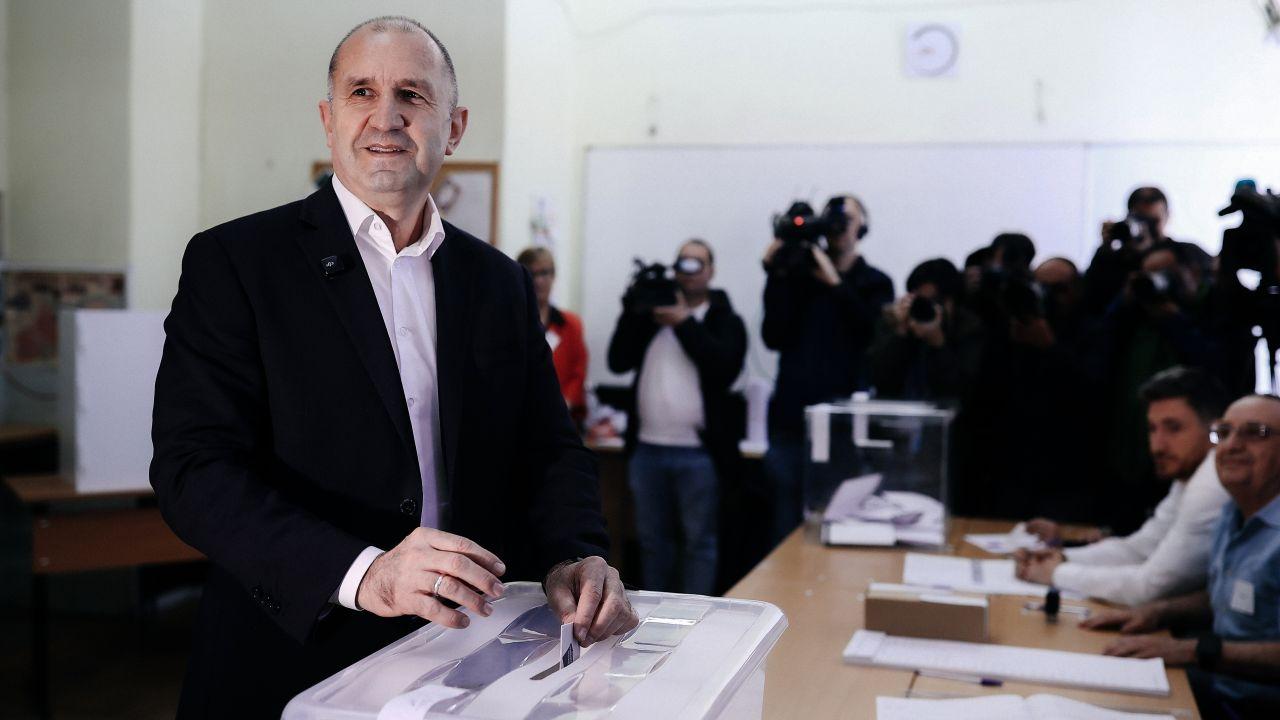
Bulgaria’s parliamentary election delivered a landslide for Rumen Radev’s Progressive Bulgaria, with multiple outlets tying the result to a potential end to years of instability and to fresh questions about Bulgaria’s relationship with the European Union.
The South China Morning Post said Radev’s Progressive Bulgaria had 44.7 per cent of the vote after 97.52 per cent of ballots were counted, putting it far ahead of the pro-European We Continue the Change-Democratic Bulgaria (PP-DB) coalition at 12.8 per cent and the long-dominant GERB party at 13.4 per cent.

Il Sole 24 ORE similarly reported that Progressive Bulgaria was poised to win 44.7% after 96% of ballots were counted, and it described the result as “a landslide victory” that could end “years of weak coalition governments.”
Taipei Times put the vote at 44.7 percent after 91.7 percent of ballots were counted, again showing Progressive Bulgaria ahead of PP-DB at 13.2 percent and GERB at 13.4 percent.
Several reports also emphasized that the vote could give Radev’s party a majority in a 240-seat parliament: Il Sole 24 ORE cited a projection of 135 seats in the 240-member chamber, while DW said the party was on course to win around 130 seats in the 240-seat parliament.
Radev, 62, told reporters in Sofia that “Progressive Bulgaria wins unequivocally,” and he framed the result as “a victory of hope over distrust” and “a victory of morality.”
The election was Bulgaria’s eighth in five years, and the turnout was described as above 50 per cent by Il Sole 24 ORE and as the highest since 2021 by multiple outlets, including France 24 and RTE.ie.
EU, NATO, and Russia
The election result immediately fed into competing interpretations of Bulgaria’s direction on Russia, the European Union, and NATO.
Multiple outlets described Radev as pro-Russian or Kremlin-friendly and as an EU critic who called for renewing ties with Russia, while also noting his opposition to military support for Ukraine’s war effort against Moscow.

Taipei Times said Radev is “a euroskeptic and former fighter pilot opposed to military support for Ukraine’s war effort against Moscow,” and it reported that his victory could “potentially pushing the EU and NATO member state closer to Moscow.”
RFI described him as “Bulgaria's Kremlin-friendly ex-president” and said his win could “potentially push the EU and NATO member state closer to Moscow,” while also stressing his pledge to fight corruption.
The New Voice of Ukraine reported that Kremlin spokesman Dmitry Peskov said it was “too early to say the result will change the European Union’s broader stance toward Russia,” adding that “We are seeing statements of a completely different nature coming from Brussels.”
DW reported that Russia welcomed the result through Peskov, who said Russia was “impressed by the statements made by Mr Radev,” and it also said European Commission chief Ursula von der Leyen sent congratulations, stating, “Bulgaria is a proud member of the European family and plays an important role in tackling our common challenges.”
France 24 quoted Radev saying Bulgaria would “make every effort to continue on its European path,” while also adding that “Europe has fallen victim to its own ambition to be a moral leader in a world with new rules.”
Voices: Radev, Peskov, von der Leyen
The election coverage foregrounded direct statements from Radev and from Kremlin and European officials, with each voice framing the outcome in different terms.
Radev told reporters, “This is a victory of hope over distrust. This is a victory of freedom over fear. And finally, this is a victory, if I may say so, of morality,” and he also said, “Progressive Bulgaria wins unequivocally.”
Il Sole 24 ORE reported that Radev, “62,” spoke in Sofia after projections were published, while Taipei Times said he told a press conference late on Sunday, “This is a victory of hope over distrust, a victory of freedom over fear, and finally, if you will, a victory of morality.”
On the Kremlin side, Dmitry Peskov told Interfax, according to The New Voice of Ukraine, “It would be premature at this point to draw broad conclusions that the overall European climate will change,” and he added that “any divergence in mutual interests can and should be resolved at the negotiating table.”
DW reported Peskov also said Russia was “impressed by the statements made by Mr Radev,” and RTE.ie described Peskov’s reaction as Moscow looking “favourably on comments from Mr Radev about closer ties and resolving disputes through dialogue.”
On the European side, Ursula von der Leyen’s message appeared in DW and RTE.ie, with DW quoting her post on X: “Bulgaria is a proud member of the European family and plays an important role in tackling our common challenges,” and RTE.ie saying she “looked forward to working with the new leadership.”
France 24 added another Radev quote that linked his worldview to EU policy, saying “But believe me, a strong Bulgaria and a strong Europe need critical thinking and pragmatism,” and it also quoted him criticizing Europe’s approach as “Europe has fallen victim to its own ambition to be a moral leader in a world with new rules.”
What changes, what stays
Beyond the headline result, outlets described a set of policy and political fault lines that could shape Bulgaria’s next steps, including judicial reform, corruption enforcement, and foreign policy alignment.
France 24 said the “real question” was whether Radev would take “real steps” against high-level corruption, including through reforms of the judiciary, and it attributed that framing to political analyst Teodor Slavev.
It also reported that for key judicial or constitutional changes requiring a two-thirds majority, Radev would need support in parliament from other parties, tying the stakes to coalition arithmetic even after a landslide.
RTE.ie and DW both described the practical challenge of turning electoral momentum into governance, with DW quoting Boyko Borissov’s caution that “Winning the election is one thing; governing is quite another.”
Several outlets also connected the election to anti-corruption enforcement, with RTE.ie saying raids linked to alleged vote buying led to multiple arrests and the seizure of over one million euro, and France 24 saying police seized “more than one million euros.”
On foreign policy, Radev’s stance was described as both conciliatory toward Russia and constrained by Bulgaria’s EU and NATO membership, with DW saying he “has nonetheless officially denounced Russia's invasion” and would not use his country’s veto to block EU aid to Kyiv if elected.
France 24 reported that Radev criticized a 10-year defence agreement signed last month between Bulgaria and Ukraine and opposed sending arms to Ukraine, while also saying he would not use his country’s veto to block EU decisions.
Coverage divergence on meaning
Different outlets framed the same election through distinct emphases, producing a divergence in how readers were guided to interpret what the win meant for Europe.
The South China Morning Post foregrounded political stability and domestic frustration, saying the performance “may end, for now, the chronic instability that led to eight elections in five years,” and it described voters as “sick of corruption and veteran parties.”

By contrast, Taipei Times and Kyiv Post emphasized the foreign-policy implications more directly, with Taipei Times saying the result could “potentially pushing the EU and NATO member state closer to Moscow,” and Kyiv Post describing “Pro-Russian Turn Sparks EU Questions.”
Il Sole 24 ORE combined both angles by calling it “a political breakthrough and possible tensions with the EU,” while also reporting Kremlin and Berlin reactions.
The New Voice of Ukraine, while reporting Kremlin comments, stressed that the Kremlin ruled out any near-term EU reset, quoting Peskov saying it was “too early to say the result will change the European Union’s broader stance toward Russia.”
DW and RTE.ie leaned into international reaction and institutional messaging, with DW highlighting Ursula von der Leyen’s congratulatory line and RTE.ie describing both Kremlin and European responses as part of a quick diplomatic readout.
Meanwhile, France 24 and RFI leaned into the corruption and governance stakes, with France 24 quoting Teodor Slavev on the “real question” of judicial reform and RFI describing the win as an absolute majority that “could spell an end to the country's half-decade of political uncertainty.”