Europe26 March, 20262 min read
European Parliament advances Turnberry tariff pact ratification amid conflicting reports of suspension
This article is an automated aggregation of coverage from news outlets. Our editorials offer in-depth analysis curated by the NewsCord team.
Parliament froze ratification amid Trump threats, with a majority agreement among groups. Parliament advanced the deal with safeguards, including sunset and suspension clauses.
Divergent progress reports
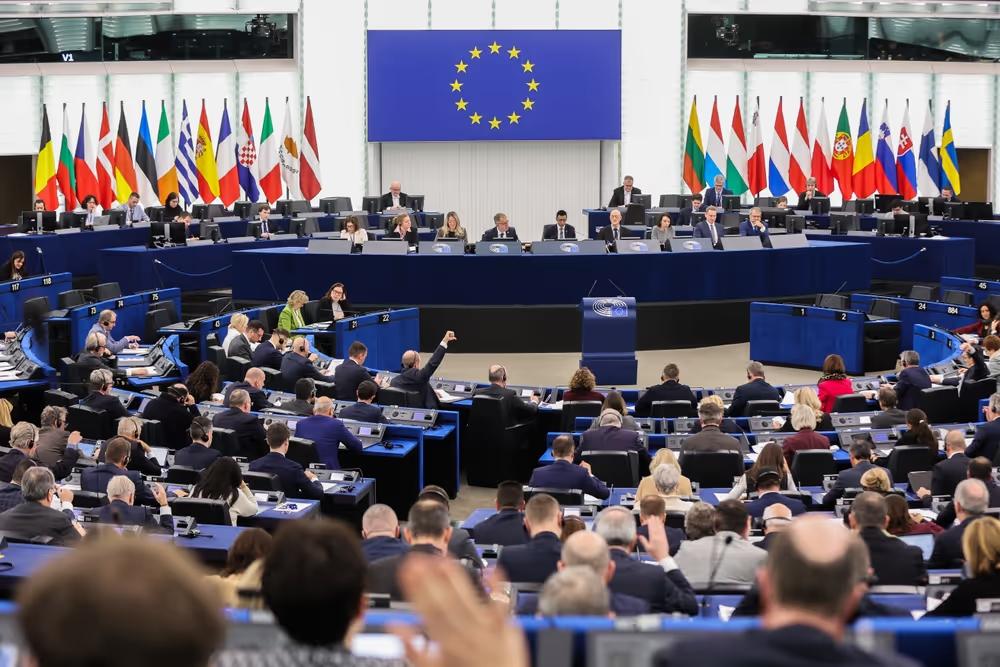
Reports conflict over whether the European Parliament advanced or suspended the Turnberry ratification, with outlets presenting competing trajectories in the same week. El País reports that the Parliament revived the tariff pact reached at Turnberry and moved toward final ratification, describing it as a crucial step and noting that the EU‑US agreement should be in force on both sides. Global Banking & Finance Review corroborates the advancement narrative, citing a 417‑to‑154 vote with 71 abstentions and saying the legislation was adopted with added safeguards.
“A crucial step for the Parliament. We need the EU-US agreement to be in force on both sides.”
KTBS 3 adds that lawmakers framed the move as an important procedural step and a political signal that the EU stands by its word. Touteleurope.eu, by contrast, highlights prior parliamentary freezes and underscores that coverage remains split, illustrating the ongoing dispute over the process.

Advancement with safeguards
Supporters emphasize concrete safeguards and market details, portraying the vote as a disciplined step toward stabilizing transatlantic trade while attempting to constrain Washington’s leverage. El País notes that a group of parties backed the agreement, guaranteeing a solid majority, while the deal’s political and legal components were highlighted as part of the framework. Global Banking & Finance Review specifies the added safeguards—sunrise, sunset and suspension clauses—and quotes proponents on the need for Washington to remove 50% duties on steel and aluminum in products such as wind turbines and motorcycles.
KTBS 3 reiterates the procedural framing with remarks from EU officials about the vote signaling reliability. Touteleurope.eu notes that the ball started rolling again after the European Commission said it would stick to the pact, acknowledging assurances from Washington.

Suspension dominant in reports
Other outlets foreground suspension, describing the EP as freezing or delaying ratification in response to Trump’s renewed pressure, thereby highlighting a substantive split in interpretation and strategy across actors. Le Parisien frames the move as suspension, noting that the Parliament decided to pause the ratification process after Trump’s threats.
“Brussels strikes back. The European Parliament has decided to suspend the ratification process of the trade agreement between the European Union and the United States, following Donald Trump's latest threats, confirmed on Tuesday by its main political groups.”
BFM reports the freeze as the initial parliamentary step and documents European leaders’ responses, including Ursula von der Leyen’s call for firm, united action and the discussion of anti‑coercion tools. Touteleurope.eu corroborates the suspension narrative with a January 20 vote to halt work on the agreement, underscoring the broader political reckoning in Brussels.
Context: coercion and diversification
The coverage also widens the context to how political pressure and legal instruments shape EU strategy, with some outlets linking the Turnberry talks to broader leverage against foreign policy coercion and signaling a shift toward diversification of partners. El País highlights Trump’s threats to impose new levies and Greenland tensions, framing the episode as part of a broader coercive dynamic that could influence EU strategy. Le Parisien emphasizes that Paris is prepared to use powerful tools, including the anti‑coercion mechanism or 'EU commercial bazooka,' in response to US measures.
BFM notes Ursula von der Leyen’s warning that Europe will respond firmly and unitarily, while referencing the anti‑coercion instrument as part of the EU’s toolkit. Together, these pieces sketch a pattern where media analyze both the coercive pressure and Europe’s countermeasures as part of a broader realignment of transatlantic trade and security.
