
Fence Raises $20 Million to Modernize $6 Billion Credit Market With Blockchain Tokenization
Key Takeaways
- Galaxy-led $20M round funds Fence to modernize the $6T credit market backend.
- Fence uses blockchain tokenization to automate back-office processes.
- The funding round demonstrates growing investor interest in blockchain-backed financial infrastructure.
Fence’s tokenized credit backend
A startup called Fence is raising $20 million to modernize a credit market described as “en gran medida manual” and worth “6 billones de dólares,” using blockchain and tokenization “en segundo plano” rather than presenting itself as a “empresa de blockchain.”
“The world's entire economy will be tokenized, says Consensys’ Joseph Lubin The Consensys CEO and founder said tokenization can be traced back to Ethereum, the blockchain he helped co-found”
CoinDesk reports that the round was “liderada por la división de capital riesgo de Galaxy Digital” and that the financing is intended to renew the “mercado de financiamiento respaldado por activos” where many asset managers still rely on manual workflows.

Fence’s CEO, Juan Montero, told CoinDesk that the company uses blockchain “detrás de escena” to automate “el seguimiento de préstamos, la elaboración de informes y los pagos,” while insisting it is not building a front-end crypto product.
The article says Fence’s software targets the operational layer of structured credit deals, from “verificación del colateral y el movimiento de efectivo,” which it describes as fragmented across multiple companies and still run with “hojas de cálculo, PDFs y correos electrónicos.”
CoinDesk adds that the company aims to replace those processes with a system that “actualiza los datos en tiempo real,” enabling lenders to monitor loan performance and cash flows continuously rather than waiting for periodic reports.
Fence also claims it can reduce costs for large asset managers, and it points to deals with BBVA where it reported “costos de financiamiento más bajos para los prestatarios” and “una reducción en el trabajo operacional.”
The financing is also framed as a step to expand in the United States, with Montero saying the funds will help Fence “expandirse en EE. UU.” and develop its product.
Ethereum’s composability pitch
At Consensus Miami 2026, Joseph Lubin—described in the sources as cofounder of Ethereum and CEO of ConsenSys—used the event to argue that tokenization is inevitable and that Ethereum’s scaling and interoperability work is aimed at making the network feel like a unified execution environment.
CriptoTendencia says Lubin introduced “Synchronous Composability” and framed it as the “tecnological piece that promises to unify the chaotic Layer-2 ecosystem,” with Ethereum positioned as the “raw material of trust” for the global economy.

In that account, Lubin said the network is “days away from enabling a transaction started on an L2 to be executed in the same block on another network,” and he described the result as “execution can span multiple networks simultaneously.”
CriptoTendencia quotes Lubin saying, “You will be able to operate across the entire ecosystem as if it were a single execution space, burning ETH at every step,” and it adds that this “invisible fusion” would mean users “will no longer have to worry about complicated bridges.”
A separate CoinDesk item (@coindesk | Western Alternative) reports Lubin’s broader claim at Consensus Miami 2026 that “tokenization of virtually the entire global economy is now inevitable rather than experimental,” and it ties that inevitability to Ethereum’s early design allowing anyone to issue tokens without creating a new blockchain.
That same CoinDesk source says Lubin argued Ethereum’s maturing ecosystem—“bolstered by layer-2 scaling, synchronous composability and ether’s role as a “trust commodity”—is attracting regulators and traditional finance.
It also quotes Lubin in a Fireside chat: “We’re moving into a world where essentially the entire economy is going to be tokenized,” and it says he told The Rollup’s Founder Robbie Klages that Ethereum is “structurally positioned to benefit the most.”
DTC pilots and security roadmap
Beyond composability, the sources describe Lubin’s Consensus presentation as including institutional tokenization pilots and a security-and-verification roadmap.
“At the epicenter of Consensus Miami 2026, Joseph Lubin, cofounder of Ethereum and CEO of ConsenSys, unveiled a proclamation that redefines the network's future: the era of digital islands is over”
CriptoTendencia says Lubin revealed that “tokenization pilots with the Depository Trust & Clearing Corporation, or DTC” had been successful, and it frames DTC as “the backbone of securities in the U.S.”
In that same account, Lubin said that after tests “this summer,” “next October is shaping up as the key date for the DTC to begin operating live with real assets on Ethereum.”
CriptoTendencia also connects the pitch to trust guarantees, stating that Lubin said the network’s ability to offer “guaranteed trust” is what convinced institutions handling “quadrillions of dollars in volumes.”
The article then turns to security, referencing “the KelpDAO hack” and quoting Lubin’s characterization of a “libertarian bailout,” describing it as “a collaborative resolution where the community, not external lawyers, managed to compensate the affected.”
It further says Lubin announced “the implementation of formally verified pipelines powered by artificial intelligence,” and it specifies the goal of reducing human errors “(15 per thousand lines of code)” through “AI audits that offer mathematical guarantees of security.”
In parallel, @coindesk | Western Alternative emphasizes that Lubin sees Ethereum’s scaling approach as involving layer-2 networks and “developments such as synchronous composability,” and it quotes him about value capture: “All of those transactions across all these different networks are going to be burning ether.”
How sources frame the same theme
The sources present overlapping claims about tokenization and Ethereum, but they emphasize different angles and use different language to describe the same underlying direction.
CriptoTendencia frames Lubin’s message around technical unification of fragmented Layer-2 networks, explicitly naming networks such as “Arbitrum, Optimism, or Base,” and it describes the problem as “fragmentation” where “Users and liquidity are split across networks.”
It then uses a vivid execution metaphor—“execution can span multiple networks simultaneously”—and ties that to a user experience goal of avoiding “complicated bridges.”
By contrast, @coindesk | Western Alternative foregrounds the inevitability thesis and institutional readiness, quoting Lubin saying “We’re now sufficiently mature to be attractive to traditional finance organisations and regulators,” and it links that maturity to “reliability, security, and scalability.”
The @coindesk source also situates tokenization within a broader financial migration, saying Lubin pointed to the evolution from “bitcoin as the first decentralised token” to Ethereum’s role in enabling new tokens without separate blockchains.
CoinDesk’s Fence story, meanwhile, approaches tokenization from the perspective of credit operations rather than Ethereum’s protocol roadmap, describing Fence’s approach as using blockchain “menos como un producto de interfaz y más como una infraestructura de respaldo.”
In that CoinDesk account, the emphasis is on practical automation—“seguimiento de préstamos, la elaboración de informes y los pagos”—and on how tokenization is used “solo se utiliza cuando aporta valor.”
What comes next for tokenization
Across the sources, the next steps are described as both product build-outs and institutional rollouts, with specific timelines and operational targets.
“Galaxy lidera inversión de $20 millones en Fence para renovar el backend del mercado crediticio de $6 billones Startup Fence utiliza la tecnología blockchain y la tokenización en segundo plano para automatizar procesos en los que muchos gestores de activos aún dependen de flujos de trabajo manuales”
For Fence, CoinDesk says the company plans to use the $20 million round to expand in the United States and to develop its product, while also claiming it can incorporate new agreements in “semanas, en comparación con meses bajo procesos estándar.”
The same CoinDesk report says Fence now supervises “alrededor de 1.500 millones de dólares en activos” through its platform, and it names collaboration with BlackRock and Fortress as part of its current operating footprint.
It also describes how Fence uses APIs, software checks, and “contratos inteligentes para liberar efectivo cuando se cumplen los términos del acuerdo,” positioning the company’s near-term impact as faster settlement of structured credit terms.
In the Ethereum narrative, CriptoTendencia points to a concrete institutional milestone, stating that “next October is shaping up as the key date for the DTC to begin operating live with real assets on Ethereum,” after tests “this summer.”
That same source ties the institutional push to “guaranteed trust” and “mathematical guarantee,” and it adds that Lubin announced “formally verified pipelines powered by artificial intelligence” with “AI audits that offer mathematical guarantees of security.”
Meanwhile, @coindesk | Western Alternative portrays the broader consequence as a shift in how regulators and traditional finance engage with tokenization, quoting Lubin that “We’re now sufficiently mature to be attractive to traditional finance organisations and regulators.”
More on Crypto

U.S. and Iran Sign Memorandum to Reopen Strait of Hormuz; Switzerland Talks Postponed
23 sources compared

Iran’s Supreme National Security Council Exempts Hormuz Transit Fees for 60 Days
28 sources compared

Trace Finance Raises $32 Million Series A Led by CoinFund to Expand Stablecoin Settlement
10 sources compared
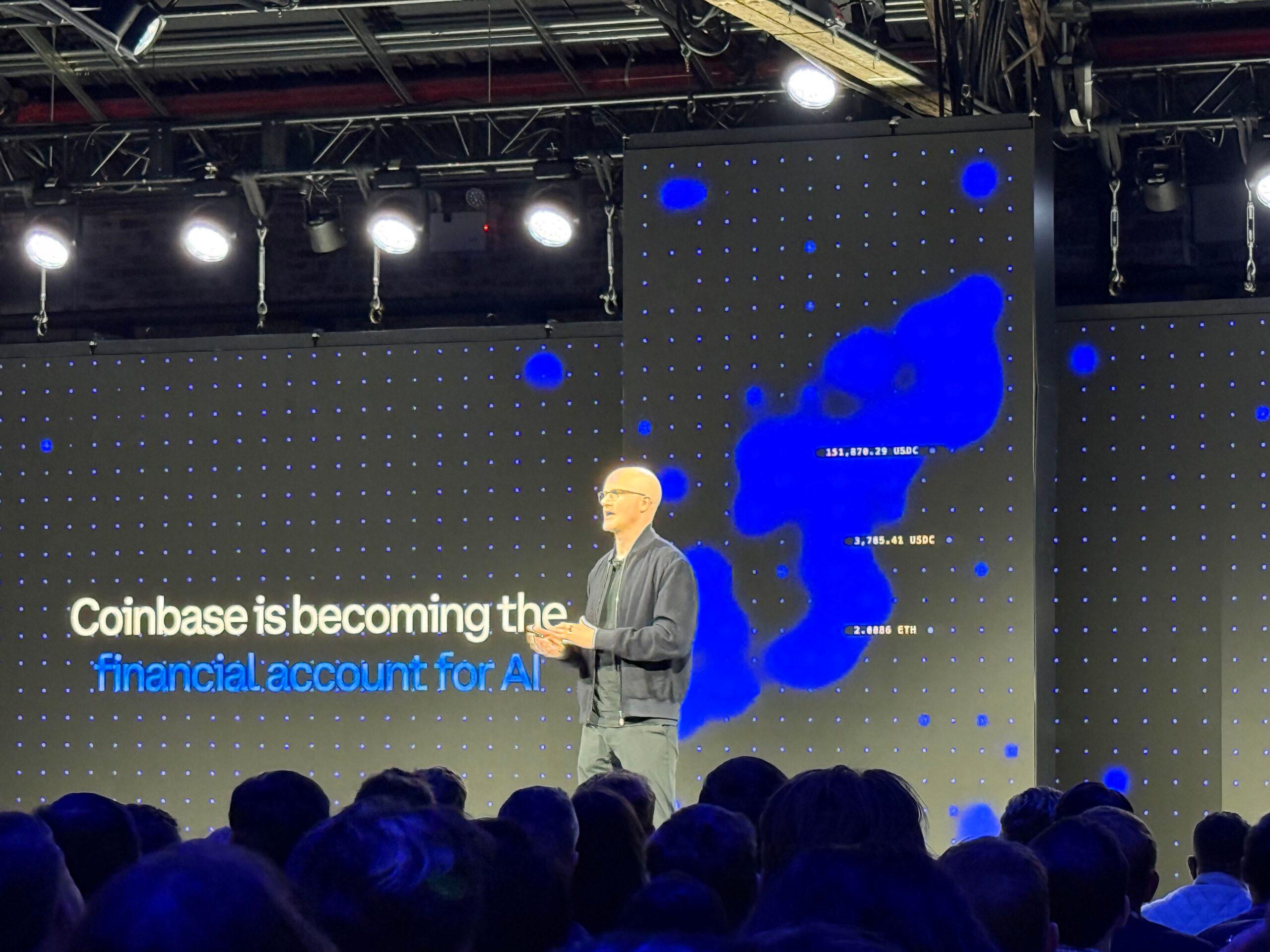
Coinbase Unveils Everything Exchange Push With Tokenized Stocks, AI Advisor, and Perpetual Futures
13 sources compared