First, the ceasefire clashes with Israel's on-the-ground conditions in Lebanon.
Key Takeaways
- Israeli raids on Lebanon intensify as fighting widens.
- International diplomacy pursues a roadmap to end the Lebanon war.
- Lebanon demands a ceasefire first; US-French-sponsored talks reportedly underway.
Diplomatic momentum toward roadmap
Israeli raids on Lebanon are intensifying as fighting widens, while an international diplomatic push gathers pace to draft a roadmap to end the war.
“At a time when Israeli raids on Lebanon are intensifying and the fighting is widening, signs of an unprecedented international diplomatic movement surface, aiming to draft a 'roadmap' to end the war in Lebanon”
Hebrew media report direct talks under American‑French sponsorship in Europe, while Lebanon publicly calls for a ceasefire first and rejects jumping to recognition or normalization.
Channel 12 cited that the Israeli government is weighing a French ceasefire proposal that would include Lebanon recognizing Israel and Hezbollah's disarmament, a plan that reportedly faces internal Israeli discontent.
Behind‑the‑scenes momentum is described by a Lebanese official to AFP, with Paris and Cyprus seen as possible hosts as part of a broader effort led by France and the United States.
The aim is a security agreement delivering an immediate ceasefire and Israeli withdrawal in exchange for Hezbollah disarmament and the redeployment of the Lebanese army south of the Litani River, with Kushner identified as a central figure in negotiations by Haaretz.
Anadolu Agency quotes a Lebanese source calling talk of Lebanon recognizing Israel or normalizing relations premature and not on the table.
Ceasefire first; security concerns next
The four‑point initiative starts with an immediate ceasefire, followed by negotiations over security and military issues such as Israeli withdrawal and Hezbollah's weapons.
Only after these steps would a political formula be discussed, potentially including a mutual non‑aggression declaration; the final terms would be resolved through lengthy negotiations.
A Lebanese source notes that no timetable or venue has been set and that the proposals remain initial ideas rather than final agreements.
Anadolu Agency also reported that Lebanon's recognition of Israel or normalization remains premature and not on the table at this stage.
Delegation talks and internal stance
Prominent diplomats have been proposed for the Lebanese delegation, including Ambassador Simon Karam, Abdul‑Sattar Essa, Ambassador Shoghi Bounsar, and Dr. Paul Salem, but the lineup is not yet complete.
“At a time when Israeli raids on Lebanon are intensifying and the fighting is widening, signs of an unprecedented international diplomatic movement surface, aiming to draft a 'roadmap' to end the war in Lebanon”
Speaker Nabih Berri rejects naming a Shiite representative before a core ceasefire agreement is reached, arguing the delegation must reflect Lebanon's national character.
Officials say success of a ceasefire and mutual commitment could open the door to long and complex negotiations on intertwined issues, with the final formula to be determined through negotiations.
On‑the‑ground fighting and toll
While diplomacy moves, fighting continues.
The Israeli army says it has intensified strikes on Hezbollah rocket launch sites and destroyed Radwan Force bases as part of a broad assault on Hezbollah infrastructure.
The Lebanese Health Ministry reports 31 health workers killed since the start of the war, including an Israeli airstrike on a health centre in Barj Qlaouiya in southern Lebanon that killed at least 12 people.
Hezbollah's Islamic Health Authority says the centre belongs to it and vows that strikes will not break the will of workers but will increase resolve.
The Israeli army spokesperson accuses Hezbollah of widely using ambulances for military purposes and says Israel will act in accordance with international law against such activity; the Health Ministry counters that the claim is an excuse for crimes against humanity.
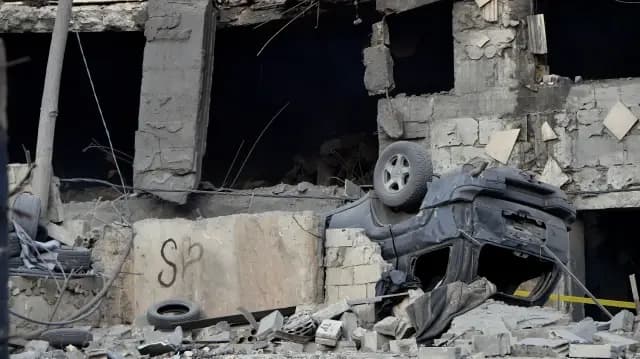
In Nabaa‑Burj al‑Hamoud, an Israeli airstrike struck a residential building, killing one person and injuring four.
Axios, citing American and Israeli sources, says Israel plans a wide ground operation to control the area south of the Litani River.
The war has killed 826 people since March 2, including 106 children and 65 women, according to the Health Ministry, while Israel has killed more than 4,000 people and injured around 17,000 during its broader aggression on Lebanon since October 2023 and the war that began in 2024, which ceased after a ceasefire agreement.
Israel continues to violate the ceasefire with Hezbollah, resulting in hundreds of dead and wounded, in addition to Tel Aviv continuing to occupy five Lebanese hills it controlled in the last war.