
Four Nigerian Women Escapees From Bollé Prison Apprehended in Kenieba, Kayes Region
Key Takeaways
- Six Nigerian detainees escaped Bollé prison in Bamako on Aug 10-11, 2023.
- Four of the escapees were captured in Kenieba, Kayes region within hours.
- Other sources do not corroborate Bollé-Kenieba details; reports discuss different escapes.
Escapes and Manhunts
A case described by Bamada.net centers on six Nigerian detainees who escaped from Bollé, the specialized center for rehabilitation, reintegration, and detention for women and minors in the Bamako district, during the night from Thursday, August 10 to Friday, August 11, 2023, and then took hours for four of the six escapees to be captured.
“At Bollé, the specialized center for rehabilitation, reintegration, and detention for women and minors in the Bamako district, six Nigerian detainees managed, during the night from Thursday, August 10 to Friday, August 11, 2023, to escape under unusual circumstances”
The same account says the accused left their block at Bollé by exiting through the bathroom window, then used the watchtower before scaling the wall, slipping under the top of the wall’s barbed wire with the help of the mosquito nets they used in their block.

Bamada.net adds that four of the six were ultimately apprehended in Kenieba, in the Kayes region, after the Kenieba Investigation Brigade placed bars and brothels under surveillance based on a tip.
In a separate escape story, Dakaractu.com reports that Baye Modou Fall, alias Boy Djinné, once again escaped from the Liberté 6 remand prison, and says the administration opened an inquiry to track down the accomplices.
Dakaractu.com says the escape occurred between 5:00 a.m. and 6:00 a.m., and that Mbaye Sarr, Regional Inspector of the Dakar Penitentiary Administration (IRAP), confirmed the information and expressed astonishment at the occurrence.
How Authorities Track Fugitives
Slate.fr describes how investigators respond once a prisoner’s disappearance is detected, saying prison center authorities contact the police and that the prefect, responsible for public order in his region, then the Ministry of Justice, are alerted.
The article says guards secure the prison if there are intrusions by accomplices or if the facility has been damaged, and it describes police deploying the Epervier plan, also called the Owl plan at night, or the Milan plan in other departments.
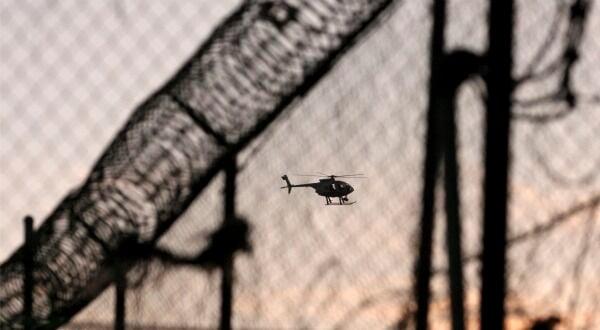
Slate.fr says roadblocks are set up at the main traffic nodes and the surroundings of the prison are inspected, and it adds that depending on the danger level, the STRJD (Technical Service for Judicial Research and Documentation) requests the support of a helicopter and the canine brigade.
It also explains that if the Epervier plan does not allow locating the prisoner in the days that follow, the OCLO takes charge and the BNRF (National Brigade for the Search of Fugitives) is tasked with supporting the forces on the ground.
In the same piece, Slate.fr says the BNRF must close each door one by one to avoid leaks or false leads, and it describes how investigators prioritize testimonies detailing distinctive signs of the fugitive not revealed in the press.
FOIA Evasion and Prosecution
The Intercept shifts to a U.S. federal case involving records and transparency, saying armed federal agents arrested Dr. David Morens, a 78-year-old retired government scientist, and charged him with crimes that could carry decades in prison for allegedly using his personal email to try to evade Freedom of Information Act requests.
“Estimated reading time: 5 minutes A prisoner escaped on Saturday morning, April 13, from the Sequedin detention center in the North, using explosives and after taking five people hostage, according to AFP”
The Intercept reports that prosecutors say Morens, a former senior adviser at the National Institute of Allergy and Infectious Diseases, used personal email accounts to dodge FOIA, deleted records, and sought to circumvent federal records requirements, and it quotes a message about communications about Covid research: “I learned from our FOIA lady here how to make emails disappear after I’m FOIA’d but before the search starts.”
It adds that Morens allegedly wrote, “Plus I deleted most of those earlier emails after sending them to my Gmail.”, and it says Morens faces real prison time if convicted: up to five years for conspiracy and up to 20 years per count for destruction of records.
The Intercept frames the stakes around whether enforcement is selective, arguing that the Justice Department has almost never treated FOIA evasion behavior as a crime and that the danger is making it so FOIA evasion is only a crime if the administration has a score to settle.
It also says Secretary of Health and Human Services Robert F. Kennedy Jr. has hollowed out most of his department’s FOIA offices, and it states the FOIA office for the bureau where Morens used to work is drowning with over 1,100 backlogged requests.
More on USA
Benjamin Song Gets 100 Years as Antifa-Linked Plot Sentences Eight in Alvarado ICE Shooting
10 sources compared

DOJ Investigates Poetica Coffee After Brooklyn Chain Bans Rep. Dan Goldman Over Israel Support
11 sources compared

Zohran Mamdani Backs Brad Lander, Claire Valdez, and Darializa Avila Chevalier in New York Primaries
10 sources compared

U.S. Supreme Court Rejects Damon Landor’s RLUIPA Damages Claim Over Louisiana Prison Dreadlocks
19 sources compared