Europe16 April, 20265 min read
France Arrests Hicham Harb Over 1982 Rue des Rosiers Jewish Restaurant Attack
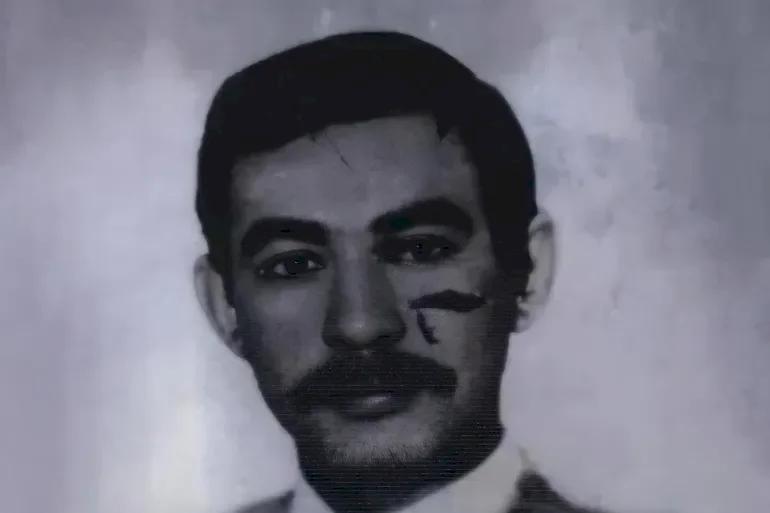
The Palestinian Authority handed Mahmoud Khader Abed Adra, known as Hicham Harb, to France. He is suspected of organizing the 1982 Rue des Rosiers attack that killed six.
Paris 1982 attack
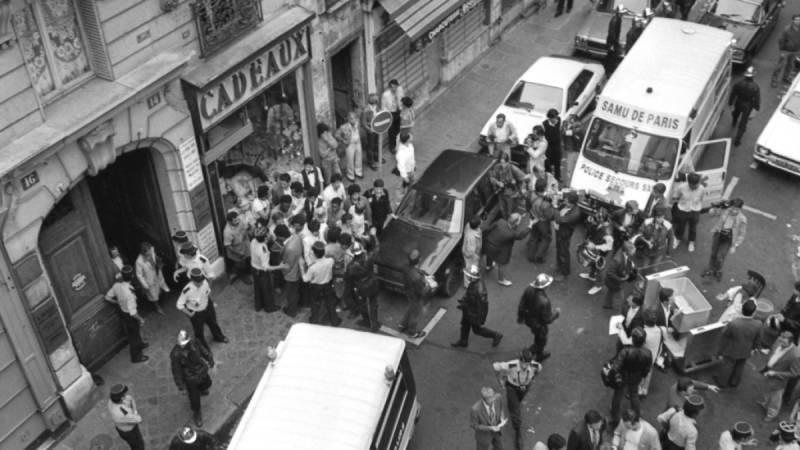
France has arrested a suspect tied to the 1982 attack on a Jewish restaurant in Paris, after Palestinian authorities handed him over to French custody. Al Jazeera identified the man as Mahmoud Khader Abed Adra, also known as Hicham Harb, and said he arrived in France on Thursday after being surrendered by Palestinian officials. Al Jazeera reported that on August 9, 1982, “three to five men threw a grenade into Jo Goldenberg, a Jewish-owned restaurant in the Rue des Rosiers, in Paris’s historic Marais district, before opening fire on the street outside.”
It added that “Six people were killed and 22 wounded in the incident,” and said the attack was blamed on the Fatah-Revolutionary Council, a Palestinian armed faction that split from the Palestine Liberation Organization (PLO). BBC said Hicham Harb was extradited by the Palestinian National Authority on Thursday in response to a request by France’s National Anti-Terrorism Prosecutor’s Office (PNAT) and described him as “considered a key suspect” in the “grenade and gun attack” that killed six people. France’s Villacoublay air base and the Rue des Rosiers setting recur across the reporting, with BBC stating that on arrival at the Villacoublay air force base near Paris, Harb was placed in detention.
Extradition and custody
The handover to France followed a sequence of arrests, extradition requests, and legal steps that multiple outlets described in detail. Al Jazeera said Adra was arrested in the West Bank by Palestinian security forces in September last year, and that “French antiterrorism prosecutors filed an extradition request days later, and he was flown to the Villacoublay military airbase outside Paris on Thursday, where he was taken into custody.” BBC similarly said Harb was detained on arrival at the Villacoublay air force base near Paris and that PNAT would formally notify him of the arrest warrant.
RFI reported that Harb was due to be brought before a judge on Friday, “a day after being extradited to France by the Palestinian Authority,” and said anti-terror prosecutors were expected to formally notify him of the arrest warrant against him. TF1 Info added that the extradition request was dated “September 30, 2025,” and stated that the individual was handed over “today, April 16, 2026, by Palestinian authorities to the French judiciary.” France 24 described the transfer as being made after the Palestinian Authority handed France “the Palestinian Hisham Harb,” and quoted a lawyer from the Jerusalem-based Independent Commission for Human Rights, Ammar Dweik, saying, “Today I was contacted by the family of Hisham Harb and told me that they had been informed by the Palestinian Authority of his surrender to the French authorities.”

Macron, Abbas and legal timeline
French and Palestinian officials linked the extradition to France’s recognition of Palestinian statehood, and multiple outlets quoted that connection directly. Al Jazeera said the handover was one that French President Emmanuel Macron linked directly to France’s recent recognition of Palestinian statehood, and it reported that Macron praised the Palestinian Authority’s cooperation as reflecting “a commitment by President Mahmoud Abbas to work with France on counterterrorism.” Al Jazeera also quoted Abbas’s explanation to French newspaper Le Figaro, saying France’s recognition in September 2025 had “created an appropriate framework” for the extradition request.
RFI echoed the same framing, saying “We thank the Palestinian authorities, who have demonstrated through their cooperation their commitment to fighting terrorism, as President Mahmoud Abbas had promised,” and that the move reflected “the concrete translation of the judicial cooperation that we can now carry out following the recognition of the state of Palestine.” BBC described Macron’s message as thanking the Palestinian Authority and said Macron called it “a concrete demonstration” of judicial co-operation resulting from France’s recognition of a Palestinian state in September 2025. The legal timeline also appears across outlets: Al Jazeera said in February France’s highest court confirmed that a trial will proceed, and that ruling had been challenged by the defendants.
Voices: victims, defense, officials
The extradition triggered competing reactions from government figures, victims’ families, and the defense side. BBC reported that Harb’s son Bilal al-Adra said the family considered his extradition illegal and with “no guarantee of a fair trial,” and it added that Paris courts rejected an appeal to have the case heard by a jury rather than by judges in a special court. RFI included a direct line from David Pere, a lawyer representing victims’ families, who said, “More than four decades have passed, and that is too long,” and called for the trial to be held as quickly as possible.
Al Jazeera also quoted David Pere saying, “Forty-four years is too long,” and described him as a lawyer representing several families. BBC quoted French Foreign Minister Jean-Noël Barrot, who met families of the Rue des Rosiers victims last year, saying, “Faced with anti-Semitism and terrorism, France never forgets and never gives up.” France 24 added that concerns were raised about the surrender’s legality and fair-trial guarantees, quoting the lawyer Dweik stressing that the surrender constitutes “a grave violation of the Palestinian Basic Law and a dangerous precedent.”

What happens next
The next steps described by the outlets focus on formal notification, court appearances, and the broader set of suspects tied to the 1982 case. RFI said Harb was due to be brought before a judge on Friday, and that anti-terror prosecutors were expected to formally notify him of the arrest warrant against him, with the national anti-terrorist prosecution office named as the source of the warrant notification. BBC said Harb was placed in detention on arrival at Villacoublay and that PNAT said he would be placed in detention, while it also described that no one has ever been convicted of carrying out the six killings inside and outside the Jo Goldenberg restaurant.
TF1 Info stated that the extradition came about two months after the Court of Cassation confirmed that a future trial would be held against the suspects in the attack that killed six people on Rue des Rosiers in 1982. BBC added that the Court of Cassation ordered a trial for six suspects, with three in absentia living in the West Bank, Jordan and Kuwait, and it named Norwegian citizen Abou Zayed as one of the suspects already in France. Al Jazeera said Harb is the subject of a 1988 German arrest warrant in connection with an attack at Frankfurt airport in 1985, and that Italian investigators suspected him over an attack on a synagogue in Rome in 1982 in which a two-year-old was killed.