France Pledges 10 Warships to Escort Vessels Through Strait of Hormuz
Key Takeaways
- Macron announced a 'purely defensive' mission to ensure navigation through the Strait of Hormuz
- France will deploy naval forces and prepare a European escort mission for Hormuz navigation
- Mission aims to reopen the Strait of Hormuz to restore oil and gas flow
French naval deployment
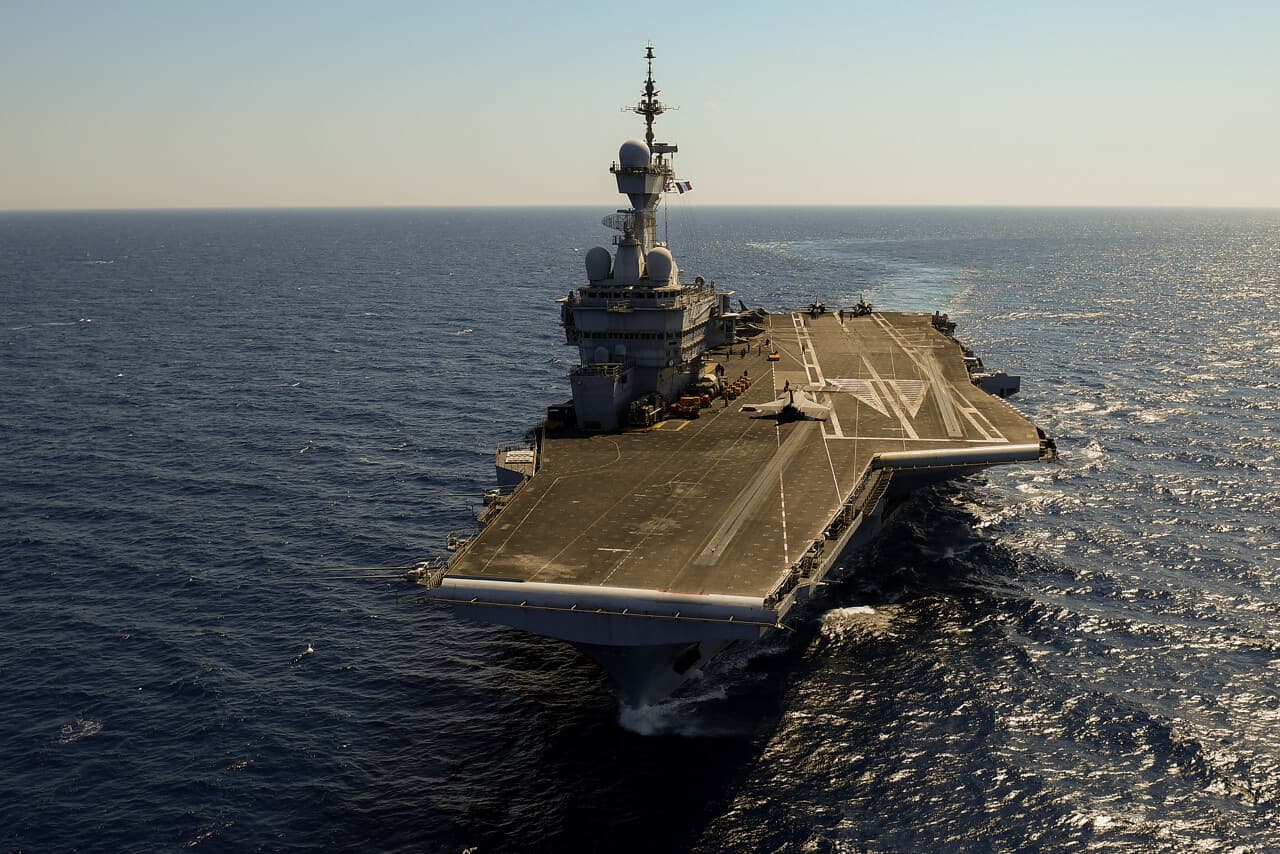
France announced it will send 10 additional warships — eight frigates and two amphibious assault ships — to the Eastern Mediterranean and Red Sea.
“Emmanuel Macron announced the preparation of a “purely defensive” mission organized by France and its partners”
It will offer escorts for traffic in the Strait of Hormuz and said the ships will join the aircraft carrier Charles de Gaulle after an Iranian drone attack on a Cyprus-based joint operating installation.
French authorities framed the deployment as a response to disruptions to navigation and the security situation around Cyprus and the Eastern Mediterranean.
France's defensive operation stance
President Emmanuel Macron consistently described the operation as strictly defensive and not an intervention in ongoing fighting.
He said France is not taking part "in an ongoing conflict" and framed the move as protecting Cyprus, Europe and navigation after the drone strike.

Officials and media emphasized the mission would begin only after the "hottest phase" of the Middle East conflict has passed.
French naval deployment details
The deployment was described in detail.
“We protect your data Advertising allows you to receive high-quality information at any time and for free”
The French Carrier Strike Group includes the carrier Charles de Gaulle plus escorts and support vessels, for example the frigate FS Chevalier Paul (D621, FREMM), a fleet oiler, and a nuclear attack submarine.
Allied escorts included the Spanish frigate ESPS Cristóbal Colón and the Dutch frigate HNLMS Evertsen.
France also sent the frigate FS Languedoc and a ground-based air-defense unit to Cyprus.
Other NATO and regional partners (Britain, Greece, Italy, Pakistan) have signalled or sent forces in support of Cyprus and regional escorts.
Mission, partners, and energy measures
Macron and French officials presented the mission as a cooperative, multinational effort to safeguard navigation and the flow of energy supplies.
They said it would be organized with European and non-European partners.
They said discussions were underway with countries such as India and other Asian states affected by the disruption.
They said France (as G7 chair) is preparing an energy ministers' meeting while G7 members consider options including tapping strategic oil reserves.
Eastern Mediterranean military tensions
The announcement came amid heightened regional tensions.
“Emmanuel Macron traveled on Monday, March 9, to the military airport in Paphos in southwestern Cyprus, which was hit by a drone shortly after the start of the Israeli-American offensive against Iran on February 28”
Outlets reported the deployment followed a March 1 drone strike on RAF Akrotiri and an Iranian drone attack on a Cyprus base.
They noted that NATO air defenses reportedly intercepted a ballistic missile in the Eastern Mediterranean while U.S. ships have used SM-3 interceptors against Iranian missiles.
France underlined recent interceptions to protect partners and cautioned that bombing alone is unlikely to effect regime change.
France said the intense phase of fighting could last days or weeks.
More on Iran-Israel

Escalation in Iran Pushes Oil Near $120, Sparks Gas Price Surge in Los Angeles
10 sources compared
U.S. Intercepts Iran Message Activating Sleeper Cells After U.S.-Israel Strike Kills Khamenei
14 sources compared

Iran Threatens To Confiscate Property Of Iranians Abroad Who Support US And Israel
14 sources compared
Ukraine Sends Drones, Experts to Shield U.S. Bases in Jordan From Iran
16 sources compared