
Gerard Piqué and Isco Rescue A Stray Bird During Iran–Spain World Cup Match In Kazan
Key Takeaways
- Piqué and Isco rescued a stray bird on the Kazan pitch.
- Piqué first picked up the bird; Isco gently deposited it off-field.
- Footage shows the moment during the Iran–Spain World Cup match.
Bird rescue at Kazan
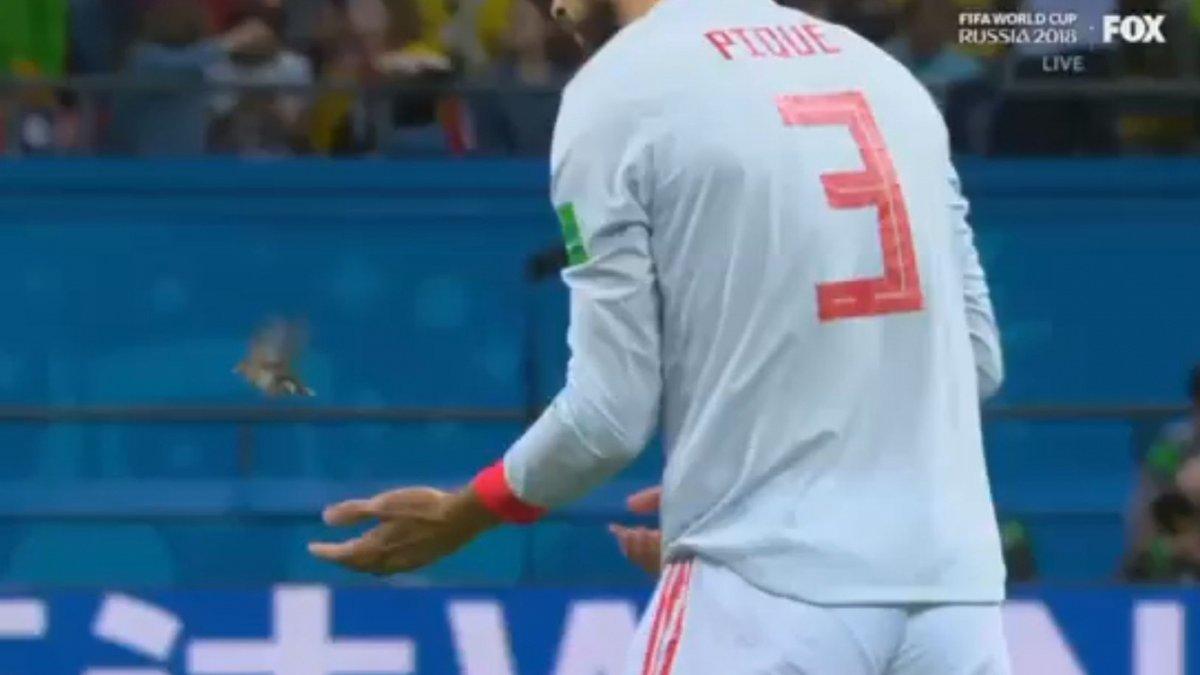
In KAZAN (Russia) at the 2018 World Cup, a stray bird was threatened with being struck by a ball on the Kazan turf and was rescued by Gerard Piqué and then Isco during Iran–Spain (0-1) on Wednesday.
“'Hug your friend with both hands' is a beautiful Peruvian proverb that explains the importance of valuing friends”
The televised footage showed the Spanish defender Piqué picking up the bird perched on the grass and making it fly away, while midfielder Isco had to pick it up in turn and run to drop it on the edge of the pitch.
The match was described as a hard-fought contest where the Spaniards, struggling against the Iranian defense, came close to shedding a few feathers before securing a victory on a lucky Diego Costa goal (54th minute).
One local account framed the moment as a “bucolic interlude” and tied it to a Spanish proverb about holding on to what you have, quoting the Castilian equivalent: 'A bird in the hand is worth two in the bush'.
Proverbs and certainty
A separate Spanish-language framing of the same proverb emphasized certainty over risk, presenting the idea behind “Más vale pájaro en mano, que cien volando.”
The Times of India wrote that the proverb means, “A bird in the hand is worth more than a hundred flying around,” and added that English speakers know it as “A bird in the hand is worth two in the bush.”

The article used a $1,000 versus $10,000 example to illustrate why “certainty often beats risky rewards,” linking the proverb to choosing what you already have over a larger but uncertain payoff.
It also stated that the English version appears in written records as early as the 15th century, while describing the Spanish form as centuries old and rooted in medieval Europe.
Culture, AI, and networks
In Spain, Mundo Deportivo said ChatGPT revealed which proverbs are most used in each autonomous community, naming Extremadura for “Más vale pájaro en mano que ciento volando.”
“These are the proverbs most commonly used in each autonomous community, according to AI”
The same list credited Andalusia with “A quien madruga, Dios le ayuda,” Catalonia with “Qui no vol pols, no va a l’era,” and the Basque Country with “A caballo regalado no le mires el diente,” while noting “no data for Ceuta and Melilla.”
Retina connected the proverb to social media strategy, arguing that “the coolest and most effective way to triumph on social networks is to materialize that stock of proverbs.”
Retina then returned to the specific line “más vale pájaro en mano que ciento volando,” presenting it as a classic that, in its view, can be “among the most effective” tools for staying with what is already in hand.
More on Finance

Charles Schwab Partners With Cboe Global Markets to Launch S&P 500 Prediction Markets
16 sources compared

Wealthsimple Launches Kalshi-Powered Wealthsimple Predict App for Canadian Event Contracts
16 sources compared

U.S. And Israel Strikes on Iran Close Strait of Hormuz, Driving Shipping Costs Higher
10 sources compared

Nvidia Plans $25 Billion U.S. Bond Sale After $85 Billion Investor Demand
11 sources compared