
Gulf States Reject Trump’s Pressure To Join Iran War
Key Takeaways
- Gulf states have been hit by Iranian missiles and drones since the Iran war began
- Gulf leaders confront choosing between angering their security guarantor or risking a powerful neighbor’s wrath
- Iran’s Revolutionary Guards said about 40% of its firepower targeted Israel
Gulf reluctance to join
Gulf states have largely rebuffed pressure from the United States and from President Trump to join a broader war with Iran, with regional governments wary of being drawn into a conflict they do not control and keen to avoid escalations they cannot manage.
“Since the Iran war began, Gulf states have faced a barrage of Iranian missiles and drones, leaving their leaders with an unenviable choice: anger their closest ally and security guarantor, or risk the wrath of a powerful neighbor they must live beside long after the war ends”
CNN reports that smaller Gulf states are waiting to see how Saudi Arabia responds because “the kingdom is the region’s heavyweight, and its decisions could shape whether others follow.”
The network adds that Gulf governments “remain reluctant to enter a war they do not control,” and voices in the region warn that “inaction is not risk-free,” underscoring a calculation driven by risk aversion rather than eagerness to join the fighting.
Note: this summary is based solely on the CNN article provided; no additional source texts were supplied for cross‑verification.
Saudi strategic risks
Saudi Arabia’s strategic weight and the risk of a multi‑front war are central to Gulf calculations: entering would likely force Riyadh to face threats on several borders and complicate existing security challenges.
CNN notes that intervening could “force Riyadh to fight on multiple fronts, including along its southern border with Yemen, where Iran‑backed Houthi rebels have only recently scaled back years of attacks on Saudi territory.”
The report highlights the Houthis’ prior disruption of shipping through Bab al‑Mandab and warns that the Red Sea route — vital for Gulf exports — is vulnerable to proxy threats, making direct military involvement more costly for Riyadh and its neighbours.
Infrastructure vulnerability
A major worry for Gulf governments is tit‑for‑tat attacks on civilian infrastructure, especially desalination plants and other water assets on which the region heavily depends.
“Since the Iran war began, Gulf states have faced a barrage of Iranian missiles and drones, leaving their leaders with an unenviable choice: anger their closest ally and security guarantor, or risk the wrath of a powerful neighbor they must live beside long after the war ends”
CNN details that “a desalination plant on Iran’s Qeshm Island was hit, prompting Iran to retaliate by damaging a desalination facility in Bahrain with a drone.”
The piece stresses that “the desert Gulf states have less than 1% of the world’s population but account for roughly half its desalination capacity.”
Officials warn an Iranian counterattack on water infrastructure “could severely disrupt supplies in a region almost entirely dependent on desalinated water,” making infrastructure protection a strategic imperative that discourages rash military entanglement.
Economic consequences
Economic fallout from the clashes is another deterrent: disruptions to shipping and energy production are already creating a regional and global shock that Gulf governments must factor into any decision to join hostilities.
CNN reports that energy shipments through the Strait of Hormuz “have nearly ground to a halt, effectively keeping about a fifth of the world’s oil supply under threat,” a squeeze that analysts call “the biggest oil shock in history” and that has pushed US fuel prices higher.
The network also notes that QatarEnergy halted LNG production after attacks, sending European gas prices “soaring nearly 50%,” and that Qatar’s energy minister warned oil could reach about $150 per barrel if disruptions continue — all pressures that make Gulf rulers cautious about widening the war.
Measured Gulf responses
Faced with these risks, Gulf options range from limited support to direct strikes, but governments prefer calibrated steps that restore deterrence without broadening the war.
“Since the Iran war began, Gulf states have faced a barrage of Iranian missiles and drones, leaving their leaders with an unenviable choice: anger their closest ally and security guarantor, or risk the wrath of a powerful neighbor they must live beside long after the war ends”
CNN records experts saying Gulf partners could “support US operations by opening their airspace and bases, the ‘least escalatory option,’” or they could “target Iranian missile and drone launch sites or escalate further by striking infrastructure directly – ‘a refinery for a refinery.’”
The article contrasts Gulf goals — “to restore deterrence and ending the conflict quickly” — with what it describes as US and Israeli priorities “focused on destroying Iran’s military capabilities,” underscoring why Gulf leaders are cautious about being pulled into a conflict with no clear endgame.
More on Iran
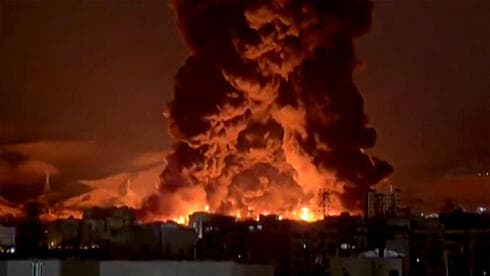
Trump Says U.S. Bombed Military Sites on Kharg Island, Iran's Oil Hub
14 sources compared
FBI Warns of Iranian Drone Plot Based on Unverified Tip; California Says No Credible Threat
10 sources compared

White House Demands ABC Retract Report Claiming Iran Sought To Launch Drone Attacks On California
11 sources compared

Iranian Proxy Claims It Shot Down US Refueling Plane in Iraq; US Military Says Otherwise
17 sources compared