Hawaii Suffers Its Worst Floods in Over 20 Years, Prompting Thousands to Evacuate
Key Takeaways
- Wahiawa dam at risk of failure prompts evacuations on Oahu.
- Hawaii endures its worst flooding in over 20 years, triggering mass evacuations.
- Kona Low storms bring heavy rain, triggering evacuations and shelter openings across islands.
Historic Flooding Event
Hawaii is experiencing its most severe flooding in over two decades, triggered by a powerful Kona Low storm system that has delivered record-breaking rainfall across the islands.
“"Right now it's a community in isolation, they're cut off," he said”
The disaster represents the state's worst weather event since 2004, with officials describing conditions as catastrophic and life-threatening.

Parts of Oahu received up to 16 inches of rain overnight, while Maui recorded nearly 46 inches over a 10-day period, breaking multiple weather records.
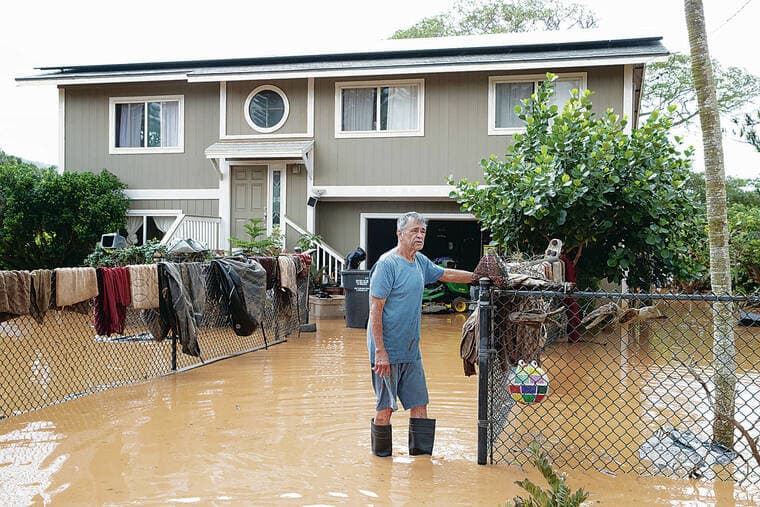
The National Weather Service issued urgent warnings of "widespread life-threatening flash flooding" that was "extremely dangerous" particularly in Haleiwa and Waialua areas where floodwaters reached chest-high levels, sweeping away homes and vehicles.
Dam Crisis and Evacuations
The most critical threat emerged from the 120-year-old Wahiawa Dam, which rose to within six feet of its maximum capacity and was declared at "imminent risk of failure" by emergency officials.
This triggered mandatory evacuation orders for approximately 5,500 residents in Haleiwa and Waialua communities downstream from the aging structure.

Honolulu officials issued urgent warnings telling residents to "LEAVE NOW or go to high ground or the highest floor of your home if you are in the evacuation area" and emphasized that "DO NOT walk or drive through moving water or on flooded roadways."
Hawaii Governor Josh Green activated the Hawaii National Guard to respond, describing the situation as "very touch-and-go" with chest-high floodwaters threatening lives and property across the North Shore region.
Widespread Damage and Impact
The unprecedented rainfall has caused catastrophic damage across multiple islands, with dozens, if not hundreds, of homes destroyed or severely damaged and extensive infrastructure losses.
Muddy floodwaters have inundated streets, pushed homes off their foundations, and swept vehicles away in affected communities.
Hawaii Electric reported that over 121,000 customers lost power at the peak of the storm, with many still without electricity as crews work to repair damaged infrastructure.
The travel industry has been severely impacted, with hundreds of flights cancelled and Honolulu's Daniel K. Inouye International Airport implementing an unprecedented 8-hour ground stop affecting approximately 400 daily passenger flights during peak spring break travel.
Hotel occupancy in affected regions has dropped by 40% as tourists and residents alike are displaced by the flooding.
Emergency Response and Recovery
Emergency response efforts have been extensive, with Hawaii National Guard helicopters conducting multiple rescue operations including airlifting 72 children and adults from a spring break youth camp that was cut off by floodwaters.
Rescuers have performed over 230 life-saving operations since the storm's onset, using Jet Skis, high-water vehicles, and helicopters to reach stranded residents.

Despite the severity of the disaster, officials report no deaths, though approximately 10 people were hospitalized for hypothermia and other weather-related conditions.
Federal assistance has been secured as Governor Green's chief of staff spoke with the White House and received assurances of federal support for the recovery effort.
Emergency shelters have been established across affected islands, and officials continue to warn that additional rainfall expected through the weekend could exacerbate ongoing flooding risks as the ground remains saturated.
Climate Context and Infrastructure
Climate experts have identified the Kona Low storm systems as a weather pattern increasingly intensified by human-caused global warming, with the frequency and intensity of heavy rains in Hawaii showing a clear upward trend.
“"If you are trapped, go to the highest level”
These winter storm systems feature southerly or southwesterly winds that bring in moisture-laden air, creating the perfect conditions for extreme rainfall events.

The aging infrastructure, particularly the 120-year-old Wahiawa Dam built for agricultural purposes in 1906, has become increasingly vulnerable to these intensified weather patterns.
The dam has received multiple deficiency notices since 2009 and was fined $20,000 in 2021 for failing to address safety deficiencies on time, despite ongoing efforts by the state to acquire and repair the structure.
As Hawaii faces recovery and rebuilding challenges, officials emphasize the need to better prepare for the growing threat of climate-driven extreme weather events that are becoming more frequent and severe in the Pacific region.
More on Technology and Science
UN Says 2025 Heat Will Last Thousands of Years
11 sources compared

UN Warns 2025 Heat Record Will Endure for Thousands of Years
14 sources compared

Kona Low Storms Strike Oʻahu and Maui, Hawaii Faces Worst Flooding in 20 Years
24 sources compared
Hawaii's Worst Flooding in 20 Years Threatens Dam, Prompts Evacuations as More Rain Looms
11 sources compared