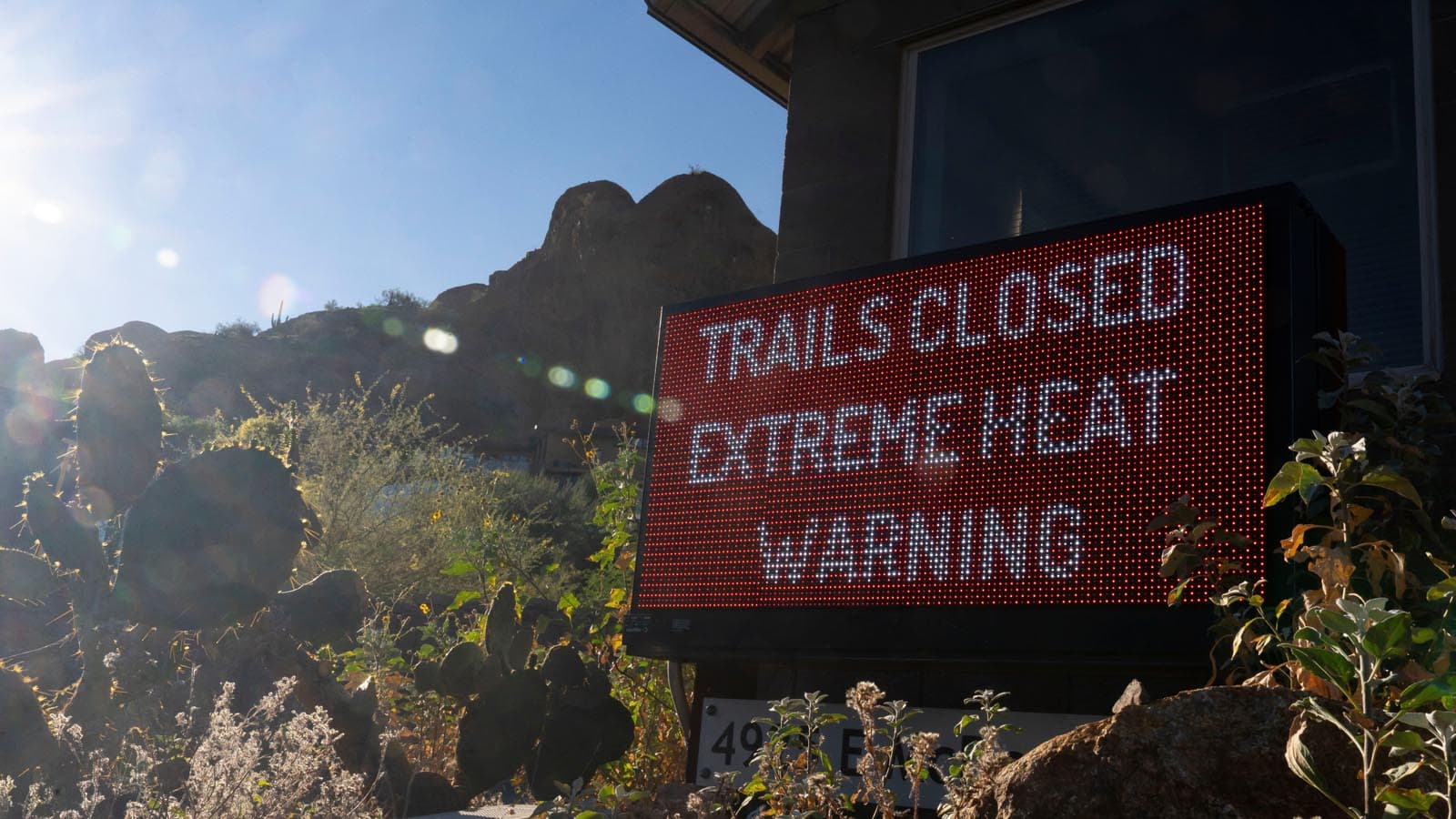
Heat waves shatter March records across the U.S. Southwest, signaling climate-driven extremes.
Key Takeaways
- Southwest experiences unprecedented March heat, with multiple locations hitting or topping all-time March highs.
- Climate attribution groups say the heat wave would be virtually impossible without human-caused climate change.
- Arizona's Martinez Lake and Yuma Desert recorded the hottest March temperatures in U.S. history.
Record-Breaking Heat
A dangerous heat wave is shattering March records across the U.S. Southwest with unprecedented temperatures that are months ahead of schedule.
“The burning of fuels like oil, gas and coal, release greenhouse gases like carbon dioxide, which go into the atmosphere and heat the planet”
The Southwest, typically accustomed to deadly heat but usually during summer months, has seen temperatures soar to historic levels, including a 110-degree Fahrenheit (43.3 Celsius) reading in Arizona that smashed the highest March temperature ever recorded in the United States.

This record-breaking heat has spread across multiple states, with cities like Phoenix experiencing their earliest triple-digit days on record since 1888, and Palm Springs reaching 107 degrees Fahrenheit, tying its March record from 1966.
The heat wave has forced early cancellations of outdoor activities and events, with baseball games in Phoenix ending early due to dangerous conditions, and temperatures being compared to what's typically seen in late May or early June rather than mid-March.
Climate Attribution
Climate scientists have definitively linked this unprecedented March heat wave to human-caused climate change, calling it virtually impossible without anthropogenic greenhouse gas emissions.
World Weather Attribution, an international group of scientists who study the causes of extreme weather events, found that "events as warm as in March 2026 would have been virtually impossible without human-induced climate change."

Their analysis shows that burning of fossil fuels has added between 4.7 to 7.2 degrees Fahrenheit to the temperatures being felt, pushing them from "very uncomfortable into potentially dangerous."
The heat wave has been classified as "ultra-extreme" by more than a dozen scientists, meteorologists and disaster experts who put it in the same category as such catastrophic events as the 2021 Pacific Northwest heat wave, the 2022 Pakistan floods, and killer hurricanes Helene, Harvey and Sandy.
Extreme Weather Pattern
The Southwest heat wave is part of a broader pattern of intensifying extreme weather events across the United States that climate scientists say is directly linked to global warming.
“Graphics show the scale of extreme heat hitting the US A burst of unusual March heat is hitting the United States this week and into next, busting previous monthly heat records by wide margins”
The area of the U.S. being hit by extreme weather in the past five years has doubled from 20 years ago, according to the National Oceanic and Atmospheric Administration's Climate Extremes Index.
The United States is breaking 77% more hot weather records now than in the 1970s and 19% more than the 2010s, while the number and average cost of inflation-adjusted billion-dollar weather disasters in the last couple years is twice as high as just 10 years ago and nearly four times higher than 30 years ago.
Stanford University climate scientist Chris Field categorized this heat wave as a "giant event," with temperatures up to 30 degrees Fahrenheit above normal, and noted that it joins a growing list of recent extreme weather events including the 2020 Siberia heat wave, the 2021 Pacific Northwest heat wave, and the 2023 western Mediterranean heat wave.
Impacts and Adaptation
The unprecedented early-season heat is creating significant impacts on human health, ecosystems, and infrastructure as communities struggle to adapt to this new climate reality.
The National Weather Service has warned that "extreme early-season heat coupled with high tourism rates will make this heat very dangerous," noting that the average first 105-degree day of the year typically doesn't occur until the end of May.

This March heat wave is already affecting wildlife in the West, with many plants and trees blooming early and vegetation growing at an accelerated rate due to heavy rains in December and January.
Experts warn of secondary effects including accelerated snowmelt in the mountains, increased drought in already dry regions, and heightened wildfire risk.
Climate scientists emphasize that such events are no longer rare but are becoming "recurring features of a warming world," with University of Victoria climate scientist Andrew Weaver stating, "What used to be unprecedented events are now recurring features of a warming world."
More on Technology and Science
Record heat blankets the US Southwest as March logs hottest temperature in Arizona
10 sources compared

Trump administration unveils national AI framework to preempt state AI laws
31 sources compared

Social media damages youth well-being, World Happiness Report 2026 finds
34 sources compared

Meta Pays Creators Up to $3,000 to Post on Facebook, Launching Creator Fast Track.
25 sources compared