Lebanon03 May, 20267 min read
Hezbollah’s “Resistance” Agenda Leaves Lebanon’s Sovereignty Hostage to Permanent Conflict With Israel
This article is an automated aggregation of coverage from news outlets. Our editorials offer in-depth analysis curated by the NewsCord team.
Lebanon's sovereignty is constrained by Hezbollah's agenda amid a perpetual regional conflict. Israeli strikes continue in Lebanon, while authorities struggle to halt attacks.

Sovereignty vs “Resistance”
Lebanon’s political and media discourse, as described by Nowlebanon, is dominated by “carefully constructed narratives sustained by distortion” that obscure “the systematic hollowing out of the Lebanese state.” The outlet argues that one central slogan, “10,452 square kilometers,” is invoked as proof of Hezbollah’s supposed patriotism and “commitment to Lebanon’s territorial integrity,” but it says the claim “borders on the surreal.” Nowlebanon frames the slogan as a repurposed symbol that contradicts the idea of sovereignty, writing that “One cannot speak of territorial unity while sovereignty itself is fragmented.”
It also insists that “A nation is not a map circulated on social media,” and defines the state as “the sole authority over arms and decisions of war and peace.” In Ici Beyrouth’s account, Lebanon is described as “a nation prisoner to a state of permanent conflict,” with “sovereignty and future” portrayed as “hostage to Hezbollah's agenda.”
Ici Beyrouth adds that the “so-called 'resistance' against Israel, led by Hezbollah” is no longer framed as liberation or defense, but as “a strategic posture serving the political survival of a single party.” Across the same debate, Ici Beyrouth ties the cost of this posture to Lebanon’s inability to move toward peace with Israel, while Nowlebanon argues that the state’s authority is being replaced by a “military–ideological structure tied to Iran’s Revolutionary Guard.”
Economic collapse and stalled peace
Ici Beyrouth links the political posture of “resistance” to Lebanon’s economic collapse, stating that “Since 2019, the Lebanese currency has lost more than 95% of its value.” The outlet says “Poverty now affects more than 80% of the population,” and describes “Entire sectors — banking, education, health — have collapsed.” It argues that Hezbollah continues to devote resources to “military arsenals, stockpiles of rockets, and parallel state structures,” framing this as “a national priority that places the 'resistance' above reconstruction.”
Ici Beyrouth then contrasts Lebanon with regional states that it lists as taking steps toward normalization with Israel, naming “the United Arab Emirates, Bahrain, Morocco, and even Saudi Arabia.” It claims that “A peace agreement with Israel would not only end the threat of a total war, but unlock immense economic potential,” and it lists potential benefits including “joint energy exploration, tourism, trade, and regional infrastructure projects.” In the same account, Ici Beyrouth asserts that Israel is “no longer just an old foe — it is an economic opportunity,” citing “its thriving tech sector and its new natural gas reserves.”
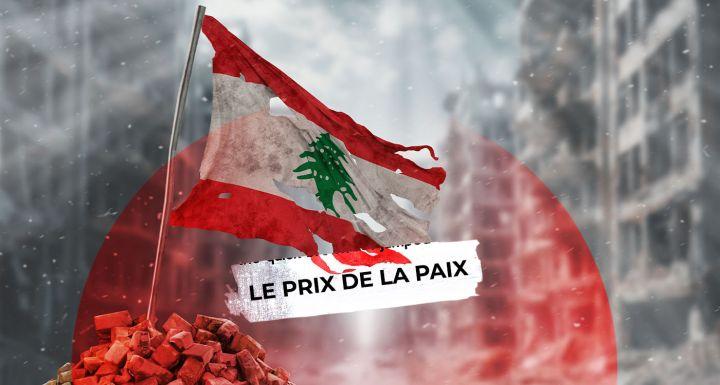
The outlet also argues that Hezbollah’s presence makes peace “politically radioactive,” because “peace would undermine its raison d’être.” Nowlebanon, meanwhile, frames the same dynamic as a distortion of civic responsibility, writing that “To oppose the killing of Lebanese citizens, to reject the dragging of the country into external wars, or to demand accountability” is “the bare minimum of civic responsibility,” rather than incitement.
Voices, accusations, and calls
The sources also stage direct voices around the meaning of “resistance” and the legitimacy of state authority.
Nowlebanon describes “weaponization of the accusation of 'incitement,'” saying it is “a charge routinely deployed to silence any voice that challenges Hezbollah’s dominance or questions its arsenal,” and it argues that this reverses roles of “victim and perpetrator.”
It also links political violence to a history of targeted killings, writing that “From the assassination of former Prime Minister Rafik Hariri to Lokman Slim and to the countless victims of turning Lebanon into an open arena for the conflicts of the Revolutionary Guard,” the issue cannot be dismissed as avoiding “provocation.”
In Le Figaro’s reporting, Hezbollah’s calls for “resistance” appear in the words of Mahmoud Qamati, who is described as “vice-president of the movement's political bureau,” saying, “What other option do we have to defend ourselves (...) to defend our land, to defend our homeland? What other option do we have besides the resistance? We have no other.”
Le Figaro also quotes Hezbollah deputy Rami Abou Hamdane urging the government to suspend meetings of the Ceasefire Monitoring Committee, saying the movement “will not accept authorities behaving as mere political analysts, paying little heed to Israeli strikes to which we are not accustomed.”
Le Figaro further reports that President Joseph Aoun condemned Israeli attacks and described them as “a 'flagrant aggression aimed at undermining the diplomatic efforts' of Lebanon and of 'friendly countries' for 'stability and the end of Israeli hostilities against Lebanon'.”
In the same Le Figaro account, the Israeli strikes are described as having killed “eight Hezbollah members,” and the Lebanese Health Ministry is said to have announced “ten people had been killed” in the Beqaa Valley and “two others” in the Ain al-Hilweh Palestinian camp.
Different frames of the same conflict
While the debate over “resistance” is consistent across the opinion pieces, the accounts diverge in how they frame Lebanon’s immediate predicament and the mechanisms of decision-making. Ici Beyrouth argues that Hezbollah’s armed status “paralyze[s] the Lebanese political system,” asserting that “No president can be elected, no government can govern, no reform can pass without its approval,” and it describes a “de facto veto right” over national decision-making. It also claims that this became evident during “the prolonged presidential vacuum after Michel Aoun's departure,” when Hezbollah “insisted on backing a candidate loyal to its axis, blocking any consensus.”
Annahar, by contrast, describes a different operational picture, saying “The exchange of messages between Israel and Iran is wearing Lebanon down in its new state,” and that authorities are “unable to marshal diplomatic efforts to stop Israeli attacks on sites or regions in Lebanon.” Annahar adds that Lebanese officials “continue to urge the international community to pressure Israel to halt its operations in Lebanon,” while it says the Lebanese state cannot convince domestic and international audiences that it “have regained control of Lebanon's decisions of war and peace.” Annahar also reports Hezbollah’s internal posture through the party’s Secretary-General, Naim Qassem, stating that he announced Hezbollah’s determination “to participate in a future conflict between Iran and the United States or Israel” if the aim is “to topple the Iranian regime.”
It further says this gives Israel “the pretext to carry out 'preventive' strikes,” and it notes that these strikes “meet with no opposition or restriction from abroad.” Le Figaro’s framing is closer to the immediate trigger of violence, describing “deadly Israeli strikes” and reporting that “The Lebanese president condemned these deadly Israeli attacks,” while Hezbollah called to suspend Ceasefire Monitoring Committee meetings.
What comes next and what’s at risk
The sources portray the stakes as both immediate and structural, with consequences ranging from further violence to long-term political and economic damage.
Ici Beyrouth says Hezbollah’s posture keeps Lebanon “stuck in time, chained to a narrative of conflict,” and it argues that “A peace agreement with Israel would not only end the threat of a total war, but unlock immense economic potential,” while warning that Hezbollah’s hostility makes peace “politically radioactive.”
It also describes “Regional isolation,” claiming “Gulf states have recalled their ambassadors, reduced their aid, and expelled Lebanese workers,” and it adds that “Saudi Arabia, once a great benefactor, has publicly condemned Hezbollah's dominance and cut its finances.”
In Annahar, the immediate risk is tied to the operational cycle between Israel and Hezbollah, with the outlet saying “Many fear that this exchange of messages above Lebanon's head will delay the country by several months.”
Annahar also reports that Israel’s “operational 'warnings'” could trigger “a violent response to any movement by the local parties,” producing “major disruptions—as Lebanon tries to demonstrate its ability to fully reassert authority over all its territories.”
Le Figaro provides a quantified toll for the current phase, stating that “More than 370 people have been killed in Israeli raids in Lebanon since the ceasefire took effect, according to an AFP tally based on data from Lebanese authorities.”
It also reports that the Lebanese government announced “a four-month renewable period to implement the second phase of its plan to disarm Hezbollah,” while Israeli authorities deem progress “insufficient.”
Nowlebanon, meanwhile, argues that the discourse itself is moving toward a “fabrication of an internal enemy,” describing how Hezbollah’s discourse “increasingly pivots toward identifying internal opponents” who “advocate for state sovereignty and institutional authority.”
It warns that “Instead of confronting the external adversary that ostensibly legitimizes its arsenal,” Hezbollah’s internal narrative recasts “the Lebanese citizen who seeks to rescue the state” as an adversary.
Finally, yalibnan’s editorial board frames the endgame as a choice between narratives and state-building, writing that “Lebanon now faces a defining choice: Continue to operate under narratives that justify endless war, or Reassert the principle that every sovereign nation requires: One army. One authority. One decision on war and peace.”