
House Speaker Mike Johnson Rejects Senate DHS Bill, Pushes 60-Day Full DHS Funding Including ICE/CBP
Key Takeaways
- Senate-passed DHS funding would fund TSA and most DHS agencies but exclude ICE.
- House Republicans reject Senate DHS deal and push a short-term funding plan.
- Trump signs executive order to pay TSA workers amid the funding impasse.
House rejects Senate DHS deal; 60-day plan
In a dramatic shift, the Senate’s late-night DHS funding package—which would fund TSA, the Coast Guard, FEMA, and CISA while leaving ICE and CBP unfunded—was immediately rejected by House Speaker Mike Johnson, who signaled that the GOP would push a separate plan to fund the agency in full.
“Trump signs executive order to pay TSA workers after House rejects funding bill The Senate early Friday approved Homeland Security funds for Transportation Security Administration and most other agencies, but not the immigration operations at the heart of the budget impasse”
The Senate bill was approved by unanimous consent, but Johnson’s team pivoted to a 60-day stopgap that would fund the entire department, including ICE, while immigration reforms are negotiated separately.

This pivot reframes the clash as a contest over immigration enforcement policy rather than airport security alone.
Analysts describe the move as a tactical reordering of leverage: maintain DHS operations while pressing for policy guardrails on ICE and CBP in a subsequent package.
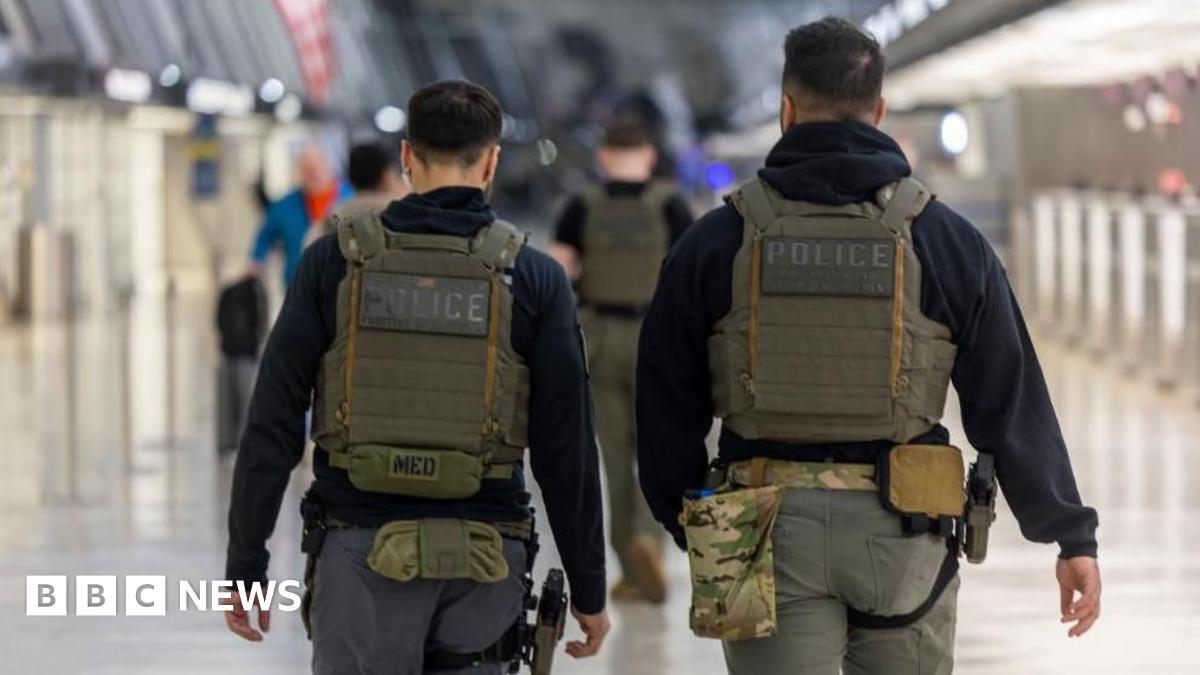
The immediate backdrop remains chaos at airports as TSA staffing shortages persist and travelers contend with long lines, underscoring why the timing of any deal matters.
DHS funding split: ICE/CBP vs. full DHS
The Senate package would fund all of DHS except ICE and CBP.
The eight-week plan would fund all of DHS except ICE and CBP, leaving ICE and CBP unfunded in this package.
Johnson’s forthcoming plan would offer a short-term patch that funds ICE and CBP while immigration changes are negotiated separately.
Democrats argue that immigration enforcement reforms should accompany DHS funding, complicating any purely fiscal workaround.
The political calculus is thus: can funding for security operations be decoupled from immigration policy, or will ICE/CBP reforms be required to unlock any DHS funding?
Executive action vs. congressional funding fight
Beyond the procedural skirmish, the political dynamics are intensifying: Trump signaled a unilateral route to mitigate airport disruption by directing DHS to pay TSA workers immediately, a move that tempers the leverage of Congress but risks signaling executive overreach.
“- Published The US Senate has voted to end a partial 40-day government shutdown, approving funding for the Department of Homeland Security (DHS) - with the exception of immigration enforcement”
Trump signed or announced an order directing DHS to pay TSA employees, with reports indicating payments would be drawn from funds tied to the president’s policy packages.
The public impact hinges on more than back pay: even with pay restored, aviation delays could persist until staffing normalizes and a longer-term funding plan is enacted.
Democrats maintain that immigration reforms must accompany DHS funding, recasting the fight as policy leverage rather than a pure budget dispute.
Global perspectives on the DHS standoff
Clarín notes that the US Senate approved a DHS funding package excluding ICE and part of CBP after a prolonged shutdown.
El Tiempo Latino emphasizes that ICE was left out despite funding for TSA, the Coast Guard, FEMA, and CISA.

EcoPortal.net adds a global-angled take, describing the emergency package as an outcome of a prolonged stalemate reached by unanimous consent.
The Virgin Islands Consortium underscores that Border Protection funding was also left out, showing broader regional impact.
More on USA
Three-Vehicle Crash Triggers Nine Air-Ambulance Requests, Seven Air Transports To Nashville And Memphis Hospitals
15 sources compared

California Governor Gavin Newsom Bans Appointees, Associates From Betting On Prediction Markets Using Confidential Information
10 sources compared

House Republicans Reject Senate-Passed DHS Funding Bill, Offer Eight-Week Stopgap
26 sources compared

Alexander Heifler Planned Molotov Cocktail Attack On Nerdeen Kiswani, Intended To Flee To Israel; Arrested
33 sources compared