How Trump and His Advisers Miscalculated Iran’s Response to War
Key Takeaways
- President Trump downplayed energy-market risks, prioritizing a mission to decapitate Iran's regime.
- On Feb. 18, President Trump weighed launching military attacks on Iran.
- Trump and his advisers miscalculated Iran's response to the U.S.-Israeli attack.
Advisers downplayed risks
In the lead-up to the U.S.-Israeli attack, President Trump downplayed the risks to the energy markets as a short-term concern that should not overshadow the mission to decapitate the Iranian regime.
“War in theMiddle East Advertisement Supported by In the lead-up to the U”
On Feb. 18, as President Trump weighed whether to launch military attacks on Iran, Chris Wright, the energy secretary, told an interviewer he was not concerned that the looming war might disrupt oil supplies in the Middle East and wreak havoc in energy markets.
Some of Mr. Trump’s other advisers shared similar views in private, dismissing warnings that — the second time around — Iran might wage economic warfare by closing shipping lanes carrying roughly 20 percent of the world’s oil supply.
Energy and shipping impact
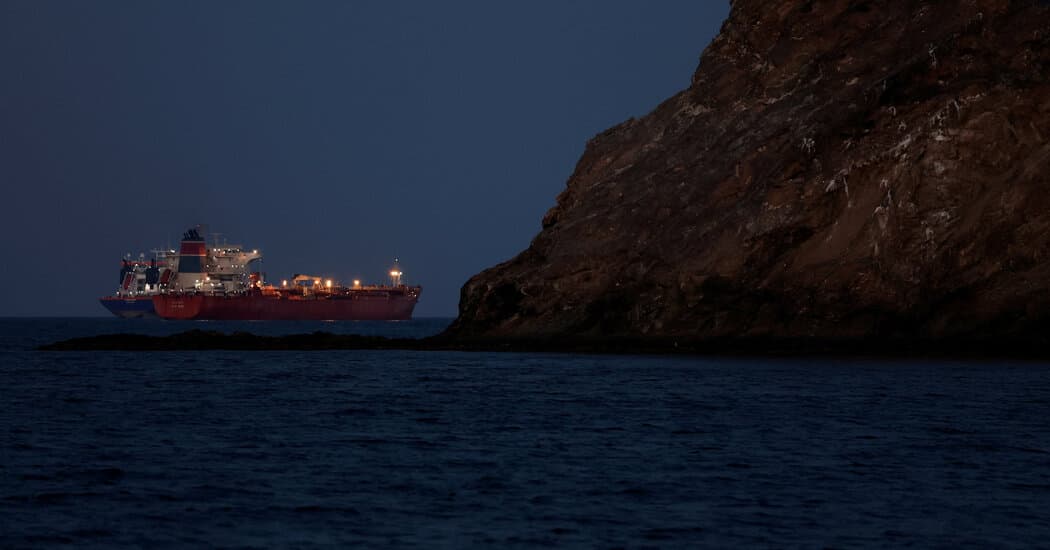
The extent of that miscalculation was laid bare in recent days, as Iran threatened to fire at commercial oil tankers transiting the Strait of Hormuz, the strategic choke point through which all ships must pass on their way out of the Persian Gulf.
In response to the Iranian threats, commercial shipping has come to a standstill in the Gulf, oil prices have spiked, and the Trump administration has scrambled to find ways to tamp down an economic crisis that has triggered higher gasoline prices for Americans.
Iran's military escalation
The episode is emblematic of how much Mr. Trump and his advisers misjudged how Iran would respond to a conflict that the government in Tehran sees as an existential threat.
“War in theMiddle East Advertisement Supported by In the lead-up to the U”
Iran has responded far more aggressively than it did during last June’s 12-day war, firing barrages of missiles and drones at U.S. military bases, cities in Arab nations across the Middle East, and on Israeli population centers.
U.S. response and uncertainty
U.S. officials have had to adjust plans on the fly, from hastily ordering the evacuation of embassies to developing policy proposals to reduce gas prices.
After Trump administration officials gave a closed-door briefing to lawmakers on Tuesday, Senator Christopher S. Murphy, Democrat of Connecticut, said on social media that the administration had no plan for the Strait of Hormuz and did "not know how to get it safely back open."
More on Iran
Trump Says U.S. Bombed Military Sites on Kharg Island, Iran's Oil Hub
14 sources compared
FBI Warns of Iranian Drone Plot Based on Unverified Tip; California Says No Credible Threat
10 sources compared

White House Demands ABC Retract Report Claiming Iran Sought To Launch Drone Attacks On California
11 sources compared

Iranian Proxy Claims It Shot Down US Refueling Plane in Iraq; US Military Says Otherwise
17 sources compared