
IDF threatens ‘elimination’ for Russian leaders who ‘wish Israel ill’
Key Takeaways
- Israeli military spokeswoman threatened elimination of Russian leaders who wish Israel ill.
- Threat followed Moscow warnings that traffic cameras could be exploited to monitor Khamenei before assassination.
- Anna Ukolova drew Moscow outrage with the threat.
Threats to Russia
Israel’s veiled threat to Moscow came just after Russian media warned traffic cameras in Moscow were vulnerable to the same exploits that Israel reportedly used to monitor Ayatollah Khamenei’s residence before assassinating him.
“Israel’s veiled threat to Moscow came just after Russian media warned traffic cameras in Moscow were vulnerable to the same exploits that Israel reportedly used to monitor Ayatollah Khamenei’s residence before assassinating him”
Israeli military spokeswoman Anna Ukolova has drawn outrage in Moscow after threatening that Russian authorities who 'wish Israel ill' could be subject to 'elimination,' while suggesting Israel could hack into Russian closed-circuit television cameras to identify and track targets.
Asked by a journalist with Russian radio broadcaster RBC whether Israel had access to Russian traffic cameras, Ukolova declined to answer directly but warned that 'Khamenei’s elimination shows our capabilities are serious' and that 'no one who wishes us harm will be left aside.'
She added, ominously, 'I hope Moscow does not wish Israel ill right now – I’d like to believe that.'
In response to a post by Russian philosopher Alexander Dugin, who wrote that the IDF spokeswoman threatened that 'Russian authorities [will] be killed if they take [an] anti-Israel position,' Ukolova claimed Dugin was spreading 'fake news.'
But she declined to clarify how her remarks had been incorrectly interpreted.
'Dear Alaxender! I am Anna Ukolov. Never said those things. Fake news. Please check facts.'
BriefCam tech and scope
Ukolova’s statements came just days after it was revealed that a large number of Russian CCTVs were potentially using BriefCam – an Israeli video analysis software that closely matches the description of a program the Netanyahu regime reportedly deployed to track Iranian movements outside the home of Iran’s Supreme Leader before they assassinated him during their February 28 sneak attack.
On March 12, Russian outlet Mash revealed that the Israeli software BriefCam 'has been used in Russia by private providers since the 2010s.'
Founded at Israel’s Hebrew University in 2007, BriefCam uses AI to let users 'review hours of video in minutes' and 'make [their] video searchable, actionable and quantifiable.'
In 2024, BriefCam was absorbed by a Dutch subsidiary of the Canon Group named Milestone Systems, which publicly pledges to 'amplify what organizations of any size can see, do and achieve with video.'
'Our patented VIDEO SYNOPSIS® technology condenses hours of surveillance into a short summary by overlaying multiple events—each tagged with its original timestamp—onto a single frame, letting you filter them by object type and attributes,' the company’s BriefCam page crows.
Originally deployed by Israel’s Ministry of Housing and Construction to safeguard illegal settlements in occupied East Jerusalem, BriefCam has been used by governments all over the world, including those in the United Kingdom, New Zealand, Pakistan, Israel, Mexico, United Arab Emirates, Canada, Indonesia, Singapore, Thailand, Brazil, Germany, South Africa, Netherlands, Australia, Japan, India, Spain, Taiwan.
It’s also been deployed in the US, with police in Hartford, Connecticut adopting the software in 2022.
In 2025, a French court found the government’s use of BriefCam was illegal, citing multiple violations of French and European privacy laws.
As of publication, BriefCam appears to be incorporated into dozens of so-called 'video monitoring systems,' including Milestone’s own VMS XProtect surveillance system.
Russian deployment and responses
According to Mash, a number of prominent Moscow businesses, institutions, and buildings use VMS XProtect surveillance system, including the Institute of Theoretical and Experimental Biophysics of the Russian Academy of Sciences, a 72-story skyscraper named 'Eurasia,' and a huge exhibit space known as the Zotov Center.
“Israel’s veiled threat to Moscow came just after Russian media warned traffic cameras in Moscow were vulnerable to the same exploits that Israel reportedly used to monitor Ayatollah Khamenei’s residence before assassinating him”
Though Milestone officially ended operations in Russia in 2022 amid the war in Ukraine, Mash reports that some software distributors in Russia 'still offer to install the hacked software and hide this in the documents.'
Global footprint and legality
BriefCam originated at Israel’s Hebrew University in 2007, was absorbed in 2024 by a Dutch subsidiary of the Canon Group Milestone Systems, and has since been deployed globally in governments and police forces—including in the United Kingdom, New Zealand, Pakistan, Israel, Mexico, United Arab Emirates, Canada, Indonesia, Singapore, Thailand, Brazil, Germany, South Africa, Netherlands, Australia, Japan, India, Spain, Taiwan.
A 2025 French court ruling found the government’s use of BriefCam illegal, citing violations of French and European privacy laws.
Mash reported that Moscow-based distributors continue to offer installation of the software despite Milestone's 2022 withdrawal from Russia.
As of publication, BriefCam appears to be incorporated into dozens of so-called 'video monitoring systems,' including Milestone’s own VMS XProtect surveillance system.
More on Russia

Muslim group claims responsibility for Amsterdam Jewish school explosion, mayor calls it attack on Jews
23 sources compared

Trump lifts sanctions on Russian oil, letting Moscow sell at sea
110 sources compared

President Trump issues 60-day Jones Act waiver to curb oil prices amid Iran war
14 sources compared
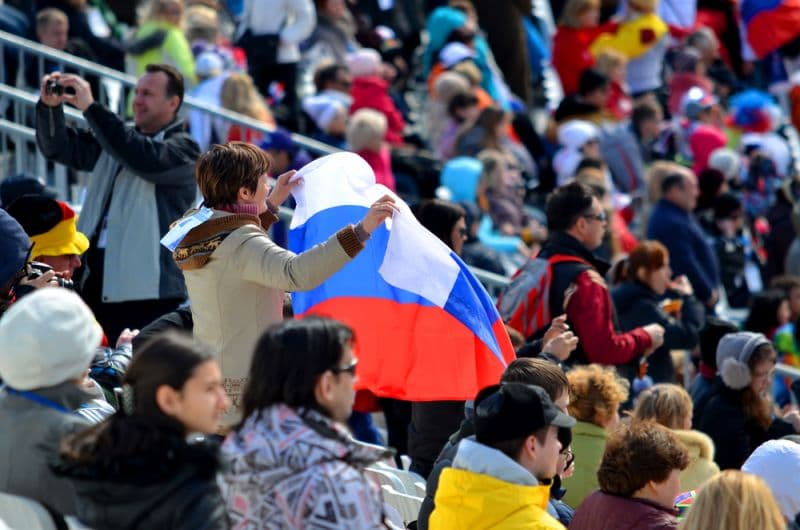
UK Government Boycotts Opening Ceremony After IPC Allows Russian, Belarusian Flags
13 sources compared