Sports28 March, 20263 min read
Ilia Malinin Cuts Quads From Seven To Five, Swaps Quad Axel For Triple At Worlds
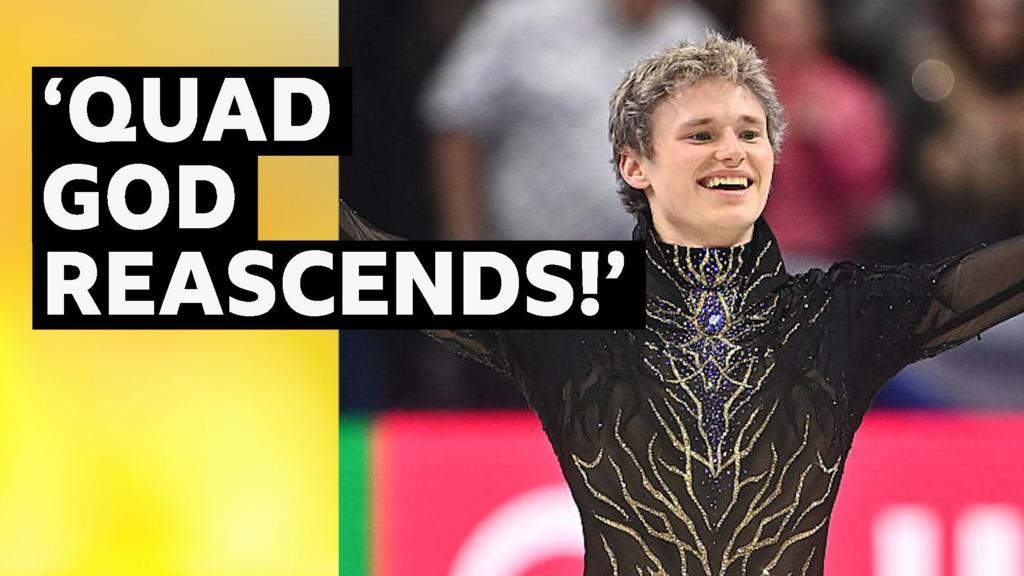
Ilia Malinin wins third consecutive World Championship title in Prague. Redemption after Olympic meltdown as he rebounds from eighth place to champion.
Strategic risk shift at Worlds
The single most important new development from Prague is Ilia Malinin’s deliberate pivot away from an all-out quad-fest toward a risk-managed program that prioritizes consistency over maximal difficulty. Across multiple outlets, analysts described him swapping the quad Axel for a triple Axel and trimming the number of quadruple jumps from seven to five, effectively retooling his Worlds routine to emphasize clean execution and psychological relief after the Milan Olympic meltdown. The ISU-wired framing notes the five-quad program with a reduced technical load, and France 24 highlights the specific substitution and reduction as a core strategic move.
“Opting for a five-quad program, Malinin focused on executing all elements cleanly and achieved that with the exception of a quarter under-rotation on a quad Lutz in a jump combination.”
NBC Sports and ESPN converge on the same point, describing Malinin as choosing five quads in the free skate and dropping the high-risk elements that had defined his Olympic season. This shift is presented not as a retreat, but as a calculated reorientation designed to convert pressure into performance, culminating in a third straight world title and a markedly calmer, more composed championship run.
Scores, margins, and method
The performance metrics from Prague underscore the impact of that risk-aware strategy: Malinin won 329.40 total points, with a 218.11 free skate that left him 22.73 points clear of silver medalist Yuma Kagiyama. NBC Sports notes the exact margin, while ESPN confirms the final total and the lead over Kagiyama, and The Guardian records Malinin’s clear separation from the field with a 329.40 total.
CBC’s account mirrors the same score, reinforcing the narrative that a more controlled program can deliver a decisive advantage even in a field of high-caliber jumpers. The closed gap only on the podal by a single podium, the margin underscores the success of stability over risk in a title-deciding context.

Redemption through composure
Beyond the numbers, Prague foregrounds a redemption arc that reframes Malinin’s narrative: after a shock Olympic collapse in Milan Cortina, he entered Worlds with a renewed mindset, insisting the season be about relief, enjoyment, and moving forward. The outlets describe a markedly calmer mood—the ‘Quad God’ delivering a composed long program and signaling that the Olympic setback did not define his career.
“Ilia Malinin claimed a third straight world figure skating championship... a swift redemption a month after his shock Olympic collapse with a commanding free skate.”
Guardian calls it a swift redemption, France 24 highlights the relief and the changed mindset, and NBC and ESPN anchor the moment with his own reflections about finally moving on from the Olympic meltdown, including his oft-quoted remarks about having ‘blown it’ at Milan. The psychological turn here is as significant as the choreography, suggesting a strategic re-centering of pressure management for future cycles.
Broader implications for skating
Collectively, the Prague results signal a potential recalibration of elite men’s skating priorities: even a QUAD-dominant figure can win by prioritizing execution, consistency, and psychological management, rather than chasing the ultimate jump count. Several outlets note that Malinin’s three-peat marks a rare achievement—the first man to accomplish it since Nathan Chen—solidifying a turning point in how the sport may balance risk and reward in the post-Olympic cycle.
The ISU-focused framing and NBC’s analysis of five quads, alongside Guardian’s emphasis on a strategic mindset, point to a broader implication: future programs may increasingly blend difficulty with disciplined pacing to maximize reliability under pressure. Taken together, Prague’s arc suggests that the sport’s record-book and coaching strategies could tilt toward stability as a competitive edge in the years ahead.
