
India says no permission needed as LPG ships cross Strait of Hormuz
Key Takeaways
- Indian-flagged LPG carriers crossed the Strait of Hormuz.
- Government says no permission required to sail through Hormuz; movements based on safety assessments.
- No payments or Iran clearance needed for safe transit through Hormuz.
Permission Clarification
India has clarified that no permission is required for vessels to sail through the Strait of Hormuz, despite concerns over reports suggesting Indian ships were awaiting clearance from Iranian authorities.
“Two Indian-flagged LPG carriers — Pine Gas and Jag Vasant — crossed the strait on Monday, carrying a combined 92,612 tonnes of LPG, equivalent to roughly a day’s domestic consumption”
According to government officials, the strait operates under international navigation conventions that guarantee freedom of passage.

'No permission is required to sail through the strait,' stated Rajesh Kumar Singh, special secretary at the Ministry of Ports, Shipping and Waterways, emphasizing that decisions on transit are made by shipping companies and charterers based on safety assessments.
This assurance comes as movement through the critical waterway, which had almost completely halted following US-Israel strikes on Iran and Tehran's retaliation, has gradually resumed.
The Indian government maintains that no fees or protection money are being paid for the safe passage of ships, with Foreign Minister S Jaishankar clarifying that there is no 'blanket arrangement' with Iran and that 'every ship movement is an individual happening.'
Successful Ship Crossings
Several Indian-flagged LPG tankers have successfully crossed the Strait of Hormuz in recent days, providing relief to India's energy supply chains.
The vessels MT Shivalik and MT Nanda Devi, carrying approximately 92,712 tonnes of LPG, reached Indian shores on March 16 and 17 respectively.
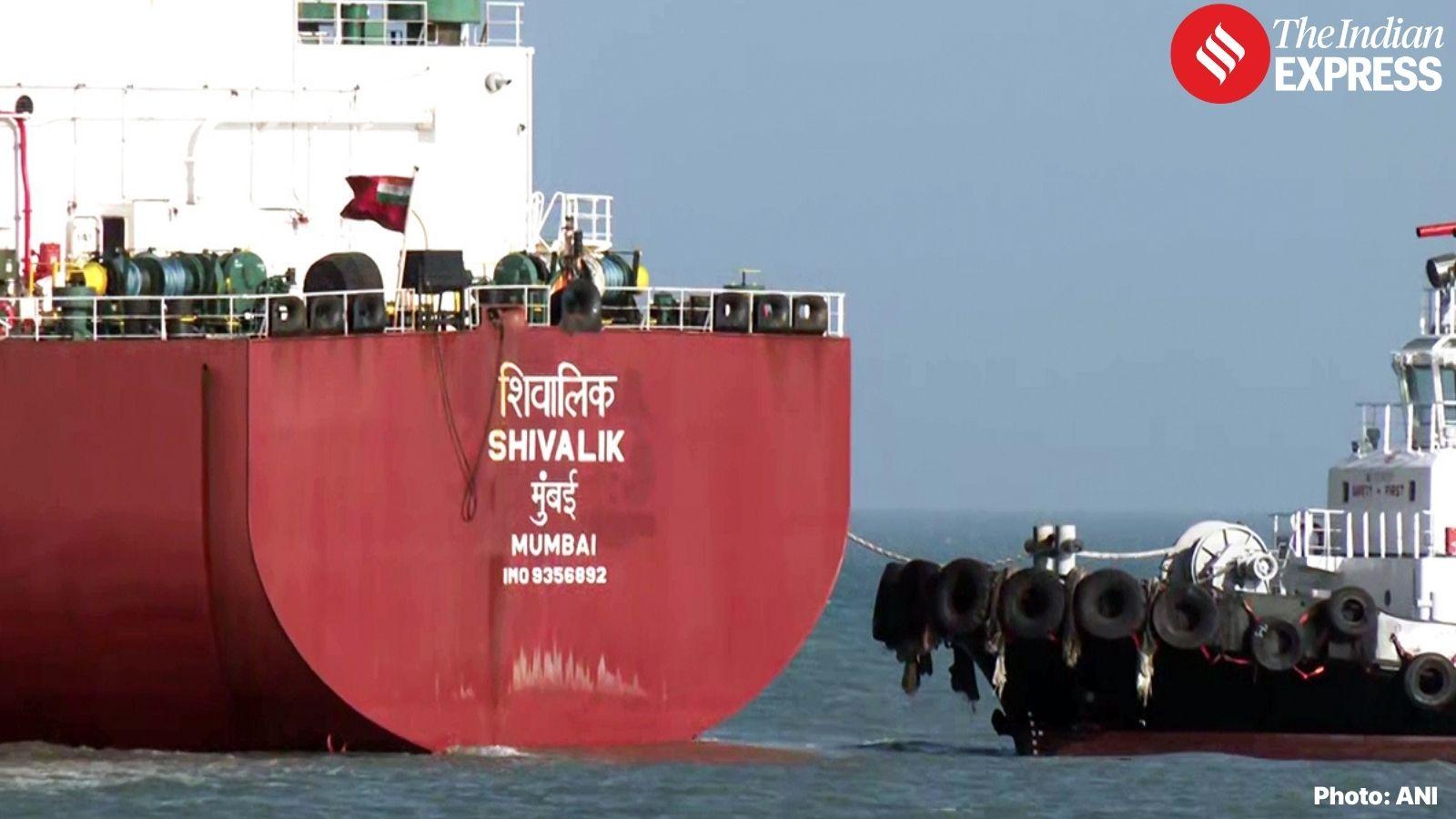
Following their successful transit, two additional LPG tankers—Pine Gas and Jag Vasant—crossed the strait on Monday, carrying around 92,600 tonnes of LPG combined.
These shipments are particularly significant as India's daily LPG demand under normal circumstances stands at approximately 90,000 tonnes.
According to ship tracking data, the vessels passed through waters between Iran's Larak and Qeshm islands, potentially to make their identity clear to Iranian authorities before transiting the strait.
The successful crossings came close on the heels of conversations between Prime Minister Narendra Modi and Iran's President Masoud Pezeshkian, suggesting ongoing diplomatic coordination.
Stranded Vessels
Despite the recent movement of several vessels, a significant number of Indian-flagged ships remain stranded in the Persian Gulf region.
“No payments are being made for the safe transit of Indian tankers out of the Persian Gulf through the Strait of Hormuz, and no permission is required from Iran either for the passage, although given the prevailing situation in West Asia, movements are being made based on safety assessments, a senior government official said on Tuesday”
Of the 28 Indian-flagged vessels present in the Strait of Hormuz when the conflict escalated, 22 continue to be confined to the Persian Gulf, with approximately 540 Indian seafarers still onboard these vessels.
The stranded fleet includes five LPG carriers holding about 2.3 lakh tonnes of cooking gas, one LNG tanker chartered by Petronet LNG Ltd, four crude oil tankers chartered by Indian Oil Corporation, Reliance Industries Ltd and BGN International, one chemical carrier, three container ships, two bulk carriers, and three vessels in dry dock for maintenance.
An additional empty vessel has begun loading LPG.
Analysts suggest that Iran may be allowing select vessels to transit after verification, with some ships taking a short diversion via the Larak-Qeshm channel to facilitate identification and confirmation that vessels and cargo are not linked to the US or other restricted entities.
Strategic Importance
The Strait of Hormuz represents a critical artery for India's energy security, with the country heavily dependent on this strategic waterway for its hydrocarbon imports.
According to official data, India imports approximately 88% of its crude oil, 50% of natural gas, and 60% of LPG through this route, with 85-95% of LPG imports and around 30% of natural gas supplies specifically passing through the strait.
Before the conflict, more than half of India's crude imports came from countries such as Saudi Arabia, Iraq and the UAE, all of which rely on the strait for their exports.
While India has partially diversified its crude supplies through sources like Russia, West Africa, the US and Latin America, disruptions to gas and LPG availability have significantly impacted industrial and commercial users.
The situation has forced shipping companies to factor in safety risks, insurance costs, and evolving military conditions before making transit decisions through this volatile region.
Diplomatic Engagement
India has been actively engaged in diplomatic efforts with Iran to ensure safe passage for its vessels through the Strait of Hormuz amid heightened tensions in the region.
“Two Indian-flagged LPG carriers — Pine Gas and Jag Vasant — crossed the strait on Monday, carrying a combined 92,612 tonnes of LPG, equivalent to roughly a day’s domestic consumption”
Foreign Minister S Jaishankar has maintained ongoing talks with his Iranian counterpart, while India has leveraged conversations between Prime Minister Narendra Modi and Iran's President Masoud Pezeshkian to facilitate vessel movements.
Iran's Foreign Minister Seyed Abbas Araghchi had previously indicated that Tehran was 'open' to discussions with countries wanting to address the 'safe passage of their vessels' through the strait.
The successful transits of Indian vessels suggest a pragmatic approach to navigation in the current geopolitical environment, with ships taking circuitous routes through Iranian territorial waters that allow Tehran to run checkpoints and regulate movements through the chokepoint.
This coordinated approach appears to be balancing international navigation rights with regional security concerns, though the long-term stability of the route remains uncertain given the ongoing tensions between Iran and Western powers.
More on Iran

Pentagon orders 1,000 82nd Airborne troops to West Asia amid Kharg Island seizure talks
13 sources compared

U.S. Prepares to Deploy 1,000 82nd Airborne to West Asia to Seize Airfields
17 sources compared
Pentagon deploys 3,000 82nd Airborne troops to West Asia to backstop Iran war operations
14 sources compared

US, Israel escalate West Asia strikes as US demands Iran roll back nuclear program
12 sources compared