Intel Refreshes Non-Ultra Core Laptop CPUs With New Wildcat Lake Silicon
Key Takeaways
- Core Ultra 270K Plus and 250K Plus undergo extensive benchmarking and retesting.
- Intel's Core Ultra refresh spans laptop and desktop lines with updated silicon.
- Higher core counts and larger caches accompany the Core Ultra lineup's performance emphasis.
Intel’s non-Ultra refresh
Intel is refreshing its non-Ultra Core laptop CPU lineup with new silicon, marking “the first time” Intel has done so for this segment since it retired the older generational branding scheme and the i3/i5/i7/i9 branding “a few years back.”
“Intel’s Core Ultra laptop CPUs have been its flagships ever since it retired the older generational branding scheme and the i3/i5/i7/i9 branding a few years back”
The company’s Core Ultra laptop CPUs have been its flagships, with the Core Ultra Series 1, Series 2, and Series 3 processors carrying newer CPU and GPU designs and newer manufacturing technology.
Ars Technica says Intel has also offered non-Ultra Core CPUs, but they “have never been particularly interesting,” because both the Series 1 and Series 2 chips were based on Intel’s old Raptor Lake architecture.
Raptor Lake was the code name for “2023’s 13th-generation Core family,” and most versions of Raptor Lake used the same silicon as “2022’s 12th-generation Core CPUs.”
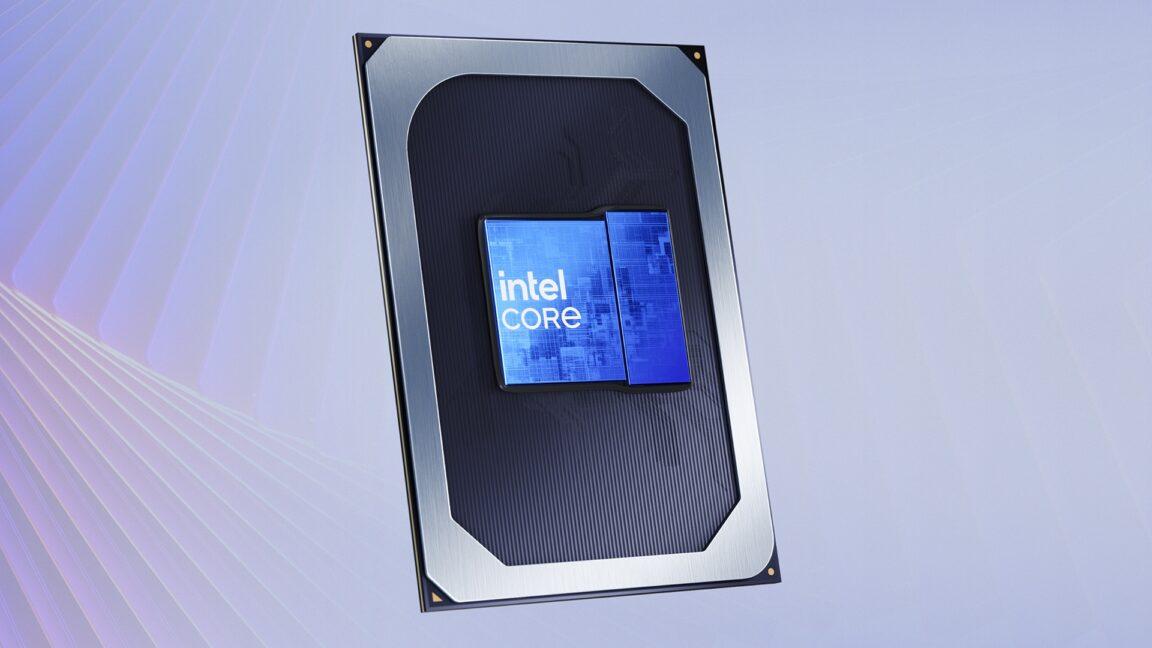
Ars Technica reports that Intel’s new, non-Ultra Core Series 3 processors are “new silicon,” and that they are codenamed “Wildcat Lake.”
The article contrasts the non-Ultra design with the Core Ultra Series 3 CPUs (aka Panther Lake), saying the non-Ultra CPUs use “a simpler design with much less computing power.”
Ars Technica details the chip’s tile layout, including “two silicon tiles,” with a compute tile that includes “a CPU with up to two Cougar Cove P-cores and four Darkmont E-cores” and an integrated GPU with “one or two of Intel’s latest-generation Xe3 GPU cores.”
It also says the compute tile usually includes “an NPU capable of up to 17 trillion operations per second (TOPS),” and that a separate platform controller tile provides “up to two Thunderbolt 4 ports, Wi-Fi 7 and Bluetooth 6.0 connectivity, and six PCIe 4.0 lanes.”
Arrow Lake Refresh under Linux
While Ars Technica focuses on Intel’s non-Ultra Core Series 3 laptop refresh, Phoronix and Tom’s Hardware concentrate on Arrow Lake Refresh desktop parts that Intel has been shipping.
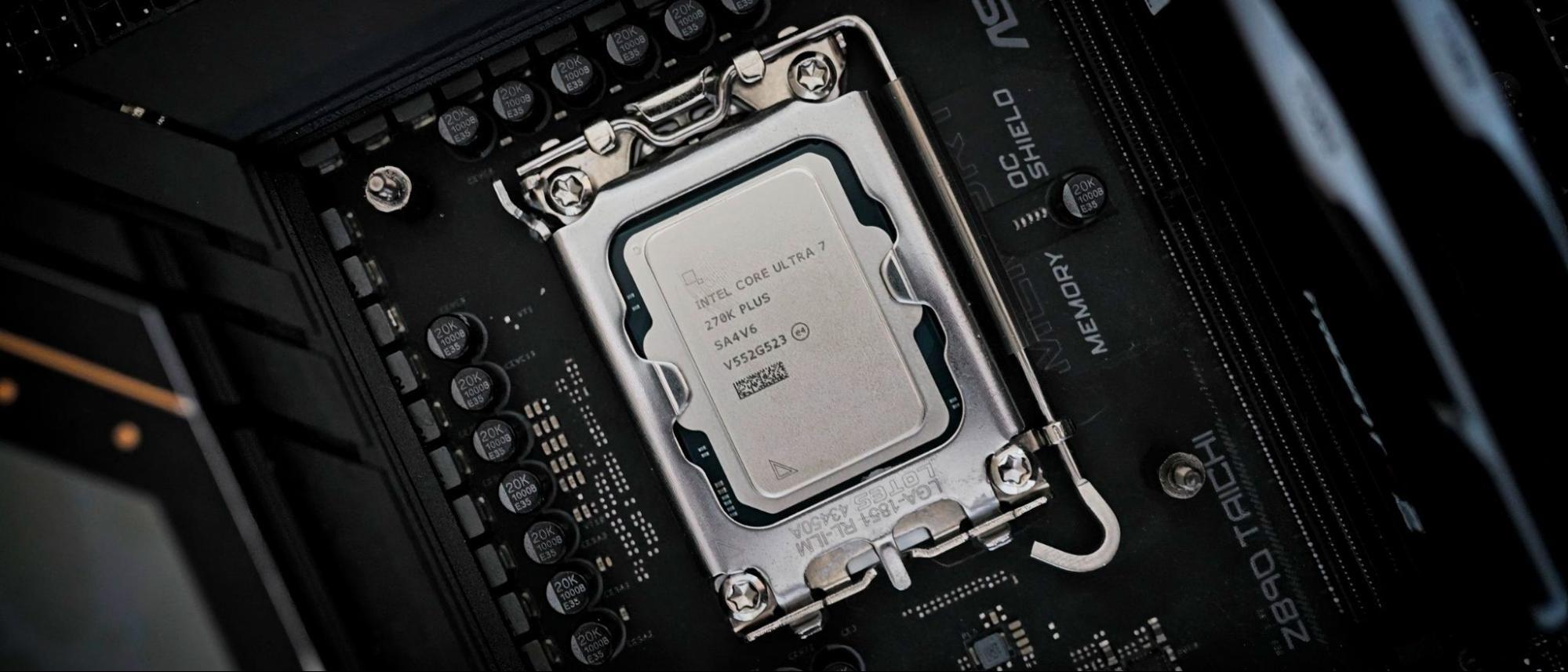
Phoronix says “Last month Intel began shipping the Intel Core Ultra 7 270K Plus ‘Arrow Lake Refresh’ desktop processor,” and frames the chip as “a mighty interesting processor for the $349 USD price point.”
The Phoronix review describes the Core Ultra 7 270K Plus as a part that has “more cores and a larger cache compared to the Core Ultra 7 265K,” and says it can deliver “much of the performance of the flagship Core Ultra 9 285K Arrow Lake processor.”
It specifies the CPU configuration as “24 cores between eight P cores and 16 E cores,” and lists a “5.5GHz turbo / TBMT 3.0 frequency” along with “3.7GHz P core base frequency” and “36 MB Intel Smart Cache.”
Phoronix also provides power figures, stating the chip has “a 125 Watt base power rating with 250 Watt turbo power rating.”
On pricing, Phoronix says Intel launched the Core Ultra 7 270K Plus with “a recommended customer price of $289 USD” but that “all the major online listings have it for $349 USD.”
The Linux testing is described as spanning “340+” benchmarks and “more than 340 different benchmarks representing a range of Linux workloads from gaming to creator to developer and technical computing uses.”
The review’s software environment is anchored to “Ubuntu 26.04 with Linux 7.0,” and Phoronix says the review samples “weren’t shipped out until after the review embargo had already lifted.”
50+ hours of retesting
Tom’s Hardware frames its coverage of Intel’s Arrow Lake Refresh desktop lineup around the difficulty of benchmarking Arrow Lake and the need to validate results repeatedly.
“Get Tom's Hardware's best news and in-depth reviews, straight to your inbox”
The outlet says, “Why we spent 50+ hours retesting Intel’s Core Ultra 270K Plus and 250K Plus,” and explains that CPU reviews “should, and do, follow the same process,” including rerunning benchmarks and using “the same software stack and OS configuration.”
Tom’s Hardware describes a situation where “I was caught on the extreme end of that variation with Intel’s new Core Ultra 7 270K Plus and Core Ultra 5 250K Plus,” and says the “strange results were actually representative of the real performance of the chips.”
The author states, “I spent no less than 50 hours (and probably more) simply rerunning benchmarks on various CPUs because I didn’t believe the results I was seeing,” and calls that “the best compliment I can give Intel’s small but potent range of Arrow Lake Refresh CPUs.”
The article emphasizes that “Arrow Lake is annoying to benchmark,” and says the team checks results against other data “to make sure my testing is on track.”
Tom’s Hardware also describes constraints under an NDA, saying “You’re working in a vacuum, bound contractually not to compare your results with other reviewers.”
The outlet reports that Intel had “made it clear that there would be performance regressions in some workloads,” and it adds that “there are still some workloads that do not play nicely with Intel’s Arrow Lake’s SoC-like CPU architecture.”
In its performance comparisons, Tom’s Hardware says “the 270K Plus is about as fast as the Core i9-14900K and 2.4% faster than the Ryzen 7 9700X in games at 1080p.”
Architecture shifts and test variance
Across the three technology articles, a consistent theme is that Intel’s recent CPU designs—whether described as “Wildcat Lake” for non-Ultra Core Series 3 or as “Arrow Lake Refresh” for the 270K Plus and 250K Plus—are challenging to evaluate cleanly.
Ars Technica describes the non-Ultra Series 3 chips as using “two silicon tiles,” with a compute tile that includes “up to two Cougar Cove P-cores and four Darkmont E-cores” and an integrated GPU with “one or two of Intel’s latest-generation Xe3 GPU cores,” while also relying on a platform controller tile for “up to two Thunderbolt 4 ports, Wi-Fi 7 and Bluetooth 6.0 connectivity.”
Phoronix, meanwhile, ties the Linux benchmark effort to a specific platform and software baseline, saying it is retesting under “Ubuntu 26.04 with Linux 7.0” and that the review samples “weren’t shipped out until after the review embargo had already lifted.”
Tom’s Hardware describes the benchmarking difficulty as a product of architectural change, writing that “Arrow Lake completely threw a wrench in the system” by featuring “a hybrid core architecture” and “a disaggregated” design.
Tom’s Hardware also warns that “Even when the first CPUs rolled out, Intel made it clear that there would be performance regressions in some workloads,” and it points to “some workloads that do not play nicely” with the “SoC-like CPU architecture.”
In parallel, Phoronix says it is running “340+” benchmarks across “a range of Linux workloads from gaming to creator to developer and technical computing uses,” and it emphasizes that it has “300+ benchmarks across a wide swath of workloads.”
The two outlets also converge on the idea that validation matters: Phoronix says the delay required “re-testing all the CPUs under the new Ubuntu 26.04 LTS operating system with the Linux 7.0 kernel,” while Tom’s Hardware says it reran benchmarks because “I didn’t believe the results I was seeing.”
Even the comparative framing differs: Tom’s Hardware compares the 270K Plus to the “Core i9-14900K” and “Ryzen 7 9700X” at “1080p,” while Phoronix compares the 270K Plus against a broader set that includes “Ryzen 9 9950X3D” and “Ryzen 7 9800X3D.”
More on Technology and Science

Meta Threatens To Shut Down Facebook And Instagram In New Mexico Over Child Safety Trial
24 sources compared

Elon Musk Testifica En El Juicio Contra Sam Altman Y Greg Brockman En Oakland
15 sources compared

Iran’s 313 Team DDoS Attack Knocks Ubuntu and Canonical Services Offline
11 sources compared

Anthropic Seeks $50 Billion Funding Round Valuing It at $900 Billion
20 sources compared