
Iran accuses Israel of hitting South Pars gas field as markets surge
Key Takeaways
- Israel struck Iran’s South Pars gas field, the world’s largest natural gas field.
- Oil and natural gas prices surged amid the strikes.
- Iran vowed retaliation and threatened strikes on Gulf energy facilities.
Gas Field Attack
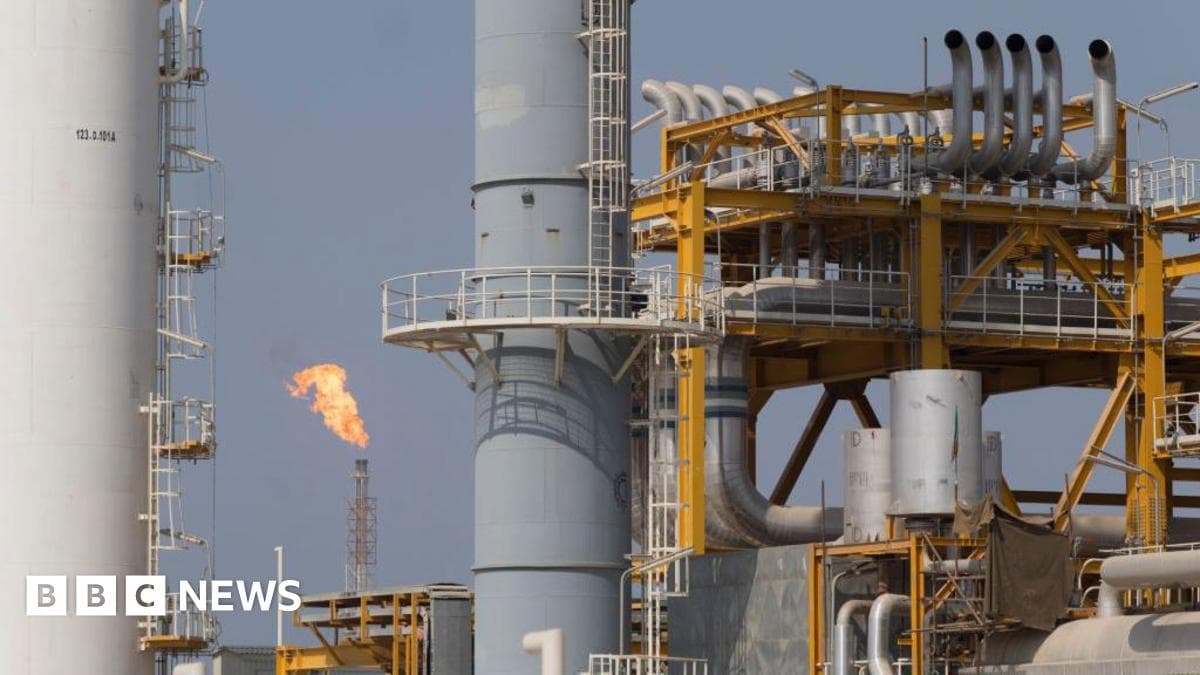
Iran accused Israel of striking the massive South Pars natural gas field, the world's largest natural gas reserve shared with Qatar.
“This incident has heightened concerns over potential disruptions to global oil and gas supplies and the risk of a wider regional confrontation”
The attack marked a significant escalation in the ongoing U.S.-Israeli military campaign against Iran that began on February 28.
Iranian state media reported that airstrikes damaged facilities connected to the South Pars gas field in Bushehr province.
The attack caused fires that emergency crews worked to contain at the gas processing infrastructure in Asaluyeh.
Qatar strongly condemned the attack, with Foreign Ministry spokesperson Majed al-Ansari describing it as a 'dangerous and irresponsible step'.
Market Surge
The attack triggered immediate market turmoil, with oil prices surging dramatically and natural gas prices climbing sharply.
Brent crude jumped more than 6% to just under $110 per barrel, representing a significant spike worldwide.

Natural gas prices also rose by approximately 6% in response to the attack on the facility.
The facility accounts for 70 to 75 percent of Iran's natural gas production, making it strategically critical.
The price increases came as oil was already up close to 50% since the start of the war on February 28.
The Trump administration eased sanctions on Venezuela to boost oil supplies and lower prices.
Iranian Retaliation
Iran's Islamic Revolutionary Guard Corps issued urgent warnings to citizens near energy facilities in Saudi Arabia, UAE, and Qatar.
“Both sides in Iran war ratchet up attacks on energy facilities, as oil prices surge Both sides in Iran war ratchet up attacks on energy facilities, as oil prices surge DUBAI, United Arab Emirates (AP) — Israel kept up its campaign of targeting Iran’s leaders on Wednesday, killing the country’s intelligence minister, and an Iranian offshore natural gas field was struck in a sign of the war’s mounting pressure – from both sides -- on the region’s economic lifeblood: energy”
The IRGC designated these facilities as 'direct and legitimate targets' for imminent strikes.
Specific targets included SAMREF refinery and Jubail petrochemical complex in Saudi Arabia.
Other targets were Al Hosn gas field in the UAE, and Mesaieed petrochemical complex and Ras Laffan refinery in Qatar.
Iranian state media reported emergency teams were working to contain fires at the South Pars facility.
Workers at the gas field had been evacuated following the attack.
The escalation came as Iran continued targeting Gulf neighbors' energy infrastructure to pressure the U.S. and Israel.
Regional Escalation
The attack on South Pars and Iran's retaliatory threats significantly escalated tensions across the entire Middle East region.
Iranian officials condemned the strike as a new phase of economic warfare.
Asaluyeh governor Eskandar Pasalar called it 'political suicide' by the U.S. and Israel.
He stated that 'the pendulum of war has swung to a full-scale economic war' and that 'energy security in the region has reached the point of zero.'
The incident heightened concerns about potential disruptions to global oil and gas supplies.
Iran has virtually halted shipping through the vital Strait of Hormuz, through which one-fifth of the world's oil travels.
Qatar, the world's second-largest LNG producer, had already been forced to suspend production due to an earlier Iranian drone attack.
More on Iran

Israel Kills Iran's Intelligence Minister Esmail Khatib
31 sources compared

Israel Kills Ali Larijani and Gen. Gholam Reza Soleimani in Overnight Strikes
31 sources compared

Trump Waives Jones Act for 60 Days to Relieve Oil Price Surge Amid Iran War
10 sources compared

President Trump waives Jones Act to ease fuel costs amid US-Israel war against Iran.
10 sources compared