Iran14 March, 20264 min read
Iran Attacks UAE as U.S.-Israel War Enters Third Week
This article is an automated aggregation of coverage from news outlets. Our editorials offer in-depth analysis curated by the NewsCord team.
War enters its third week as Iran escalates missile and drone attacks across Gulf. Iran warns UAE ports to evacuate and threatens UAE assets amid attacks.
Gulf Escalation
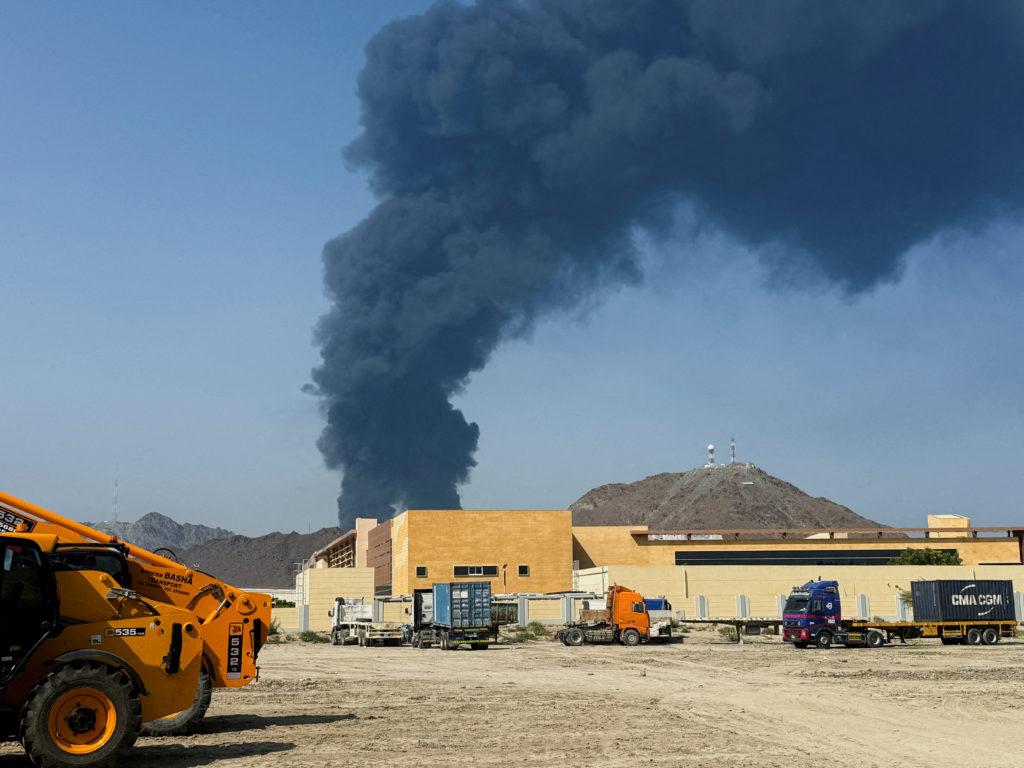
Iran has escalated its attacks across the Gulf region, targeting multiple neighboring countries including Saudi Arabia, Qatar, and the United Arab Emirates (UAE) in ongoing retaliation for the U.S.-Israel launched war. Tehran's strikes have hit civilian infrastructure, airports, oil fields, and military targets, with debris from intercepted drones causing fires at UAE's Fujairah bunkering hub and other locations.
“Iran has pressed on with sustained missile and drone attacks across the Gulf region, despite repeated protests from its neighbours, in ongoing retaliation in the war launched by the United States and Israel. Tehran's strikes targeted multiple countries, including Saudi Arabia, Qatar and the United Arab Emirates (UAE), late on Friday and into Saturday.”
The UAE Ministry of Defense confirmed that since the conflict began, their air defense systems have engaged 278 ballistic missiles, 15 cruise missiles, and 1,540 UAVs, resulting in six fatalities and 131 injuries among various nationalities. Iranian Foreign Minister Abbas Araghchi stated that Iran was targeting U.S. assets while claiming to avoid populated areas, though the strikes have primarily affected civilian infrastructure and neighboring countries.

Allied Strikes
The United States and Israel have conducted extensive military strikes against Iranian targets, with U.S. Defense Secretary Pete Hegseth reporting over 15,000 enemy targets struck since the war began.
Trump announced the U.S. had 'obliterated' military sites on Kharg Island and threatened to target oil infrastructure if Iran continued interfering with ship passage through the Strait of Hormuz.
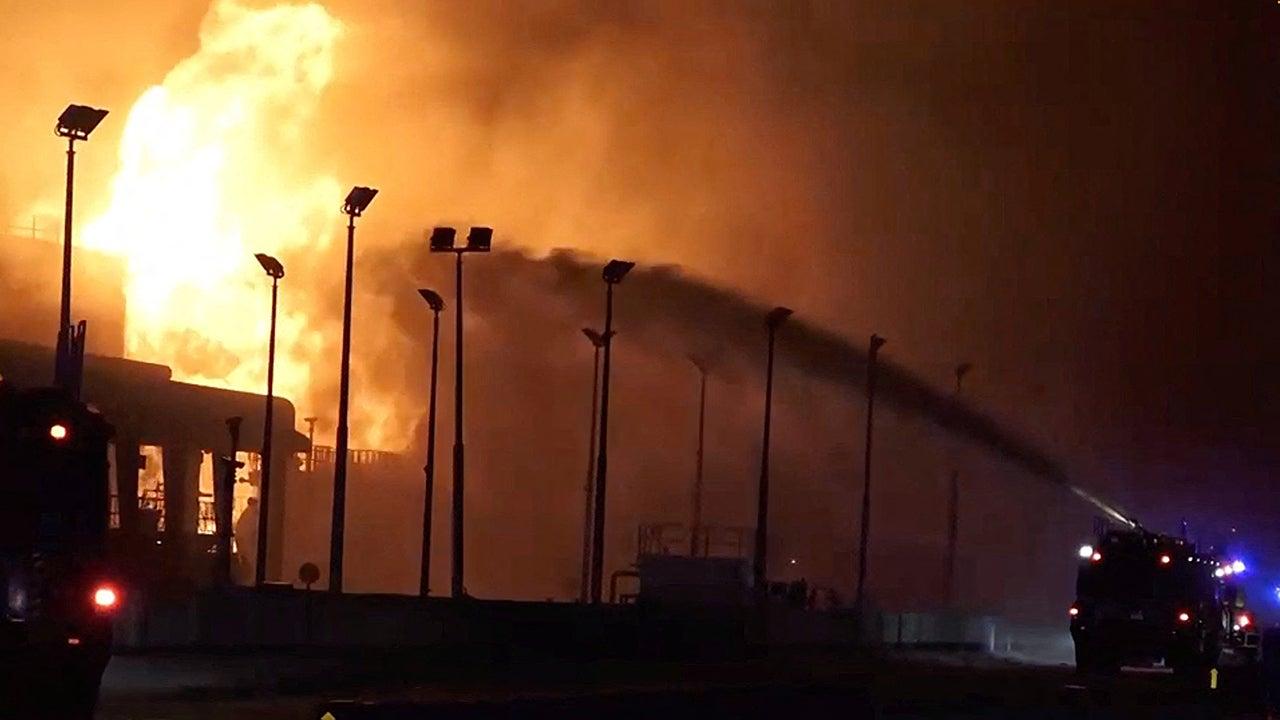
Israel has targeted Iranian nuclear scientists and infrastructure, with Prime Minister Netanyahu claiming senior Iranian nuclear scientists 'who led the development of nuclear bombs meant to destroy us' were killed.
The IDF reported neutralizing hundreds of Iranian drones and launchers, while U.S. Central Command claimed destroying naval mine storage facilities, missile storage bunkers, and other military sites on Kharg Island.
Oil Security Crisis
Escalating tensions over oil infrastructure and maritime security have become central to the conflict, with global anxiety soaring over oil prices and supplies. Iran has closed the Strait of Hormuz to 'those who are attacking us and their allies,' while Trump called for China, France, Japan, South Korea, the U.K. and others to send warships to keep the strategically vital waterway 'open and safe.'
“As global anxiety soars over oil prices and supplies, Trump said Saturday that he hopes China, France, Japan, South Korea, the U.K. and others send warships to keep the Strait of Hormuz 'open and safe.' Britain in response said it was discussing with allies a 'range of options' to secure shipping.”
Iran's parliamentary speaker warned that attacks on the country's oil infrastructure would provoke a new level of retaliation, with the joint military command threatening to attack U.S.-linked 'oil, economic and energy infrastructures' across the region. The Treasury Department has temporarily authorized purchases of stranded Russian oil to help stabilize global energy markets during the conflict, reflecting concerns about supply disruptions.
Humanitarian Impact
The conflict has triggered significant humanitarian consequences, particularly in Lebanon where the crisis has deepened with over 800 people killed and 850,000 displaced as Israel launched waves of strikes against Iran-backed Hezbollah militants.
The U.S. Embassy in Baghdad has been repeatedly targeted, with a missile striking a helipad inside the compound, leading the State Department to urge citizens in Iraq to leave 'now' by land since commercial flights were not available.

Military deployments have increased dramatically, with 2,500 additional Marines being sent to the region as part of the largest buildup of warships and aircraft in decades, though officials emphasized this doesn't necessarily indicate a ground operation will take place.
Information Warfare
The conflict has been marked by conflicting claims and information warfare, with both sides presenting drastically different narratives about the extent of damage and casualties.
“Iran's semiofficial Fars news agency said Saturday the U.S. strikes caused no damage to the island's oil infrastructure. It said at least 15 explosions followed the strikes, which it said targeted an air defense facility, a naval base, the airport control tower and an offshore oil company's helicopter hangar.”
Iran's semiofficial Fars news agency claimed the U.S. strikes on Kharg Island caused no damage to oil infrastructure, targeting only military sites, while U.S. Central Command released a video showing the destruction of naval mine storage facilities, missile storage bunkers, and other military infrastructure.
Trump made controversial claims about Iran's Supreme Leader Mojtaba Khamenei, stating he believes he is still alive 'in some form' despite not being seen publicly since taking office, while Netanyahu claimed 'in a short time, we eliminated the tyrant Khamenei and many senior figures in the terror regime.'
The UAE issued stark warnings about civilian casualties, listing multiple nationalities affected by Iranian attacks, while Iran framed its actions as legitimate retaliation against foreign aggression.
Military Posturing
The military buildup and strategic positioning continue to evolve as the conflict enters its third week, with significant naval deployments and advanced military systems being deployed to the region.
The USS Tripoli was spotted by commercial satellites sailing near Taiwan, putting it more than a week away from waters off Iran, while the Navy had 12 ships, including the aircraft carrier USS Abraham Lincoln and eight destroyers, in the Arabian Sea earlier in the week.
U.S. Defense Secretary Healey mentioned having 'pre-positioned in the region some autonomous mine hunting systems' and discussing 'additional options we can bring to bear alongside allies should it be needed.'
Meanwhile, Iran has openly threatened neighboring countries' non-U.S. assets for the first time, with Iranian Foreign Minister Araghchi urging neighbors to 'expel foreign aggressors' and describing Trump's call for international naval presence as 'begging.'