Iran Fires Cluster Munitions at Israeli Cities to Overwhelm Air Defenses
Key Takeaways
- Iran fired ballistic missiles carrying cluster munitions at Israeli cities
- Cluster warheads burst high, scattering bomblets to overwhelm and complicate Israeli air defenses
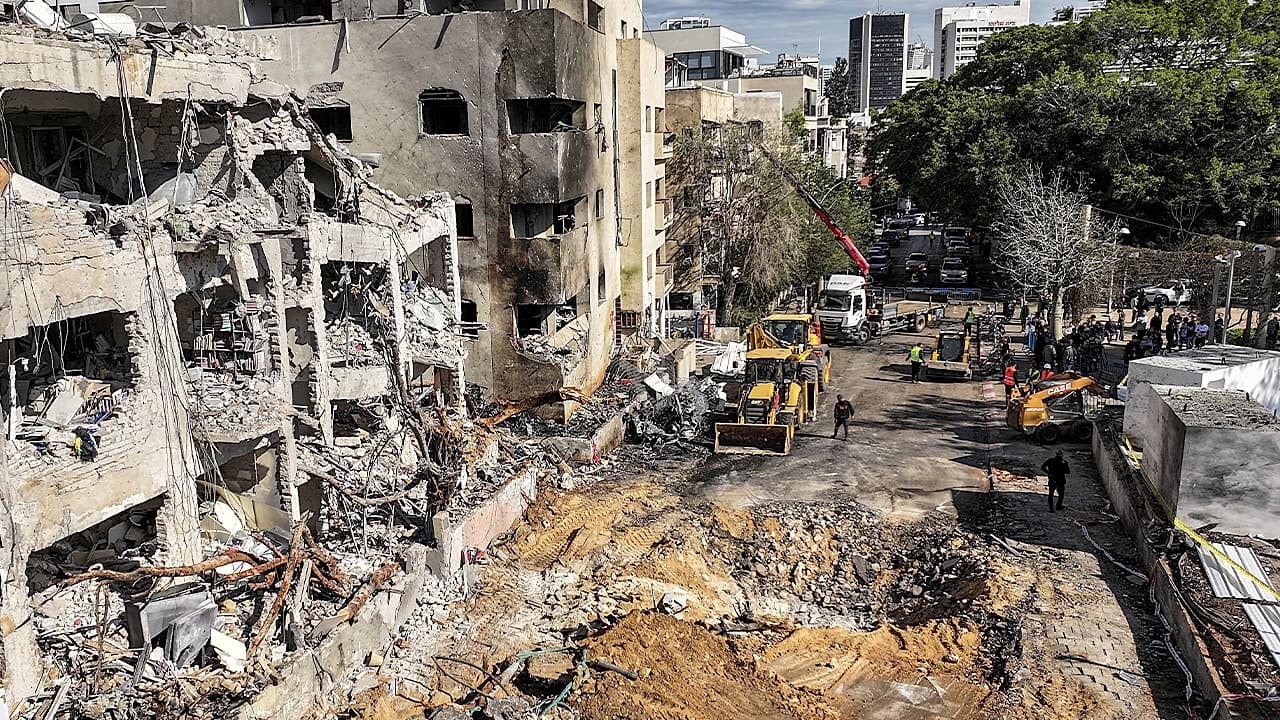
- Cluster submunitions killed and wounded civilians and left unexploded bomblets endangering residents
Scale of Iranian strikes
Multiple outlets report that Iran has been firing cluster munitions into Israeli population centers, a tactic Israeli officials say complicates and amplifies the threat to the country’s already-stretched air defenses.
“Some of these submunitions do not explode on impact and can cause casualties over time, particularly among children”
The New York Post reported that “Iran is using cluster bombs for its attacks on Israeli cities, officials said, making strikes harder to stop for the Jewish state’s already burdened air defenses.”

The Boston Globe summarized the same dynamic: “Israel says Iran has been firing cluster munitions throughout their 10-day war — adding a complicated and deadly challenge to Israel’s already-stretched air defenses.”
Regional reporting likewise matches Israel’s own estimates that a large share of incoming missiles carry cluster warheads, with Asharq Al-awsat quoting a military official that “Approximately 50 percent of Iranian missiles fired toward Israel carry cluster warheads that disperse into smaller bombs in the air, creating additional falling debris hazards.”
How they evade defenses
Cluster munitions work by dispersing many small submunitions mid-flight, which broadens the target area and reduces the effectiveness of missile defenses that are designed for single warheads.
The New York Post explained the basic mechanism: “What are cluster bombs? As the name implies, cluster bombs carry multiple submunitions within them that are scattered once the missile reaches its target.”
The Boston Globe provided technical detail on timing and altitude: “After what’s called a parent munition is launched, it releases smaller submunitions at an altitude of 7-10 kilometers (4-6 miles).”
Local analysis described how that pattern defeats interceptors: mezha.net quoted an analyst saying “This is a mechanism for bypassing active anti-missile defense,” and both U.S. and Israeli commentators noted that air defenses like Iron Dome and Arrow are not optimized to stop dispersed bomblets once they have separated from a parent missile.
Civilian danger and casualties
Those dispersed bomblets carry distinct risks to civilians during and after strikes because many fail to detonate on impact and effectively become long-term explosive hazards.
“Iran deploys cluster munitions, intensifying threats near Israel and testing its defenses”
The Boston Globe warned that the dangers “can persist as unexploded bombs on the ground even after civilians leave shelters,” while the New York Post noted that cluster weapons leave “unexploded bomblets [that] leave lasting dangers in their wake.”
Mezha.net emphasized the indiscriminate threat in populated areas, stating that “cluster munitions are often considered indiscriminate due to their dispersal pattern, which threatens civilians in densely populated areas.”
Asharq Al-awsat reported immediate human costs on the ground, recording that “Two construction workers died from shrapnel wounds after missiles were fired at central Israel on Monday,” with responders saying the damage “appeared to have been caused by a cluster munition.”
Strategic and psychological aims
Analysts and local reporting also frame the tactic as having strategic and psychological aims: dispersing bomblets forces Israeli civilians to remain under shelter, burdens air-defenses and imposes economic and social costs.
Mezha.net quoted experts who said “The ongoing use of such munitions is likely to have primarily a deterrent and psychological effect: Iran aims to exhaust Israel’s will and impose economic and social costs by forcing people to continually seek shelter from attacks.”

That assessment aligns with reporting that the weapons have been used frequently during the campaign and have caused lethal incidents, with the New York Post noting both that “the weapons are more difficult to intercept” and that “Roughly half of the projectiles that Iran has been firing at Israel since the war began have been cluster munitions.”
Legal and historical context
Finally, the reporting highlights legal and historical context: numerous countries have banned cluster munitions, human-rights groups have previously condemned Iran’s use, and the weapon has a history in the region.
“TEL AVIV, Israel (AP) — Israel says Iran has been firing cluster munitions throughout their 10-day war — adding a complicated and deadly challenge to Israel’s already-stretched air defenses”
The Boston Globe noted that “Over 120 countries have signed an international convention banning the use of cluster munitions, although Israel, the United States and Iran are among the nations that have not joined the treaty.”

Mezha.net and Asharq Al-awsat referenced prior condemnations and past uses, with mezha.net citing Amnesty International’s finding that Iran’s previous employment of the weapons was an “open violation of international humanitarian law,” and Asharq Al-awsat reporting that Amnesty found Tehran used cluster munitions at least three times during the June 2025 confrontation.
More on Iran
US Bombs Military Sites on Iran's Kharg Island
10 sources compared
Iran Closes Strait of Hormuz, Chokes Global Shipping and Pushes U.S. Retail Prices Higher
41 sources compared
President Donald Trump Orders US Bombing of Iran's Kharg Island, Says Targets 'Totally Obliterated'
18 sources compared
US obliterates military targets on Iran’s Kharg Island, Trump warns
13 sources compared