Iran Launches Ballistic Missiles at US-UK Diego Garcia Base in Indian Ocean
Key Takeaways
- Iran fired two intermediate-range ballistic missiles at Diego Garcia, a joint US-UK base.
- Neither missile hit; one failed, and a US warship intercepted the other.
- UK condemned Iran’s reckless attacks; US officials warned of threats to allies.
Missile Attack Details
Iran launched two intermediate-range ballistic missiles toward the joint US-UK military base on Diego Garcia in the Indian Ocean, marking a significant escalation in the ongoing Middle East conflict.
“Select “More options” to see additional information, including details about managing your privacy settings”
According to multiple reports, neither missile successfully reached its target, with one failing mid-flight and the second being engaged by a US Navy destroyer using an SM-3 interceptor missile.
The Wall Street Journal reported that it remained unclear whether the interception was successful, while CNN confirmed the launches targeting what they described as 'a crucial overseas US military staging post for operations far from home.'
This attack represents one of Iran's longest-range strike attempts, targeting a base located approximately 4,000 kilometers from Iranian territory, far beyond the 2,000-kilometer range that Iran's Foreign Minister Abbas Araghchi had previously claimed Tehran had deliberately imposed on its arsenal to avoid becoming a 'global threat.'
Strategic Military Significance
The attempted strike on Diego Garcia carries profound military and strategic implications, representing a dramatic expansion of Iran's operational reach beyond the traditional confines of the Middle East.
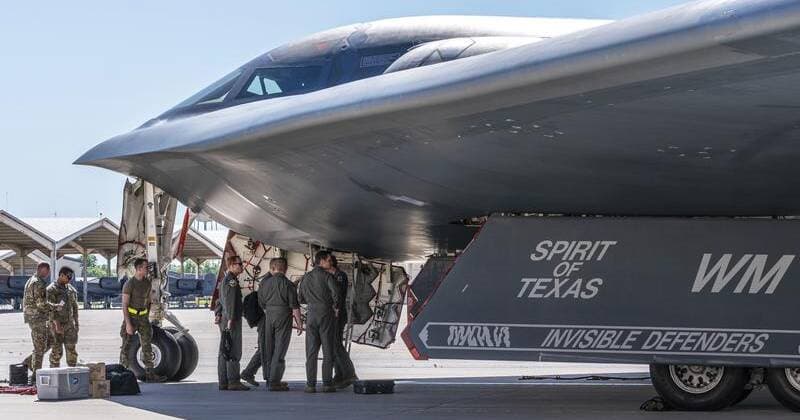
Diego Garcia serves as 'an all but indispensable platform' for US security operations across multiple regions, hosting long-range bombers, nuclear submarines, and guided-missile destroyers.

The base has been instrumental in US military operations from Vietnam to Iraq and Afghanistan, and was even used for clandestine rendition flights of terror suspects in 2008.
According to analysis in The Times of India, the attack showcases 'a sharp escalation in both capability and intent, pushing the geography of the ongoing conflict far beyond the Middle East.'
The Khorramshahr-4 class missiles reportedly used in the attack are liquid-fuelled and capable of carrying warheads exceeding one tonne, with potential deployment of cluster munitions, combining relatively simple architecture with high payload capacity.
This technological capability, if fully operational, would place major European cities including Paris and London within theoretical reach of Iranian weapons systems, fundamentally altering strategic calculations for NATO countries.
Political Reactions
The missile attack came amid intensifying diplomatic tensions and followed a significant policy shift by the UK government, which confirmed on Friday that it had given the United States permission to use British bases for 'specific and limited defensive operations' aimed at degrading Iranian missile capabilities.
“BREAKING Missiles targeted Israel's Dimona, town that is home to its nuclear facilityExplosions and intercepted reported east of TehranIran says it has targeted bases in Kuwait and the UAE Click to pause breaking news tickerpause-square-backgroundClose Breaking News Tickerclose Toggle Play UK says Iran missile attack on Diego Garcia failed The UK says Iran launched ballistic missiles at the joint US-UK Diego Garcia base in the Indian Ocean, calling the attack unsuccessful”
This decision, which allowed US forces to strike Iranian missile sites considered a threat to shipping in the Strait of Hormuz, provoked an immediate and sharp reaction from Iranian officials.
Iranian Foreign Minister Abbas Araghchi took to social media platform X to declare that British Prime Minister Keir Starmer 'is putting British lives in danger by allowing UK bases to be used for aggression against Iran,' adding that 'Iran will exercise its right to self-defense.'
The UK Ministry of Defence responded by condemning Iran's attacks as 'reckless,' stating they were 'a threat to British interests and British allies.'
Meanwhile, US President Donald Trump criticized the UK's response, saying Sir Keir 'should have acted a lot faster' and expressing disappointment in what he called the UK's 'very late' decision to authorize the use of the base.
This diplomatic friction is complicated by the ongoing dispute over the Chagos Islands, where Trump has been sharply critical of UK Prime Minister Keir Starmer's refusal to authorize the use of the base for initial US-Israeli strikes, and has withdrawn his support for a UK-backed agreement to transfer sovereignty of the islands to Mauritius.
Historical Background
Diego Garcia's historical and geopolitical context adds significant layers to understanding why this particular base was targeted.
The island, the largest in the Chagos Archipelago, has been under British control since 1814 when it was ceded by France following the defeat of Napoleon.
In the 1960s and 1970s, Britain forcibly evicted as many as 2,000 Chagossian people from Diego Garcia so the US military could establish its base there, a move that has been widely condemned internationally.
The United Nations and International Court of Justice have repeatedly urged Britain to end its 'colonial administration' of the islands and transfer sovereignty to Mauritius.
After prolonged negotiations, the British government struck a deal last year with Mauritius to hand over sovereignty over the islands, while maintaining a 99-year lease for the Diego Garcia base.
However, this agreement has faced criticism from opposition politicians in Britain who fear it puts the base at risk of interference by China and Russia, and displaced Chagossians and their descendants have challenged the deal, claiming they were not consulted and it leaves them unclear on whether they will ever be allowed to return to their homeland.
The US administration initially welcomed the deal but President Trump dramatically changed his position in January, calling it 'an act of GREAT STUPIDITY,' further complicating the geopolitical landscape surrounding this strategically critical location.
Missile Capabilities Analysis
The attempted missile strike reveals significant insights into Iran's evolving missile capabilities and strategic intentions, challenging previous assessments of Tehran's technological limitations.
“administration initially welcomed the deal, but U”
While Iran had publicly maintained a self-imposed limit on its ballistic missile program, restricting range to approximately 1,240 miles (2,000 kilometers), the targeting of Diego Garcia at roughly 4,000 kilometers suggests either that Iran possesses more advanced capabilities than previously acknowledged or that it has modified existing systems to achieve greater range.

According to analysis in The Indian Express, this attack confirmed suspicions that Iran possesses intermediate-range ballistic missiles (IRBMs) with ranges of 3,000-5,500 kilometers, which bridge the gap between medium-range ballistic missiles and intercontinental ballistic missiles.
Western analysts have long pointed to Iran's space program as evidence of potential long-range missile development capabilities, though the attempted Diego Garcia strike represents the first operational indication of such extended range.
The semi-official Mehr news agency in Iran celebrated the move as 'a significant step that shows that the range of Iran's missiles is beyond what the enemy previously imagined.'
However, military experts suggest the missiles may not yet be fully operationally ready for sustained use at such extended ranges, indicating this could be both a demonstration capability and a signal of Iran's determination to expand its strategic reach beyond traditional Middle East boundaries.
More on Iran

Iran strikes Dimona with missiles, wounds dozens
15 sources compared
Trump Defends Iran War by Citing Pearl Harbor
12 sources compared

Israel's Defense Minister Warns Israel and United States Will Intensify Attacks on Iran
125 sources compared

Iran Threatens Worldwide Attacks on Tourist Sites
11 sources compared