
Iran Launches Missiles Toward Israel After Israeli Air Raid on Beirut Suburbs
Key Takeaways
- Iran launched missiles at Israel for the first time since the April ceasefire.
- Missiles fired in retaliation for Israeli airstrike on Beirut's southern suburbs.
- Israel intercepted waves of missiles and activated air defenses.
Missiles after Beirut strike
Iran launched missiles toward Israel for the first time since a ceasefire took effect in early April, according to Israel, as the Israeli military said it detected missiles launched from Iran and activated air defense systems to intercept them.
The escalation followed an Israeli air raid on Beirut's southern suburbs that Lebanon's health ministry said left two people dead and 20 more injured, and Iran said its armed forces hit several "military targets" north of the "occupied Palestinian terroritories".

Israel said the missile barrage raised the possibility of a return to heavy fighting and complicated mediation efforts to end the war, while Iran's Revolutionary Guard warned that if attacks were repeated, responses would encompass "all American and Zionist targets throughout the region."
The U.S. Embassy in Israel later directed employees and family members to shelter in place, and sirens sounded in several areas of Israel sending millions running for shelter as multiple explosions were heard in the north.
In parallel, the U.S. military reported it had shot down six Iranian one-way attack drones over the past two days headed toward the Strait of Hormuz, and it said seven ballistic missiles fired at Kuwait and Bahrain early Saturday local time were largely intercepted.
Trump urges restraint
U.S. President Donald Trump told Fox News that the Iranian strikes are "certainly not going to help" negotiations and urged Iran to "Get back to the table and make a deal."
Trump also told the Financial Times that Israeli Prime Minister Benjamin Netanyahu would have "no choice" but to accept whatever deal the U.S. negotiates with Iran, saying "I call all the shots. He [Netanyahu] doesn’t call the shots."
Israel’s military spokesperson Brig. Gen. Effie Defrin said, "Iran has made a grave mistake," while the Israeli military’s chief of staff, Lt. Gen. Eyal Zamir, said it will "strike the enemy with determination as soon as the order is given."
Iran’s chief negotiator warned that an Israeli strike on south Beirut and the ongoing U.S. blockade of Iranian ports would trigger retaliation, and parliamentary speaker Mohammad Bagher Ghalibaf accused Washington of giving Israel the "green light" for strikes.
CNN reported that former Prime Minister Naftali Bennett called the moment "a moment of truth" and that far-right Minister of National Security Itamar Ben Gvir said, "Tonight Tehran must burn."
Deal talks and regional risk
The missile exchange threatened to derail a forthcoming agreement between Washington and Tehran, with CBS News saying Iran’s adviser to Iran's supreme leader told CNN that negotiations are "at a deadlock" and "the ball is in Trump's court."
“Israel says Iran launched missiles at it in first such bombardment since fragile ceasefire Israel says Iran launched missiles at it in first such bombardment since fragile ceasefire JERUSALEM (AP) — Iran launched missiles at Israel in the first such bombardment since a fragile ceasefire took effect in early April, raising the possibility of a return to heavy fighting and complicating mediation efforts to end the war”
Iran’s state broadcaster confirmed the launches, and Iran closed its western airspace to brace for a possible response, while Iraq’s Civil Aviation Authority announced that the country’s airspace would close for 72 hours and Syria’s aviation authority announced a 12-hour airspace closure.
The AP reported that Israel’s strikes and ground invasion in Lebanon in pursuit of Hezbollah, and the militant group’s resistance to disarming, have complicated an overall deal to end the war in the Middle East, while Iran says any deal must include an end to fighting in Lebanon.
The U.S. Central Command posted on X that "U.S. forces across the Middle East remain vigilant and ready," and the U.S. Embassy in Israel directed employees and family members to shelter in place as the situation escalated.
NBC News said the heaviest fighting ended with a preliminary ceasefire on April 8, but the sides have not been able to agree on a long-term end to the war, leaving the Strait of Hormuz and global economic strain tied to the next moves.
More on Iran
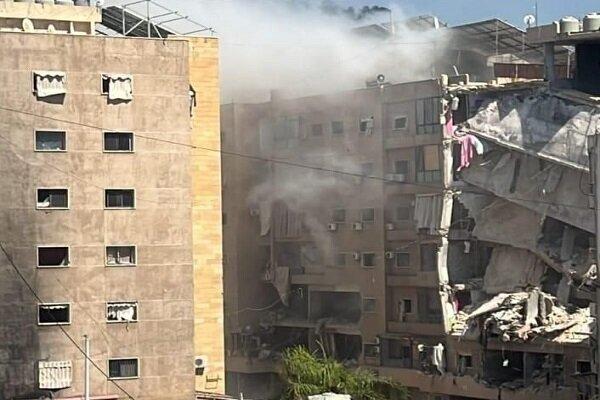
Iran Launches Missiles At Israel After Beirut Strike, Israel Intercepts Waves
17 sources compared
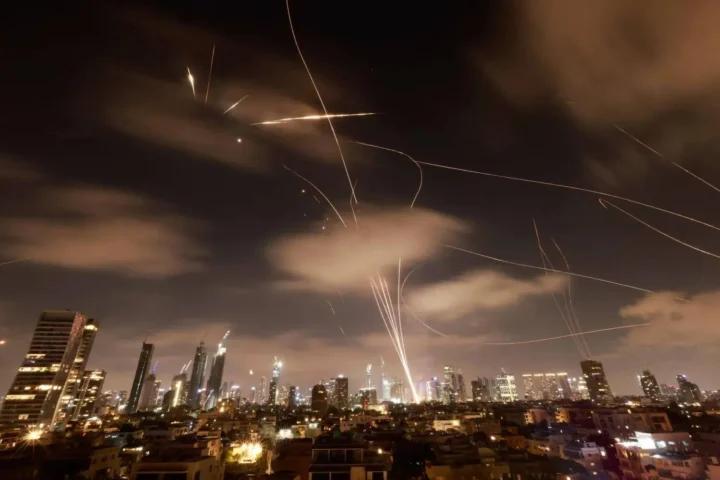
Iran Launches Missiles At Israel After Beirut Suburb Bombardment
27 sources compared
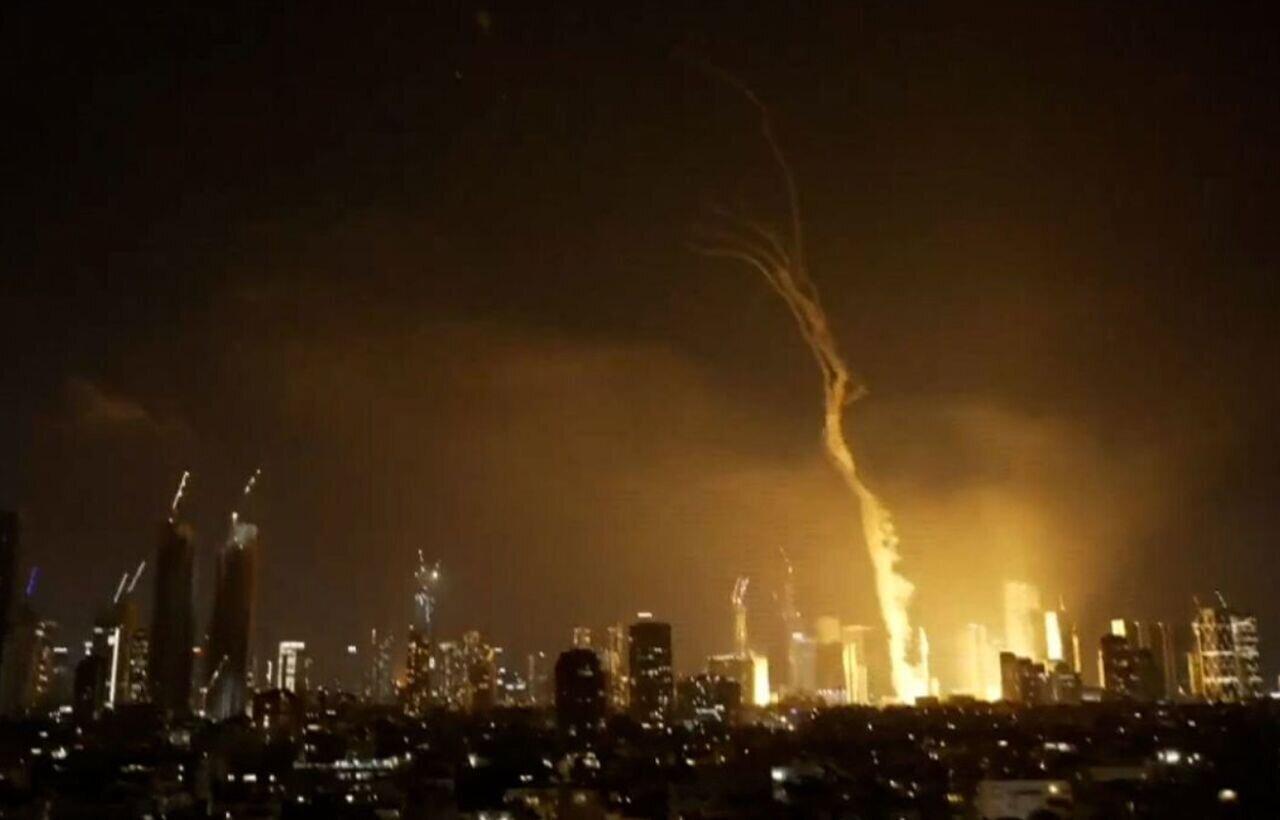
Iran Fires Missiles at Israel After Warnings Over Lebanon Assault
19 sources compared

Iran Fires Ballistic Missiles and Drones at Bahrain and Kuwait, US Strikes Radar Sites
26 sources compared