
Iran Offers U.S. Deal To Reopen Strait of Hormuz, End War, Postpone Nuclear Talks
Key Takeaways
- Iran offered a deal to reopen the Strait of Hormuz and end the war.
- Nuclear talks postponed to a later stage.
- Proposal relayed through Pakistani mediators to Washington.
Hormuz Deal, Nuclear Postponed
Iran has offered the United States a new proposal to reopen the Strait of Hormuz and end the war while postponing nuclear negotiations to a later stage, according to an Axios report citing a U.S. official and two sources with knowledge of the matter.
“Skip to main content 14 hours ago - Politics & Policy Iran offers U”
The proposal would “bypass” the nuclear issue “en route to a faster deal,” Axios said, and it would focus first on lifting the blockade and extending a ceasefire for a long period or agreeing on a permanent end to the war.
Axios reported that the plan was given to the U.S. via Pakistani mediators, after Iranian Foreign Minister Abbas Araghchi’s visit to Pakistan ended with no progress.
The same Axios reporting said Trump was expected to hold a Situation Room meeting on Iran on Monday with his top national security and foreign policy team, and that one U.S. official said the discussion would cover “the stalemate in the negotiations and potential next steps.”
The Times of Israel echoed the Axios framing, saying Iran’s proposal would reopen the strait and end the war while delaying negotiations on Tehran’s nuclear program “to a later stage.”
In parallel, ynetnews described the proposal as being passed to the United States through Pakistani mediators, with the ceasefire extended for a long period or becoming a permanent end to the war, and with nuclear talks beginning only afterward.
Stalemate and Sequenced De-escalation
The proposal arrives amid a diplomatic stalemate and internal divisions within Iran over what nuclear concessions should be on the table, Axios reported, describing the Iranian leadership as “divided about what nuclear concessions should be on the table.”
Axios said the Iranian proposal would “bypass that issue” by solving the crisis over the strait and the U.S. blockade first, with nuclear negotiations starting only after the strait was open and the blockade lifted.
Kurdistan24 similarly described a sequenced approach to de-escalation, prioritizing “the restoration of maritime traffic and a formal end to hostilities” over the nuclear dispute, and it said the framework would prioritize reopening the shipping route and a formal end to hostilities before nuclear talks.
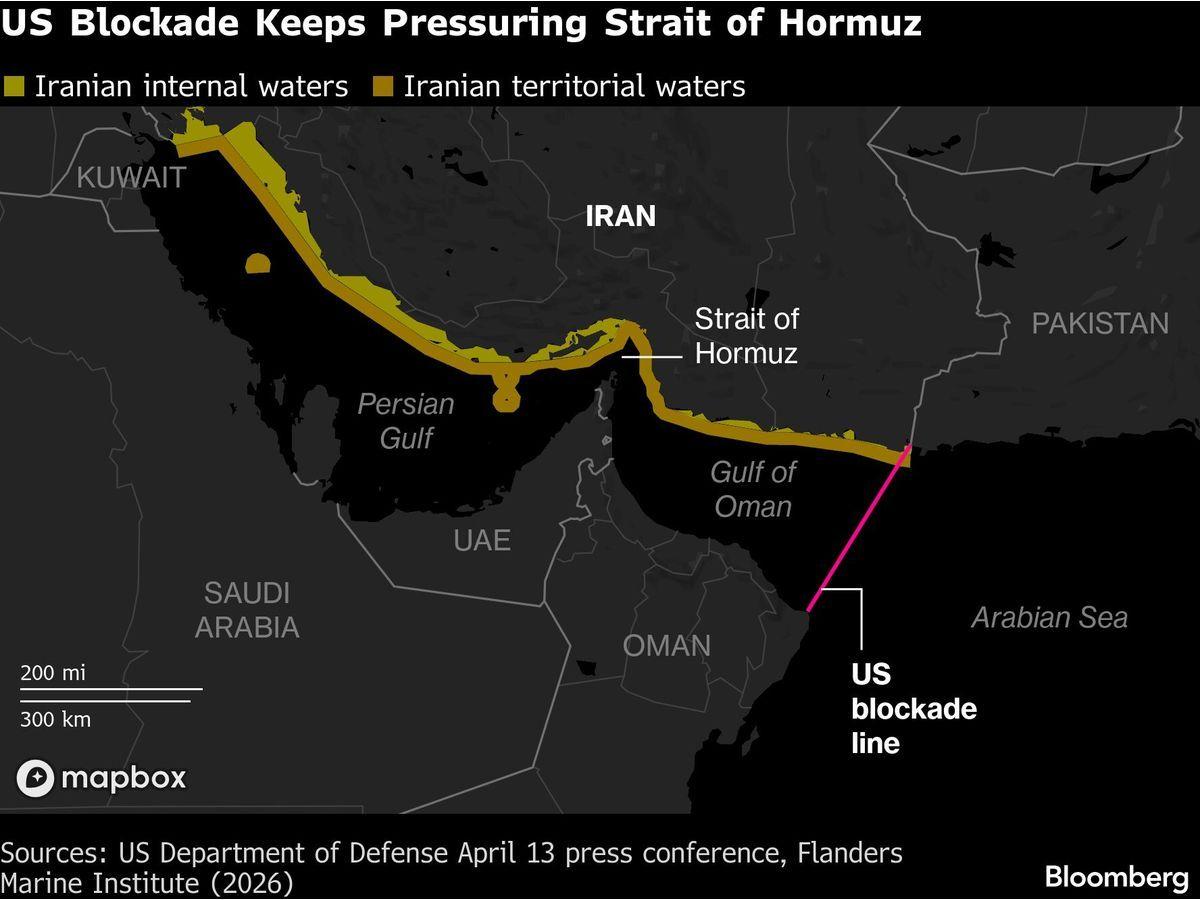
The Times of Israel added that the Strait of Hormuz has been at the center of the standoff since a ceasefire between Iran and the U.S. and Israel entered into effect on April 8, as Iran restricted movement through it and the U.S. imposed a blockade of Iranian ports.
It also said the strait is “the narrow mouth of the Persian Gulf through which a fifth of all traded oil and natural gas passes,” tying the negotiation to the energy chokepoint.
Seeking Alpha, republishing Axios, framed the plan as “reopen the Strait and end war in exchange for ending the blockade, deferring nuclear talks,” while CNBC reported that Iran’s foreign minister, Abbas Araghchi, made a brief return to Islamabad as Pakistan pushed to revive talks and Trump said discussions could take place over the phone.
Trump, Wales, and Araghchi
The reporting also captures sharp, competing signals from Washington and Tehran as the proposal circulates.
“Iran has given the US a new proposal to reopen the Strait of Hormuz and end the war that includes postponing nuclear negotiations, Axios reported, citing a US official and two people with knowledge of the matter”
Axios quoted White House spokesperson Olivia Wales saying, “These are sensitive diplomatic discussions and the U.S. will not negotiate through the press,” and it added that “the United States holds the cards and will only make a deal that puts the American people first, never allowing Iran to have a nuclear weapon.”
Axios also reported that Trump canceled a planned trip by envoys Steve Witkoff and Jared Kushner to Islamabad, saying, “I see no point of sending them on an 18-hour flight in the current situation. It's too long. We can do it just as well by telephone.”
Trump’s remarks to Fox News were carried in the Jerusalem Post, where he said, “When you have vast amounts of oil pouring through your system ... if for any reason this line is closed because you can't put it into containers or ships ... what happens is that line explodes from within.”
The Jerusalem Post also reported that Araghchi said talks with Oman aimed to secure safe navigation for the strait, publishing on X: “Important discussions on bilateral matters and regional developments. As only Hormuz littoral states, our focus included ways to ensure safe transit that is to the benefit of all dear neighbors and the world.”
CNBC added that Araghchi “has reportedly departed Islamabad for Moscow,” placing the diplomatic sequence alongside the U.S. Situation Room meeting expected on Monday.
Markets, Blockade, and Escalation Risks
As diplomacy plays out, the sources connect the Hormuz standoff to market moves and to the operational reality of blockades.
CNBC reported that oil prices “inched higher Monday,” citing benchmark Brent oil futures for June rising around 1% to $106.55 per barrel and U.S. crude oil also for June adding 0.88% to $95.23 per barrel.

CNBC also said Goldman Sachs expected oil prices to stay higher for longer, raising its Brent forecast to $90 a barrel by late 2026 from $80 previously, and it cited a note that delayed normalization in Gulf exports was “now expected only by end-June.”
Seeking Alpha’s excerpted framing tied the blockade to supply disruption, stating that “Blockade threatens significant disruption and shortages in Middle East oil flows, driving up prices,” and it asked how blocked Hormuz impacts global oil exports.
Financial Post added operational details, saying American forces implementing the blockade against Iranian ports have directed “38 ships to turn around or return to port,” citing U.S. Central Command in a social media post.
The Financial Post also described Iran’s response, saying Iran is “in turn imposing its own blockade of Hormuz, using its “mosquito fleet” of gunboats,” and it reported that “Daily transits are now close to zero, compared with about 135 before the conflict began Feb. 28.”
What Comes Next and Diverging Frames
The sources also diverge in how they frame what happens next and how the proposal fits into broader political messaging.
“Iran has reportedly proposed a new deal to the US to reopen the Strait of Hormuz and end hostilities, while postponing nuclear negotiations to a later stage”
Axios said the White House has received the proposal but it is unclear whether the U.S. is willing to explore it, and it described Trump’s expected Situation Room meeting on Monday to discuss “the stalemate in the negotiations and potential next steps.”
Kurdistan24 described the same sequence as a way to break a stalemate driven by “deep internal divisions within the Iranian leadership regarding potential nuclear concessions,” while also emphasizing that Trump clarified his preference for remote diplomacy over in-person meetings and that the sides can “talk by phone.”
The Times of Israel added a different emphasis, saying that resolving the standoff over the Strait of Hormuz, lifting the U.S. blockade, and allowing Iran’s oil exports to flow again would leave Trump and Washington “without much leverage for future negotiations,” and it also said it was unclear whether Trump would push off nuclear talks to an unspecified later date.
In contrast, NDTV reported a “three-stage formula” for negotiations, describing Stage 1 as complete end of the war and guarantees against resumption “against Iran and Lebanon,” Stage 2 as management and administration of the Strait of Hormuz, and Stage 3 as nuclear discussions only after the first two stages.
The Arabic-language Al Sharq report presented a more confrontational Trump message, quoting him on Truth Social that “We will destroy every power plant and every bridge in Iran,” and it claimed Trump accused Iran of fully violating the ceasefire by closing the Strait of Hormuz and said “many shots hit a French vessel and a British-flagged cargo ship.”
More on Iran

Oil Prices Rise as US-Iran Peace Talks Stall, Strait of Hormuz Tensions Grow
13 sources compared

King Charles III and Queen Camilla Begin Four-Day US State Visit With Trump Tea
10 sources compared

Oil Prices Rise as US-Iran Peace Talks Stall and Strait of Hormuz Remains Constrained
14 sources compared
Abbas Araghchi Arrives in Russia for Talks With Vladimir Putin to End U.S.-Israel War on Iran
33 sources compared