Full story
Talks stall, oil jumps
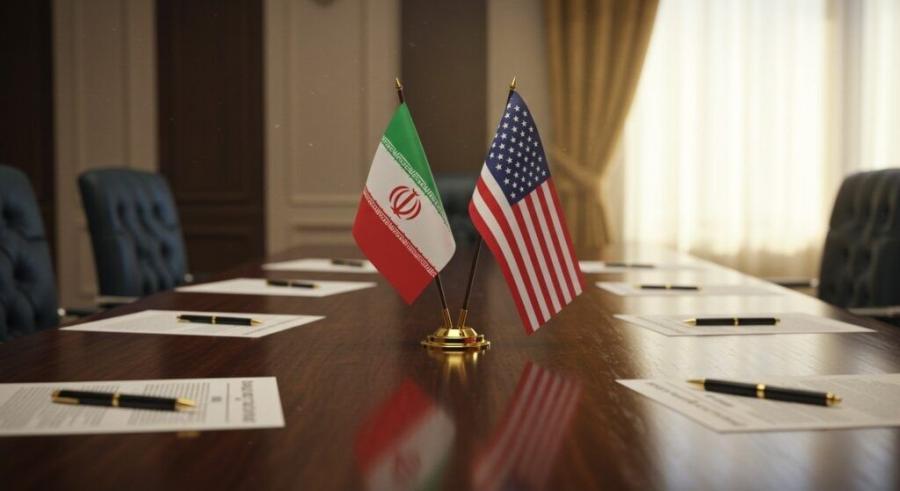
Oil prices rose as plans for a second round of peace talks between the US and Iran stalled again, with Brent rising by around 2% to $109.33 (£80.72) a barrel and US-traded crude increasing by 2% to $96.78, the BBC reported.
“Oil prices have climbed higher amid stalled peace talks between the United States and Iran”
CNBC described markets “balancing resilient risk appetite against renewed geopolitical strain” as prospects of U.S.-Iran negotiations took a hit over the weekend, after U.S. President Donald Trump scrapped plans to send envoy Steve Witkoff and Jared Kushner to Islamabad for talks with Iran on Saturday.

The BBC tied the price pressure to the Strait of Hormuz being “effectively closed by the conflict,” and said around a fifth of the world’s crude oil and liquified natural gas (LNG) usually passes through the strait.
Middle East Eye similarly reported that oil prices jumped almost three percent on Monday as peace talks stalled and shipments through the Strait of Hormuz remained limited, keeping global oil supplies tight, with Brent at $108.36 a barrel and US West Texas Intermediate at $96.85.
Al Jazeera said Brent stood at $106.99 as of 1:30 GMT after hopes for a second round of ceasefire negotiations between Washington and Tehran unraveled over the weekend.
Across the reports, the same diplomatic disruption—talks stalling and the strait remaining constrained—was paired with the same market reaction: higher oil prices and continued uncertainty over when flows might normalize.
Iran’s proposal and travel
While negotiations were disrupted, Iran offered a new proposal to reopen the Strait of Hormuz and end the war while suggesting that nuclear talks be deferred, CNBC reported, citing Axios and “a U.S. official and two sources with knowledge of the matter.”
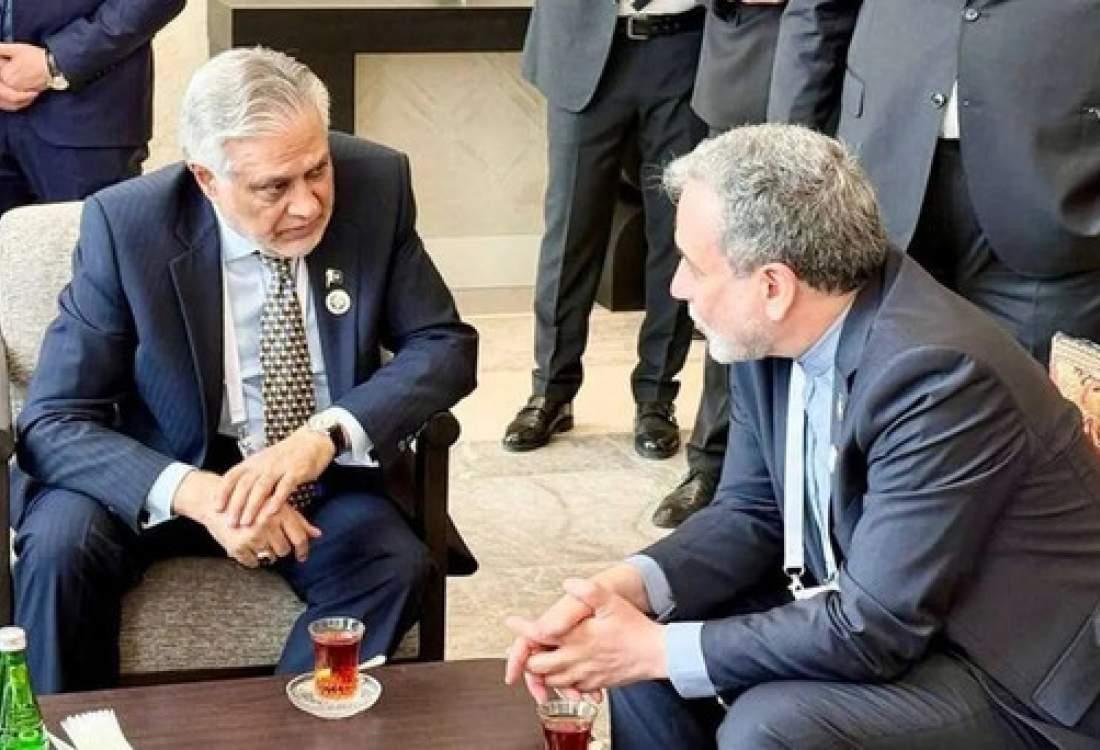
CNBC added that Iran’s Foreign Minister Abbas Araghchi made a brief return to Islamabad on Sunday as Pakistan’s leaders pushed to revive talks between Tehran and Washington, and said Trump stated discussions could instead take place over the phone.

The BBC reported that Iranian Foreign Minister Seyed Abbas Araghchi said on Sunday that “important discussions on bilateral matters and regional developments” were ongoing with Oman, and quoted his social media post: “Our focus included ways to ensure safe transit that is to benefit all dear neighbors and the world. Our neighbors are our priority.”
AP News said Araghchi met on Sunday with the Sultan of Oman, Haitham bin Tariq Al Said, in Muscat, and that Oman’s foreign minister, Badr al Busaidi, also attended the meeting.
AP further reported that Iran offered to end its chokehold on the Strait of Hormuz if the U.S. lifts its blockade and ends the war, with “discussions on the larger question of its nuclear program” coming later, and said Trump seems unlikely to accept the offer.
Al Jazeera described Araghchi’s trip as following a whistle-stop visit to Oman on Sunday, and said he arrived in Russia’s Saint Petersburg on Monday for talks with Russian President Vladimir Putin as Tehran sought a way out of the diplomatic impasse.
Numbers behind the disruption
Several reports quantified how the Strait of Hormuz disruption was translating into constrained flows and inventory pressure.
The BBC said around a fifth of the world’s crude oil and liquified natural gas (LNG) usually passes through the Strait of Hormuz, and it said Brent crude had risen by more than 10% since Trump announced last week that he would extend a ceasefire with Tehran to give its leadership a chance to present a “unified proposal.”
Al Jazeera provided a specific snapshot of traffic, saying that on Saturday, 19 commercial vessels transited the strait, which normally carries about one-fifth of global oil and natural gas supplies, and it cited Windward for that maritime intelligence figure.
Al Jazeera also said that before the US and Israel launched their war on Iran in late February, the waterway saw an average of 129 daily transits, using United Nations Trade and Development data.
CNBC described market mechanics in terms of supply normalization timing and inventory draw estimates, saying Goldman Sachs expected delayed normalization in Gulf exports only by end-June and that global inventories were estimated to be drawing at a record pace of 11 million barrels per day to 12 mbd in April.
The Guardian’s business live report likewise said Goldman estimated that 14.5m barrels a day of Persian Gulf crude production had been lost, leading to a record drawdown of global oil inventories of 11m-12m barrels a day this month.
Voices: Trump, Araghchi, traders
The sources also foregrounded competing statements from Washington and Tehran, alongside market-facing commentary about how long the disruption might last.
The BBC quoted Trump’s Saturday remarks in a Truth Social post, including that there was “tremendous infighting and confusion” within Tehran’s leadership and that “Nobody knows who is in charge, including them,” adding, “Also, we have all the cards; they have none! If they want to talk, all they have to do is call!!!”
The BBC also reported that Araghchi arrived in St Petersburg on Monday with the aim of meeting and holding talks with Russian President Vladimir Putin, as Iranian state-run news agency Irna reported.
CNBC described Araghchi’s movement back to Islamabad and said he “has reportedly departed Islamabad for Moscow,” while also noting that Trump said discussions could instead take place over the phone.
In the market commentary, the BBC quoted Sophie Huynh, a portfolio manager and strategist at BNP Paribas, saying the closure could affect the price of everything from “bin bags to medicine,” and she warned, “We're not consuming crude, we're consuming products.”
The BBC also included a view from economics lecturer Goh Jing Rong from the Singapore Management University, who said traders were waiting for “credible” evidence of the conflict easing and wanted “concrete evidence rather than just a fragile and reversible ceasefire agreement.”
Consequences beyond oil
The consequences described in the sources extended beyond crude pricing into broader supply chains, corporate costs, and even consumer-facing products.
CNBC said oil prices inched higher Monday and that Goldman Sachs expected oil prices to stay higher for longer, raising its Brent forecast to $90 a barrel by late 2026 from $80 previously, while also estimating global inventories were drawing at a record pace of 11 million barrels per day to 12 mbd in April.

CNBC added that disruptions were beginning to reflect deeper and more persistent impacts in natural gas and food supply chains, with Leung saying, "LNG is the under-discussed leg here," and that European benchmarks were running about a third above pre-war levels with roughly a fifth of global LNG supply choked off.
The BBC similarly warned that if the strait remains closed for more than a few weeks, effects would be “really far reaching in terms of supply chain,” and it quoted Huynh saying the closure could affect prices across products.
AP News reported that airlines worldwide had begun canceling flights as the war in the Middle East strains jet fuel supplies and pushes up oil prices, and it also described Transavia France canceling some flights in May and June because of rising fuel costs, citing “the current geopolitical context in the Middle East and its repercussions on the price of aviation fuel.”
In a separate consumer-products angle, AP News said Karex, the world’s largest manufacturer of condoms, raised prices by up to 30% to cope with escalating costs due to the closure of the Strait of Hormuz.