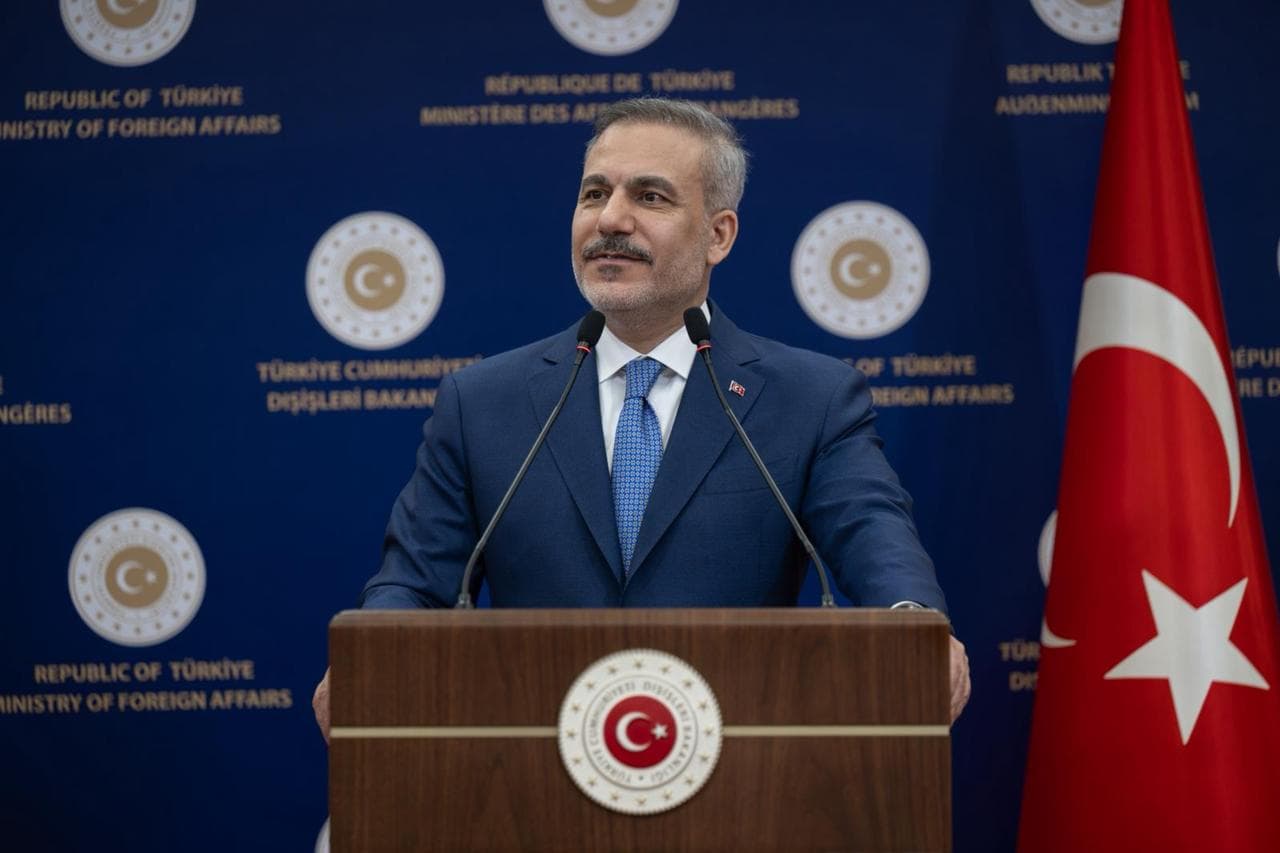
Iran Open to Back-Channel Talks With U.S., Turkish Foreign Minister Says
Key Takeaways
- Iran is open to back-channel talks with the United States, says Turkey's foreign minister.
- Talks described as informal back-channel with no serious initiative to restart formal negotiations.
- Regional conflict conditions hinder diplomacy; environment not conducive for formal talks.
Iran's Diplomatic Stance
Iran's leadership is open to back-channel diplomacy with the United States despite the current unfavorable conditions for formal negotiations.
“Turkey's Foreign Minister Hakan Fidan says Iran remains willing to engage in behind-the-scenes diplomatic discussions with the U”
According to Turkish Foreign Minister Hakan Fidan, Iranian officials feel 'betrayed' after being targeted while engaged in nuclear negotiations with Washington.

This betrayal has created an environment where traditional diplomacy has become difficult.
Despite these challenges, Fidan indicated that Tehran remains willing to pursue quiet diplomatic channels as an alternative to open negotiations.
The current regional conflict, triggered by U.S. and Israeli attacks on Iranian targets, has created significant barriers to restarting formal diplomatic processes between Washington and Tehran.
Turkey's Neutral Position
Turkey has maintained a neutral stance throughout the escalating regional conflict.
The Turkish government has condemned both American and Israeli attacks on Iran as well as Tehran's retaliatory operations against Gulf nations hosting U.S. military installations.

Fidan emphasized that Ankara's 'primary objective' remains staying out of the fighting.
Turkey's NATO membership and southern air bases housing NATO forces, including American personnel, complicate its position in the regional power struggle.
Despite being provoked by missile incidents, Fidan ruled out military retaliation.
He noted that NATO's defensive systems proved effective and maintained Ankara's determined neutrality.
Missile Incidents
Missile incidents have further complicated Turkey's delicate balancing act in the regional conflict.
“Turkey says Iran feels ‘betrayed’ by US attacks during nuclear talks Foreign Minister Hakan Fidan says Tehran still ‘open to any sensible backchannel diplomacy’, vows to keep Ankara out of the war Turkey’s powerful foreign minister said on Saturday that there is no serious initiative to resume negotiations between the United States and Iran but that he believes Iran is open to backchannel talks”
Turkish authorities confirmed that three missiles believed to have originated from Iran were intercepted by NATO defense systems over Turkish territory.
These incidents created a direct security challenge for Ankara.
Iranian officials have denied targeting Turkey, though available intelligence and the Turkish foreign minister's assessment indicate the missiles came from Iranian sources.
Fidan described these incidents as attempts at provocation while maintaining that Turkey's defensive stance remains focused on non-military responses.
The missile incidents have motivated Turkey to accelerate domestic weapons and air defense production capabilities.
This underscores the security challenges posed by the regional conflict's proximity to Turkish borders.
Iran's Leadership Change
Iran's power structure has undergone significant changes following the leadership transition from Ayatollah Ali Khamenei to his son Mojtaba Khamenei.
The transition occurred after the former's death on February 28 during the war's initial phase.
Fidan confirmed that the new supreme leader is 'alive and functioning' but lacks detailed information about the extent of injuries he sustained in an earlier strike.
The Turkish minister explained that the leadership transition and medical conditions of the new leader created a temporary gap in Iran's power structure.
Fidan believes this gap has been filled by the high command of the Revolutionary Guards.
This paramilitary organization, which answers to the Supreme Leader, has assumed greater importance during the transition period.
The Revolutionary Guards are helping Iran navigate the ongoing regional conflict and diplomatic challenges.
Turkey's Regional Role
Turkey has actively pursued diplomatic initiatives to address the regional conflict.
“Türkiye’s Foreign Minister Hakan Fidan said there is currently no serious initiative to resume negotiations between the United States and Iran but suggested Tehran could be open to back-channel diplomacy”
Before the conflict began, Turkey had proposed hosting talks in Istanbul between the U.S., Iran and regional countries.
This proposal suggested a broader framework where nuclear discussions would be separate from regional security concerns.
Iran later chose Oman-mediated discussions focused solely on nuclear issues without regional participation.
Those talks eventually collapsed.
Fidan criticized Israel's regional activities, particularly in Syria.
He noted Israeli forces have seized territory and launched airstrikes since December 2024.
Fidan argued that 'they are after not security, they are after more land.'
Turkey has also joined Trump's Board of Peace and volunteered to provide troops for an international stabilization force in Gaza.
Fidan noted Israeli opposition has prevented troop contribution requests.
More on Iran

Epstein network plots 9/11-style attack to blame Iran, Ali Larijani says
11 sources compared

Iran Drone Attack Hits UAE Fujairah Port, Halting Oil Loading
11 sources compared

FCC chair Brendan Carr Threatens Broadcasters' Licenses Over Iran War Coverage
18 sources compared

US-Israeli strike pounds Iranian city of Hamadan
11 sources compared