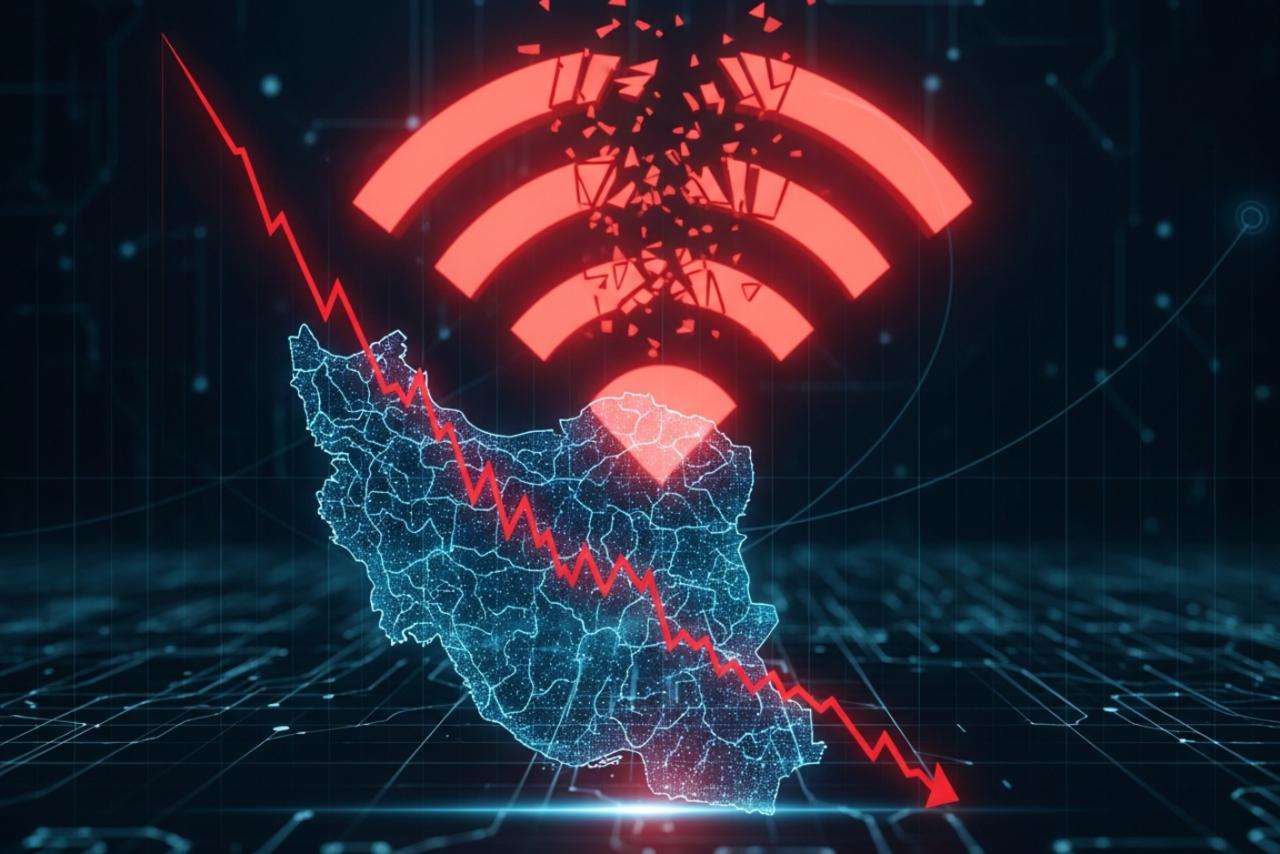
Iran Partially Restores Internet After 88-Day Blackout Following Pezeshkian Order
Key Takeaways
- President Masoud Pezeshkian ordered restoration of internet access to pre-war level.
- Internet access partially restored; mobile networks largely still blocked, per NetBlocks/Kentik.
- Shutdown lasted about 88 days, among the longest in modern history.
88 Days, Partial Return
Iran partially restored internet connectivity on Tuesday after an 88-day near-total blackout that had largely isolated the country from the rest of the world since war between Iran, the United States and Israel broke out.
Al-Monitor reported that the move followed President Masoud Pezeshkian ordering the Ministry of Communications to restore international internet access to its pre-January status, with the directive later approved by the Special Headquarters for Organizing and Governing the Country’s Cyberspace.

Mohammad-Reza Aref, the body’s head, said on X that “the first step toward free and regulated access to cyberspace has been taken,” while BBC reported that Netblocks and Kentik saw “partial” restoration around 13:00 GMT.
The BBC also said the Iranian government cut internet access after the launch of US and Israeli attacks on 28 February, and that the restoration was not universal, with “some regional variation.”
Court Halts Cyberspace Body
The restoration faced immediate legal friction, with Al-Monitor reporting that Iran’s Administrative Court of Justice announced Tuesday it had temporarily halted implementation of the presidential decree establishing the Special Headquarters for Organizing and Governing the Country’s Cyberspace.
Al-Monitor said the suspension came after the court received complaints seeking the body’s annulment, and that under the ruling “all decisions and directives issued by the cyberspace body will remain suspended pending judicial review.”

In parallel, the BBC reported that Netblocks said it was unclear whether the internet return would be sustained, and that “Access is not universally back to its original state, with some regional variation.”
BBC also quoted its research director Isik Mater saying the return showed signs of “more extensive filtering” than prior to January, including additional restrictions to messaging apps like WhatsApp.
Skepticism, Costs, and Control
As connectivity resumed in some places, CNN reported that a 46-year-old man in Tehran said, “Yes, I’m connected, but I still have to use a VPN. Don’t get too excited though — the internet isn’t fully open.”
CNN also described skepticism and defiance, including an Iranian woman’s post on X that the regime wants “to bring back the ‘filternet’ and they’re making such a huge spectacle out of it.”
NBC News said the eased shutdown had cost Iran’s economy an estimated $30 million to $40 million a day, while it remained unclear when mobile internet would be widely restored.
The BBC added that after the ceasefire was agreed on 8 April, an “internet pro” scheme was introduced for businesses and professionals, offering higher-quality access for a fee and subject to identity verification, and that it drew backlash and criticism.
More on Iran

Donald Trump Moves Cabinet Meeting From Camp David To White House Amid Iran Talks
11 sources compared

U.S. Strikes Hormozgan, IRGC Threatens Retaliation After Rubio Says Deal Possible
13 sources compared

U.S. Military Launches Self-Defense Strikes In Southern Iran, Targeting Missile Sites And Mine-Laying Boats
15 sources compared

Ayatollah Mojtaba Khamenei Warns Gulf Countries Won’t Shield US Bases After Iran Strikes
13 sources compared