Iran Presses Navigational Fees Framework for Strait of Hormuz, Baqaei Says It Rejects Tolls
Key Takeaways
- Parliament outlines a comprehensive plan to govern Hormuz.
- Plan contemplates sovereignty-based revenue via navigational service fees.
- Baghaei denies intention to levy tolls; frames charges as navigational services.
Hormuz fees and sovereignty
Iran is pressing a framework for managing the Strait of Hormuz that it describes as “navigational services” rather than tolls, with foreign ministry spokesman Esmaeil Baqaei saying the charges “require the collection of certain fees.”
Baqaei also said Iran is “not seeking to collect tolls,” while the same reporting describes Iran enforcing an authorization regime for vessels transiting the area it claims to regulate.

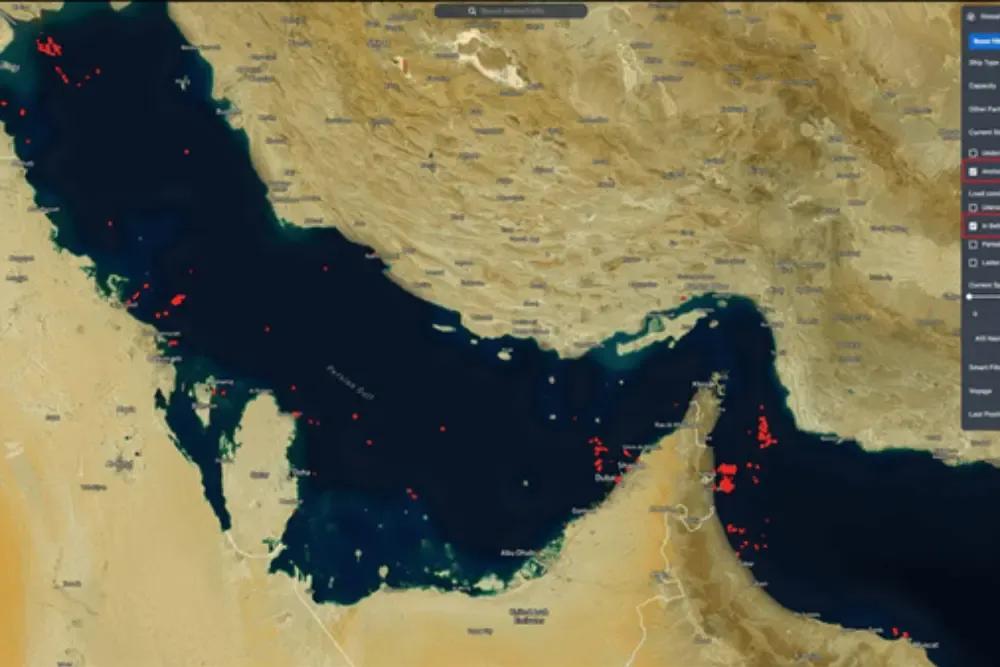
The dispute has drawn formal warnings to shipping companies through the International Maritime Organisation (IMO), after Iran published a map claiming regulatory control over a stretch of the Strait of Hormuz extending into the territorial waters of the United Arab Emirates and Oman.
In response, Bahrain, Kuwait, Qatar, Saudi Arabia and the UAE sent a joint letter to the IMO warning commercial and merchant vessels not to comply with Iran’s Persian Gulf Strait Authority (PGSA) requirements.
Iran’s plan is also framed in Parliament terms as an “intelligent management” mechanism that includes navigational guidance, inspection of passages and vessels, and the issuance of a financial capability certificate for potential fines.
U.S. talks and congressional doubts
Negotiations between the United States and the regime in Tehran are described as reaching a decision point, with American sources citing progress on reopening the Strait of Hormuz while sources close to Tehran stress that no final agreement has been reached.
The same coverage says disagreements remain unresolved over the fate of the enriched uranium stockpile, how and when to release blocked assets, and the sequencing of commitments.
In the United States, Republican Senator Tom Tillis described the regime’s commitment to reopening the Hormuz Strait without reaching a final peace agreement as ‘doubtful.’
Republican Senator Roger Wicker wrote on social media that ‘a 60-day ceasefire with the assumption that Iran will act in good faith would be a disaster.’
Democratic Senator Cory Booker told CNN that the U.S. president is ‘being played like a fool,’ while Chris Van Hollen described the framework as ‘a return to the status quo ante war.’
What Iran says it will do
Iran’s Parliament plan, as laid out in a nine-article mechanism, says the government in cooperation with the Armed Forces of the Islamic Republic of Iran would provide navigational guidance, inspect passages and vessels, and assess compliance.
The plan also states that vessels affiliated with hostile countries, except where approved by the Supreme National Security Council, and vessels that have violated duties under the law will not be allowed to pass through the Strait of Hormuz, with armed forces required to prevent passage.
To operationalize the system, the plan says the Ministry of Economic Affairs and Finance, with private sector participation, would establish a new company to provide services, and that the company would be up and running within at most three months after the law becomes enforceable.
The plan further specifies that the government shall collect navigational guidance service fees from vessels transiting the Strait of Hormuz in Rial, with fees set so the route remains cheaper than other transshipment routes.
In parallel, Iran’s sovereignty-stabilization plan is described by Ahmad Naderi as a step toward strengthening the rial, with payments made in rials, and he estimated revenue from managing and regulating maritime traffic in the Strait of Hormuz at between $10 and $15 billion per year.
More on Iran

Donald Trump Moves Cabinet Meeting From Camp David To White House Amid Iran Talks
11 sources compared
U.S. Strikes Hormozgan, IRGC Threatens Retaliation After Rubio Says Deal Possible
13 sources compared

U.S. Military Launches Self-Defense Strikes In Southern Iran, Targeting Missile Sites And Mine-Laying Boats
15 sources compared

Ayatollah Mojtaba Khamenei Warns Gulf Countries Won’t Shield US Bases After Iran Strikes
13 sources compared