
Iran rejects UK’s self-defense excuse for complicity with US
Key Takeaways
- Amir Saeed Iravani wrote to UN Secretary-General Guterres and UNSC President Waltz on March 8
- He called UK measures justified as self-defense 'unfounded and unjustifiable' under international law
- He warned such UK measures would amount to an act of aggression
Response to UK letter
Amir Saeed Iravani sent a letter dated March 8 to UN Secretary-General Antonio Guterres and President of the UN Security Council Michael G. Waltz responding to a UK letter of March 7, 2026 (S/2026/140).
“In a letter for UN Secretary-General Antonio Guterres and President of the UN Security Council (UNSC) Michael G”
He wrote that the measures the United Kingdom has undertaken under the pretext of the so-called right of self-defense are "unfounded and unjustifiable" under international law.
He wrote that those measures "would, in and of themselves, amount to an act of aggression."
The letter was submitted for circulation as an official document of the Security Council.
Iravani's UN statement
Iravani recalled his earlier letters of 3 and 7 March 2026 (S/2026/121–S/2026/139).
He stated that "the United States and the Israeli regime attacked the Islamic Republic of Iran on 28 February 2026," which he said was a flagrant violation of Article 2(4) of the Charter of the United Nations and the peremptory norm (jus cogens) of the "prohibition of aggression."
He described the initial incident as commencing with "a cowardly act of terrorism and war crimes against the Leader of a sovereign Member State of the United Nations and several other State officials, as well as thousands of civilians," and said Iran thereafter exercised its inherent right of self‑defense under Article 51 of the Charter.
Territorial use and legality
Iravani asserted that the aggressors used the territories and facilities of certain third States.
“In a letter for UN Secretary-General Antonio Guterres and President of the UN Security Council (UNSC) Michael G”
He invoked Article 3(f) of General Assembly resolution 3314 (XXIX) of 14 December 1974, saying it treats allowing another State to use one’s territory to perpetrate an act of aggression as an act of aggression.
On that basis he argued those third States could not lawfully request the United Kingdom to exercise collective self-defense, and that the United Kingdom would not be in a legal position to receive or act upon such a request.
Iravani's critique of UK
He concluded that the United Kingdom has failed to acknowledge the initial aggressors, namely the United States and the Israeli regime, and has "effectively reversed the roles and positions of the victim and the aggressor."
The article does not specify the specific measures the United Kingdom took nor identify the "certain third States" Iravani referenced; those details are not provided in the letter as quoted in this report.
More on Iran
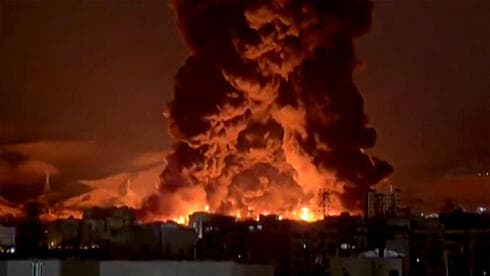
Trump Says U.S. Bombed Military Sites on Kharg Island, Iran's Oil Hub
14 sources compared
FBI Warns of Iranian Drone Plot Based on Unverified Tip; California Says No Credible Threat
10 sources compared

White House Demands ABC Retract Report Claiming Iran Sought To Launch Drone Attacks On California
11 sources compared

Iranian Proxy Claims It Shot Down US Refueling Plane in Iraq; US Military Says Otherwise
17 sources compared