Iran Strikes Gulf Energy Facilities as US and Israel Strike Back
Key Takeaways
- Iran targeted Ras Laffan LNG hub and Gulf energy facilities after Israel's South Pars strike.
- Global oil and gas prices surged after Gulf energy facilities were attacked.
- Reports vary on US knowledge or coordination of the South Pars strike.
Gulf Energy Attacks
Iran intensified major attacks on oil and natural gas facilities across the Gulf region Thursday, dramatically escalating the conflict with Israel and the United States.
“However, three Israeli officials said the operation had taken place in consultation with the United States, but was unlikely to be repeated”
The strikes came in direct retaliation for an Israeli attack on Iran's key South Pars gas field, the world's largest natural gas reservoir shared with Qatar.

Iran targeted energy infrastructure in Qatar, Saudi Arabia, Kuwait and the United Arab Emirates, hitting critical facilities that process a significant share of global energy supplies.
In Qatar, Iranian ballistic missiles struck the Ras Laffan Industrial City, causing extensive damage to liquefied natural gas facilities that process about one-fifth of the world's LNG supply.
Saudi Arabia reported attacks on its SAMREF refinery in the Red Sea port city of Yanbu, while the UAE and Kuwait also confirmed strikes on their energy infrastructure.
Market Impact
The Iranian attacks triggered severe disruptions to global energy markets, causing oil and gas prices to surge to multi-year highs.
Brent crude oil spiked to as high as $119 a barrel, up more than 60% since Israel and the US began their war against Iran on February 28, while European natural gas prices jumped 17% in a single session.
Energy analysts warned that the attacks could cause lasting global gas shortages, with QatarEnergy reporting that Iranian strikes had eliminated one-sixth of Qatar's LNG export capacity, representing $20 billion annually in lost revenue.
The closure of the Strait of Hormuz, through which a fifth of the world's oil is transported, further compounded supply concerns as Iranian naval operations effectively halted most commercial shipping in the vital waterway.
Market analysts noted that the disruptions would have far-reaching economic consequences, potentially triggering interest rate hikes and inflationary pressures worldwide.
US-Israeli Response
US and Israeli officials moved to coordinate responses to Iran's escalation, with US President Donald Trump issuing stark warnings and Israeli Prime Minister Benjamin Netanyahu agreeing to restrain further attacks on Iranian energy infrastructure.
Trump claimed that Washington 'knew nothing' about the Israeli strike on South Pars but warned that if Iran continued attacking Gulf energy facilities, the US would 'massively blow up the entirety of the South Pars Gas Field' at a scale 'Iran has never seen or witnessed before.'
Despite Trump's public distancing, Israeli officials confirmed that the strike on the gas field was coordinated with US consultation.
The Trump administration has stated multiple war objectives including degrading Iran's missile capabilities and nuclear program, with Defense Secretary Pete Hegseth declaring that the US military 'controls the fate' of Iran.
Meanwhile, Israel's military reported conducting its first strikes in the Caspian Sea, targeting Iranian Navy infrastructure in what it described as one of the most significant operations since the war began.
Regional Condemnation
The Iranian attacks drew widespread condemnation from Arab and Islamic nations, with 12 countries issuing a joint statement denouncing what they described as 'deliberate Iranian aggressions' targeting civilian infrastructure.
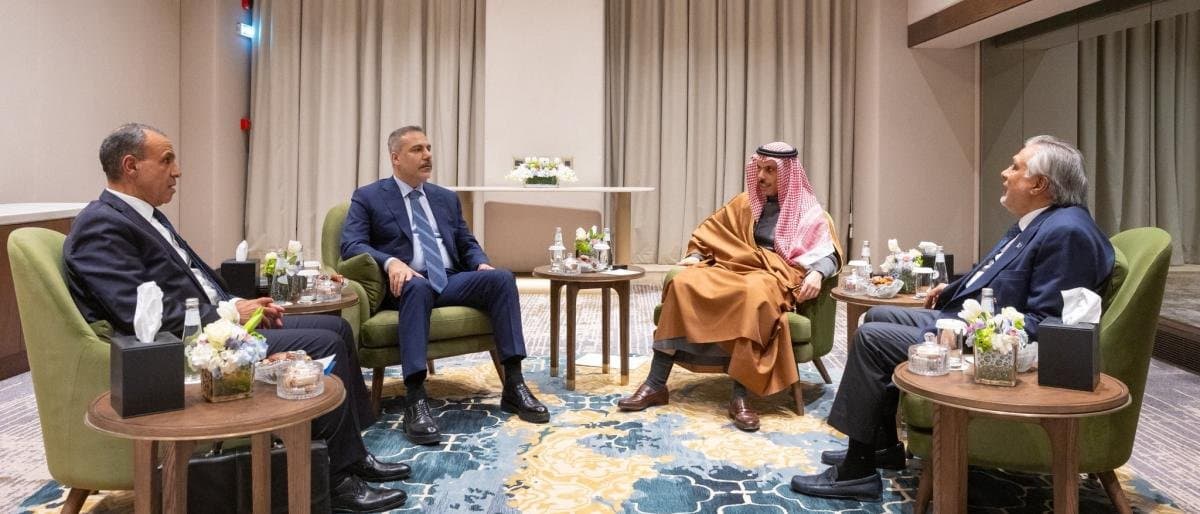
Foreign ministers from Qatar, Bahrain, Egypt, Jordan, Kuwait, Lebanon, Pakistan, Saudi Arabia, Syria, Turkey, UAE and Azerbaijan met in Riyadh to coordinate their response, condemning Iran's use of ballistic missiles and drones against residential areas, oil facilities, desalination plants, airports, and diplomatic premises.

Saudi Arabia's foreign minister Prince Faisal bin Farhan warned that Iran's pressure would 'backfire politically and morally' and that Saudi Arabia 'reserved the right to take military actions, if deemed necessary.'
European leaders also joined the chorus of condemnation, with French President Emmanuel Macron calling the attacks 'reckless' and UK Prime Minister Keir Starmer warning that 'attacks on critical infrastructure risked pushing the region further into crisis.'
The Arab League Secretary-General Ahmed Aboul Gheit described the escalation as 'dangerous,' while Qatar expelled Iranian diplomatic staff and declared them 'persona non grata' following the attack on its Ras Laffan facility.
Escalation Fears
The escalation of targeting energy infrastructure has raised serious concerns about the potential for uncontrollable regional conflict with global economic repercussions.
Analysis from multiple sources indicates that the Israeli strike on South Pars specifically targeted what experts describe as the 'single piece of infrastructure most essential to Iran's ability to function' - a field that provides 75 percent of Iran's domestic gas supply and powers roughly 80 percent of the country's electricity generation.

Human rights groups report that the conflict has already caused significant civilian casualties, with over 3,000 people killed in Iran since the US-Israeli attacks began on February 28, including at least 1,351 civilians.
Meanwhile, Iran's Islamic Revolutionary Guard Corps has warned that if further attacks on Iranian infrastructure occur, 'further attacks on your energy infrastructure and that of your allies will not stop until it is completely destroyed.'
International observers note that the conflict threatens to create lasting damage to global energy markets and could potentially trigger wider instability across the Middle East, with energy analysts warning that the attacks represent a dangerous new phase in the war with unpredictable long-term consequences.
More on Iran

Italy's Prime Minister Meloni Rules Out Military Mission in Strait of Hormuz, EU Favors Diplomacy.
10 sources compared

Trump Administration to Seize Iran's Kharg Island to Reopen Strait of Hormuz
16 sources compared

Iran Attacks Kuwaiti Oil Refinery as Tehran Steps Up Gulf Attacks
21 sources compared
Switzerland Halts Arms Exports to US Over Attacks on Iran, Citing Neutrality
16 sources compared