
Iran Attacks Kuwaiti Oil Refinery as Tehran Steps Up Gulf Attacks
Key Takeaways
- Iran launched drone attacks on Kuwait's Mina Al-Ahmadi refinery, triggering multiple fires.
- The strikes hit for a second consecutive day, prompting emergency response and refinery shutdown.
- Global oil prices surged as markets anticipated broader Gulf energy disruption.
Refinery Attacks Escalate
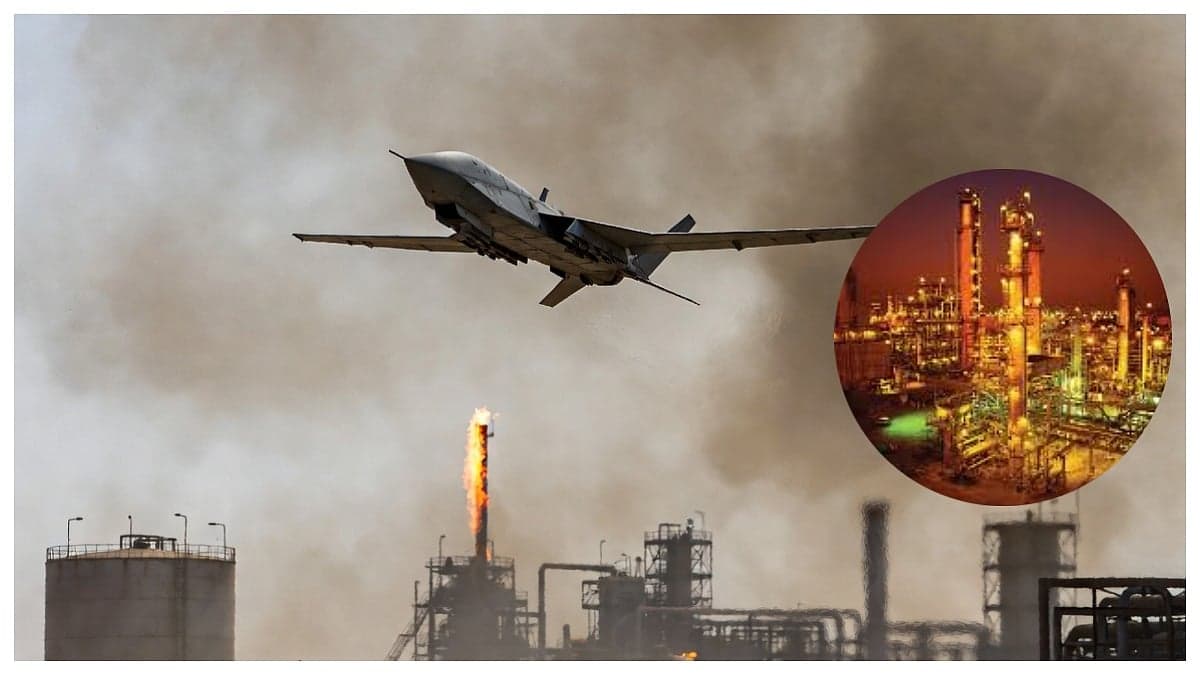
Iran escalated its regional campaign by attacking Kuwait's Mina Al-Ahmadi oil refinery for the second consecutive day on March 20, 2026, as part of a broader strategy targeting Gulf energy infrastructure.
“* 2h Facebook SunStar Davao's post [](https://www”
The drone strikes caused fires in several units at the facility, which processes 730,000 barrels of oil daily, though no casualties were reported according to preliminary assessments.

Kuwaiti emergency crews responded quickly to contain the blaze, with the state-run Kuwait Petroleum Corporation confirming that safety systems helped limit the damage.
This attack followed a similar strike the previous day that had already compromised the refinery's operations, representing a significant escalation in Iran's retaliatory campaign against Gulf states following Israel's bombing of Iran's South Pars gas field.
The attacks have heightened security concerns across the region as Gulf states scramble to protect critical infrastructure from increasingly sophisticated drone warfare.
Regional Warfare Escalation
Iran stepped up its attacks across multiple Gulf nations on March 20, 2026, creating a coordinated campaign of economic warfare targeting energy infrastructure.
The United Arab Emirates reported incoming missile and drone threats that triggered air defense systems, with heavy explosions shaking Dubai as interceptors engaged incoming fire over the city during Eid al-Fitr celebrations.

Bahrain's Interior Ministry confirmed a fire at a warehouse caused by shrapnel from what it termed 'Iranian aggression', while Saudi Arabia's defense ministry announced it had intercepted and destroyed more than a dozen drones within two hours across the country's eastern and northern regions.
Iran's Islamic Revolutionary Guard Corps claimed responsibility for hitting United States forces at the UAE's al-Dhafra airbase, as well as sites inside Israel.
These attacks represent a systematic targeting of Gulf energy infrastructure that has closed the strategically vital Strait of Hormuz, through which approximately one-fifth of the world's oil and LNG passes, sending global energy prices surging and creating supply chain disruptions worldwide.
Global Economic Impact
The coordinated Iranian attacks have triggered severe global economic consequences, with energy markets experiencing unprecedented volatility and supply chain disruptions worldwide.
“Supreme leader says Iran dealt enemies 'dizzying blow' Iran's Supreme leader Mojtaba Khamenei said Friday the country had dealt its enemies a "dizzying blow" in the war with the United States and Israel, as fresh blasts hit Tehran on the first day of the Persian New Year festival”
Brent crude oil prices spiked to over $119 per barrel during Iran's attacks on March 19 before easing to around $107 by March 20, representing a 47% increase since the conflict began on February 28.
Qatar's Ras Laffan Industrial City, the world's largest liquefied natural gas terminal, suffered 'extensive damage' from Iranian missile strikes, wiping out roughly 17% of global LNG supply and costing an estimated $20 billion in annual revenue.
QatarEnergy chief Saad al-Kaabi confirmed that repairs could take between three and five years, warning that the destruction had set the region back '10 to 20 years.'
Governments across Asia have begun rationing electricity and cutting office hours as the global energy system faces what the International Energy Agency calls 'the most severe energy crisis in history,' with oil and gas flows potentially taking up to six months to return to normal levels.
The systematic targeting of energy infrastructure has revealed critical weaknesses in global energy security frameworks and accelerated market reorientation toward alternative suppliers.
Military Escalation
Iran's retaliatory campaign has intensified dramatically since Israel's attack on Iran's South Pars gas field on March 18, with both sides launching simultaneous strikes across the region while marking religious holidays.
Israel launched further attacks on Iran overnight, with explosions heard in Tehran as Iranians celebrated Nowruz, the Persian New Year.

Israeli sirens sounded early Friday morning in central Israel, including Tel Aviv, due to a second Iranian missile barrage within the hour, with the army stating that air defense systems were attempting to intercept the incoming missiles.
Iranian Foreign Minister Abbas Araghchi warned that the strikes on Gulf infrastructure represented 'a fraction' of the country's capabilities, threatening 'zero restraint' should Iran's own energy facilities come under attack again.
In contrast, Israeli Prime Minister Benjamin Netanyahu stated that Israel had acted alone in striking South Pars and would hold off further attacks on energy infrastructure at the request of US President Donald Trump, who had distanced himself from the strike.
The Iranian Revolutionary Guard Corps continued missile production despite Israeli claims that Iran's capability had been neutralized, with spokesman Gen. Ali Mohammad Naeini stating 'We are producing missiles even during war conditions, which is amazing, and there is no particular problem in stockpiling.'
Naeini was killed in an Israeli airstrike early Friday morning.
Humanitarian & Diplomatic Response
The escalating conflict has caused significant humanitarian costs and triggered international diplomatic responses as regional and global leaders express concern over the unprecedented scale of the war.
“Mina Al-Ahmadi refinery, processing 730,000 barrels per day, represents a critical chokepoint in regional refined product supply chains”
According to casualty reports from multiple sources, more than 1,300 people have been killed in Iran during the conflict, while Israeli strikes against Iranian-backed Hezbollah in Lebanon have displaced over 1 million people.
Lebanon's government reports more than 1,000 deaths from Israeli strikes, while Israel claims to have killed over 500 Hezbollah militants.
In Israel, 15 people have been killed by Iranian missile fire, including 4 in the occupied West Bank.
At least 13 US military members have also been killed.
The human toll extends beyond battlefields, with Kuwaiti authorities arresting 109 people for filming and posting misinformation during the conflict.
Internationally, Egypt and Turkey's foreign ministers warned of 'catastrophic repercussions' of continued violence, while China called for an immediate end to the war, stating that history shows force is not a solution.
The NATO mission in Iraq has been evacuated amid security concerns, and Poland has withdrawn its troops from Iraq due to escalating regional tensions.
Ukraine has deployed interceptor units to protect infrastructure in five Middle Eastern countries, reflecting the war's global reach and complexity.
Long-Term Market Transformation
The Iran-Israel conflict has fundamentally reshaped global energy security architecture and created long-term structural changes in international energy markets that will persist long after hostilities cease.
The systematic targeting of Gulf energy infrastructure has exposed critical vulnerabilities in the global system, including processing concentration where Middle Eastern facilities handle 40% of global refining capacity, geographic clustering creating single points of failure, and limited redundancy with alternative processing operating at 90%+ utilization.
The conflict has accelerated existing trends toward energy market decentralization, with major energy companies demonstrating how security concerns drive investment toward politically stable regions like Alaska.
This represents a fundamental shift from cost-optimized global supply chains toward security-prioritized regional networks.
The crisis has also triggered technology investment acceleration across multiple categories, with infrastructure protection expected to reach $100-150 billion in the next 2-3 years, alternative processing $300-500 billion in 5-7 years, and emergency response frameworks $50-100 billion in 3-5 years.
The conflict has established new precedents for economic warfare through infrastructure attacks, demonstrating how regional conflicts can leverage energy vulnerabilities to achieve strategic objectives with limited military resources while creating maximum global economic disruption.
More on Iran

Police Scotland Arrest Iranian Man and Woman After Breach Attempt at Faslane Nuclear Submarine Base
14 sources compared
Trump Calls NATO Cowards as U.S. Sends More Marines Toward the Middle East
43 sources compared

Israel strikes South Pars gas field; Iran attacked Gulf energy sites
38 sources compared
Iran Targets Gulf Oil and Gas Facilities
74 sources compared