Iran Strikes Israel, US Bases, Calls for 'Trump's Blood'
Key Takeaways
- Iran launched a new wave of attacks on Israel, US bases, and regional countries
- Iran threatened the United States would "bitterly regret" torpedoing an Iranian warship
- Iran called for "Trump's blood" while Israel reported striking multiple targets in Iran
Strike on Iran’s leadership
A sudden and wide-ranging war began on Saturday when U.S. and Israeli forces struck deep into Iran, killing Iranian Supreme Leader Ayatollah Ali Khamenei and hitting Iran’s missile arsenal and nuclear facilities.
“DUBAI, United Arab Emirates (AP) — Iran launched a new wave of attacks Thursday at Israel, American bases and countries around the region, threatening that the United States would “bitterly regret” torpedoingan Iranian warshipin the Indian Ocean and calling for “Trump’s blood,” while Israel said it hit multiple targets in Iran”
Officials and leaders since then have described shifting and open-ended aims, including suggestions to topple Iran’s government.
The attacks set off a broader regional conflagration as Iran’s clerical establishment and allies reacted, and the conflict’s stated objectives and timelines have repeatedly changed.
Clerical calls for 'Trump's blood'
High-ranking cleric Ayatollah Abdollah Javadi Amoli issued one of the few explicit clerical statements, calling openly for violence by saying on state television that both Israeli and “Trump’s blood” should be shed and declaring “Fight the oppressive America, his blood is on my shoulders,” a rare and severe call from one of the highest ranks of the Shiite clergy.
Other social-media statements warned of consequences and said actors “will come to bitterly regret (the) precedent it has set.”
Regional spillover and incidents
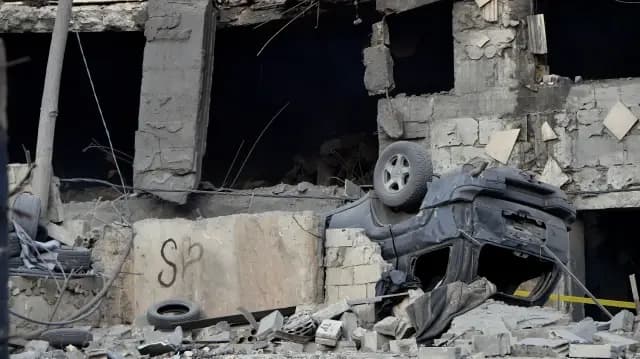
The conflict has spilled across the region: drones and missiles have fallen in or near Azerbaijan, Lebanon, the United Arab Emirates, Qatar, Saudi Arabia and off Kuwait’s coast, causing civilian injuries and widening the geography of attacks and strikes.
“DUBAI, United Arab Emirates (AP) — Iran launched a new wave of attacks Thursday at Israel, American bases and countries around the region, threatening that the United States would “bitterly regret” torpedoingan Iranian warshipin the Indian Ocean and calling for “Trump’s blood,” while Israel said it hit multiple targets in Iran”
In Azerbaijan a drone crashed near Nakhchivan airport and another fell near a school injuring two civilians.
In Abu Dhabi six people were wounded after a drone was shot down near the Al Dhafra Air Base.
Qatar evacuated residents near the U.S. Embassy and later reported a missile attack on the city.
Saudi Arabia said it destroyed a drone near its border with Jordan.
A tanker off Kuwait was apparently attacked, according to military authorities.
Economic and shipping impact
The fighting has disrupted global energy and shipping routes, especially through the Strait of Hormuz and the Gulf of Oman, pushing Brent crude roughly 15% higher since the conflict began and prompting market volatility even as U.S. stocks briefly rebounded.
Attacks on shipping and the threat to a corridor that carries about a fifth of the world’s oil have been cited repeatedly as the conflict’s economic multiplier.
Casualties and longevity concerns
Casualty figures are substantial and have been reported by officials inside the affected countries: more than 1,200 dead in Iran, more than 70 in Lebanon and around a dozen in Israel, according to official counts cited in reporting.
“DUBAI, United Arab Emirates (AP) — Iran launched a new wave of attacks Thursday at Israel, American bases and countries around the region, threatening that the United States would “bitterly regret” torpedoingan Iranian warshipin the Indian Ocean and calling for “Trump’s blood,” while Israel said it hit multiple targets in Iran”
The scale of those losses, together with the wide geographic spread of incidents and inflammatory clerical exhortations, has increased fears that the conflict could persist indefinitely rather than be confined to a short, limited engagement.