
Iran Threatens to Close Strait of Hormuz, Hit Power Plants After Trump's Ultimatum
Key Takeaways
- Trump issues 48-hour ultimatum to reopen Hormuz; threatens to destroy Iran’s power plants.
- Iran threatens to close Strait of Hormuz and strike Gulf energy infrastructure in response.
- Asian stock markets plunged; IEA chief warns global economy faces major threat.
Trump Ultimatum Sparks Crisis
President Donald Trump issued a 48-hour ultimatum to Iran on March 21, demanding the full reopening of the Strait of Hormuz or face destruction of Iranian power plants.
“RELATED ARTICLES Indirect Iran-US talks end ‘for now’: media; FM spokesperson says China maintains communication with parties on relevant issues Indirect talks between Iran and the US in Oman's Muscat ended "for now," and the two delegations may”
Trump warned that if Iran didn't 'FULLY OPEN, WITHOUT THREAT, the Strait of Hormuz, within 48 HOURS,' the United States would 'hit and obliterate their various POWER PLANTS, STARTING WITH THE BIGGEST ONE FIRST!' in a Truth Social post.
Iran's military operational command Khatam Al-Anbiya responded immediately, stating that any US attack on Iranian fuel and energy infrastructure would lead to direct retaliation against all American energy, information technology and desalination infrastructure regionally.
Iranian Parliament Speaker Mohammad Bagher Ghalibaf warned that if power plants are hit, infrastructure as well as energy and oil infrastructure across the entire region would be considered legitimate targets and 'irreversibly destroyed.'
Iranian President Masoud Pezeshkian countered that threats against Iran 'only strengthen our unity,' calling the illusion of erasing Iran from the map 'desperation against the will of a history-making nation.'
Escalating Counter-Threats
The escalating threats dramatically intensified as Iran issued multiple counter-ultimatums, warning that the Strait of Hormuz would be 'completely closed' if the US followed through with Trump's threat to attack power plants.
Iranian military officials specifically warned they would target power plants in the region that supply electricity to US military bases, as well as economic and industrial infrastructure in which Americans have shares.

In a particularly alarming escalation, Iran's Defense Council warned that any attempt to attack Iran's coasts or islands would result in 'all access routes in the Gulf being mined,' effectively extending the blockade beyond the strait itself.
Iranian Foreign Minister Abbas Araghchi attempted to shift blame, claiming that while the strait is not closed, ships are staying away due to insurers' fears created by the US, stating 'Strait of Hormuz is not closed. Ships hesitate because insurers fear the war of choice you initiated—not Iran.'
Meanwhile, the US Central Command led by Admiral Brad Cooper confirmed that US fighter jets had struck 5,000-pound bombs on an underground facility in the Iranian coast, which houses missiles to attack ships, destroying missile radar relays and missile intelligence support.
Market Panic & Economic Crisis
Global financial markets reacted sharply to the escalating tensions, with stock markets in Asia Pacific falling dramatically amid Trump's ultimatum warning.
“Global economy under 'major threat' from Strait of Hormuz crisis: IEA chief The global economy is under "major threat" from the energy crisis caused by the Middle East war and "no country will be immune" to its effects, International Energy Agency chief Fatih Birol said Monday”
South Korea's benchmark KOSPI plunged 6.5 percent on Monday, while Japan's benchmark Nikkei 225 fell 3.5 percent.
In Hong Kong, the Hang Seng Index tumbled more than 4 percent.
The global oil benchmark initially climbed to $114 a barrel before tumbling more than 7% to trade below $99 a barrel following Trump's announcement of a five-day postponement of strikes.
International Energy Agency head Fatih Birol warned that the global economy faces a 'major, major threat' from the war's disruption to oil and gas flows, stating 'No country will be immune to the effects of this crisis if it continues to go in this direction.'
Birol emphasized that the current situation was worse than the combined oil crises of 1973 and 1979, noting that 'only as of today,' global oil supplies had lost 11 million barrels per day – more than two major oil shocks put together.
The IEA head revealed that at least 40 energy facilities across nine countries have also been severely damaged in the conflict, exacerbating the global energy crisis.
Deadline Extension & Talks
In a dramatic development on Monday, President Trump extended his deadline for Iran to reopen the Strait of Hormuz by five days, announcing that the US would hold off striking Iranian power plants due to 'very good and productive conversations' that could yield 'a complete and total resolution' in the war.
However, Iran's Foreign Ministry immediately denied any dialogue between Tehran and Washington, stating Trump's announcement was 'an effort to reduce energy prices and gain time to carry out his military plans.'
Despite Iran's denial, Trump told reporters that Iran wants 'to make a deal,' claiming US envoys have been holding talks with a 'respected' Iranian leader.
The announcement brought temporary relief to financial markets, with oil prices easing and stock prices jumping on Wall Street following severe losses elsewhere in the world.
US Ambassador to the U.N. Mike Waltz defended Trump's approach, stating 'all options should be on the table and the president's made that very clear,' when asked about the possibility of bombing nuclear plants.
Meanwhile, NATO Secretary General Mark Rutte addressed growing concerns about Trump's criticism of the alliance, saying he had 'several conversations this week with the president' and that the U.S. could not share plans for Operation Epic Fury with European allies for security reasons.
Military Escalation
The conflict has intensified with significant military actions on multiple fronts.
“Live updates: Trump says Iran wants to reach deal to end war as Iran denies negotiations are taking place The Strait of Hormuz is a small strip of water connecting the Persian Gulf to the world’s oceans”
Iranian ballistic missiles hit the cities of Dimona and Arad in southern Israel on Saturday evening, injuring 175 people and causing extensive destruction in at least 10 apartment buildings, three of which were threatened with collapse.

A 12-year-old boy was the most severely injured in the attacks.
In a historically significant development, Iran fired two long-range missiles at the joint US-British military base at Diego Garcia in the Indian Ocean, approximately 4,000 kilometers away from Iran.
Iranian Speaker of Parliament Ghalibaf commented that if the Israeli regime cannot fire missiles in the heavily protected Dimona region, it is operationally a sign of entering a new stage of the war.
Meanwhile, the United Arab Emirates reported that its air defense systems intercepted seven ballistic missiles and 16 drones launched by Iran on Monday, with the UAE stating it has faced 352 ballistic missiles, 15 cruise missiles and 1,789 drones since the start of the US-Israel campaign on February 28.
Israeli forces also continued their operations, striking the Qasmiyeh bridge near Tyre after giving an hour's warning, and accelerating destruction of Lebanese homes near the border.
International Response
The international community has expressed growing alarm over the escalating tensions, with multiple nations calling for de-escalation and expressing concern about the humanitarian and economic consequences.
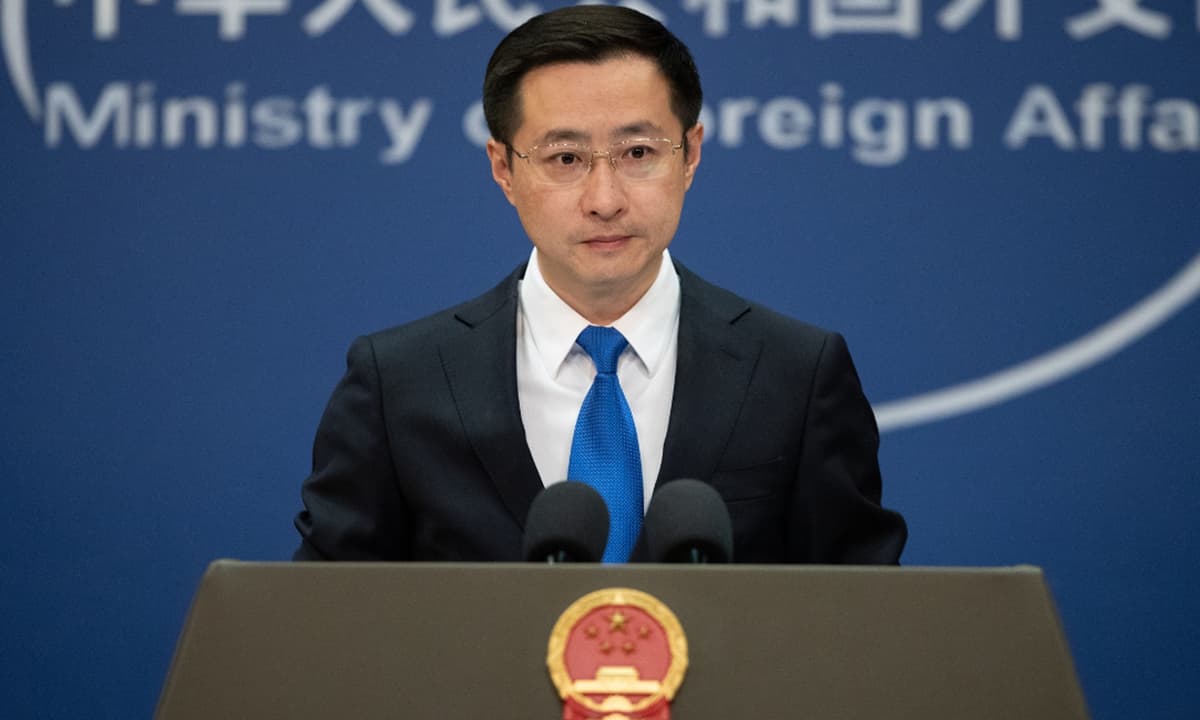
Chinese Foreign Ministry spokesperson Lin Jian called on 'all parties to immediately halt military actions, avoid further escalation of tensions, and prevent regional instability from causing greater impact on global economic development,' adding that China maintains communication with all relevant parties regarding the current situation.
Spanish Prime Minister Pedro Sánchez demanded the Strait of Hormuz be opened and called for 'the preservation of all energy sites of the Middle East,' warning that 'We stand at a global tipping point. Further escalation could trigger a long-term energy crisis for all humanity.'
Russia has also expressed serious concern, with the Kremlin warning of potentially catastrophic consequences from US-Israeli strikes near Iran's Bushehr nuclear facility.
Kremlin spokesperson Dmitry Peskov said Russia has conveyed its concerns directly to Washington, stressing that attacks on nuclear facilities are 'extremely dangerous' and could lead to irreversible fallout.
Meanwhile, the exiled son of Iran's last shah, Crown Prince Reza Pahlavi, called on the U.S. and Israel to 'continue targeting the regime and its apparatus of repression, while sparing the civilian infrastructure Iranians will need to rebuild our country,' stating that 'Iran's civilian infrastructure belongs to the Iranian people and to the future of a free Iran.'
More on Iran

President Trump delays strikes on Iran power plants for five days amid conflicting reports.
41 sources compared

Trump Extends Deadline to Reopen Strait of Hormuz, Delays Strikes on Iranian Power Plants.
27 sources compared
Trump Says Talks With Iran Ongoing; Iran Denies Negotiations.
15 sources compared

US State Department Warns Americans Worldwide of Possible Attacks Amid War With Iran
14 sources compared