
Iran Vows To Draw Blood, Refuses To Parley Despite Devastating Airstrikes
Key Takeaways
- Iran's leaders believe they must inflict serious pain on enemies before negotiations start
- Iran refuses to parley or sit down with President Donald Trump
- Iran endures devastating airstrikes
Iran-U.S. conflict update
The confrontation between Iran and U.S.-aligned forces has entered a prolonged, uncertain phase.
“Iran wants 'blood' as Trump says US can fight 'forever'”
Iranian leaders have vowed to "draw blood" and refused direct talks.
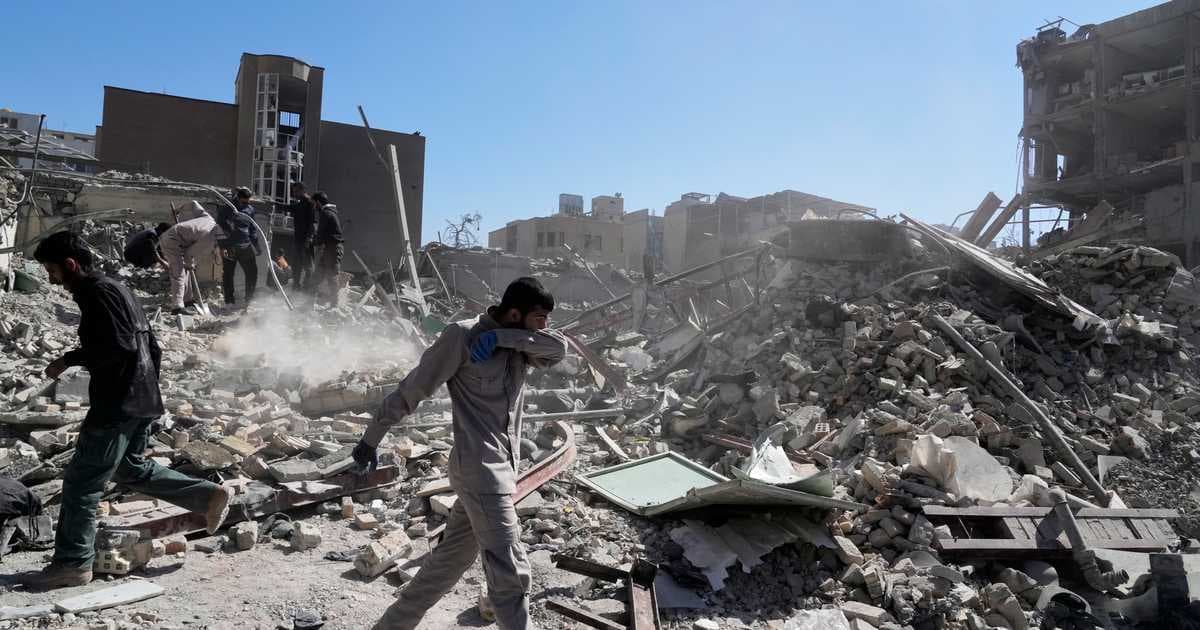
A punishing air campaign has inflicted significant damage.
President Trump has told Americans to expect "several more weeks of conflict."
He has floated inconsistent strategies, from demanding Iran abandon nuclear weapons to urging Iranians to rise up and proposing a Venezuela-style accommodation.
Critics have called those moves "wishful thinking."
Iran strikes and air defenses
Militarily, the crisis has become a race between Iran’s long-range strikes and shrinking allied air defenses.
U.S. officials say Iran has launched more than 2,000 drones and roughly 500 ballistic missiles, pushing air-defense systems to their limits.
The confrontation has so far produced relatively low allied fatalities — the report notes six U.S. war dead — while Iranian deaths exceed 700, underscoring severe asymmetry in human cost even as interceptors have blunted many attacks.
Air-defense interceptor shortages
A central strain in allied planning is the depletion of interceptors and regional air-defense stocks.
“Iran wants 'blood' as Trump says US can fight 'forever'”
The story reports that Qatar has only days of Patriot missiles left, the UAE is seeking outside help, and partners such as Italy are repositioning defenses to the region.
Those shortages force stark choices about what and whom to protect if interceptors run out.
The administration has not publicly resolved this problem.
Iranian stance vs U.S. pressure
Tehran appears determined to act independently of U.S. expectations.
The piece highlights that Iran’s leaders are not seeking Washington’s approval even as Trump publicly presses Iranians to overthrow their clerical rulers.
Critics call that tactic unrealistic given recent deadly crackdowns and the deaths of many regime figures the administration references.
That gap between U.S. rhetoric and on-the-ground Iranian posture complicates diplomatic avenues.
Regional strategic strain
The overall picture is one of mounting strategic and logistical strain with unclear endgame.
“Iran wants 'blood' as Trump says US can fight 'forever'”
High Iranian casualties and massed Iranian strikes on the one hand, shrinking allied interceptors and political incoherence on the other, leave regional leaders facing hard choices about escalation, what to defend, and how long to sustain operations.
The report suggests that while the U.S. has signalled readiness to continue the fight, it has yet to solve the immediate materiel shortfalls that could determine whether the confrontation widens or grinds into attrition.
More on Iran-Israel

Escalation in Iran Pushes Oil Near $120, Sparks Gas Price Surge in Los Angeles
10 sources compared
U.S. Intercepts Iran Message Activating Sleeper Cells After U.S.-Israel Strike Kills Khamenei
14 sources compared

Iran Threatens To Confiscate Property Of Iranians Abroad Who Support US And Israel
14 sources compared
Ukraine Sends Drones, Experts to Shield U.S. Bases in Jordan From Iran
16 sources compared