Iran war and breaking news on oil prices, live | Trump now hints that a dialogue with Iran is possible: "Depends on what terms"
Key Takeaways
- Trump hinted dialogue with Iran could be possible, stating it 'depends on what terms'.
- Iran replied: 'We will decide when the war ends, not the United States'.
- Sánchez's government said 'the alternative to international order is disorder; choose peace or war'.
Middle East war escalation
Iran's Revolutionary Guard warned the United States: 'We will decide when the war ends, not the United States.'
Alí Larijani wrote on X to President Donald Trump, 'Be careful not to be eliminated!'
Iran's Revolutionary Guard announced a new salvo of missiles against Israeli and U.S. targets, saying it used Fateh, Emad and Kheibar missiles.
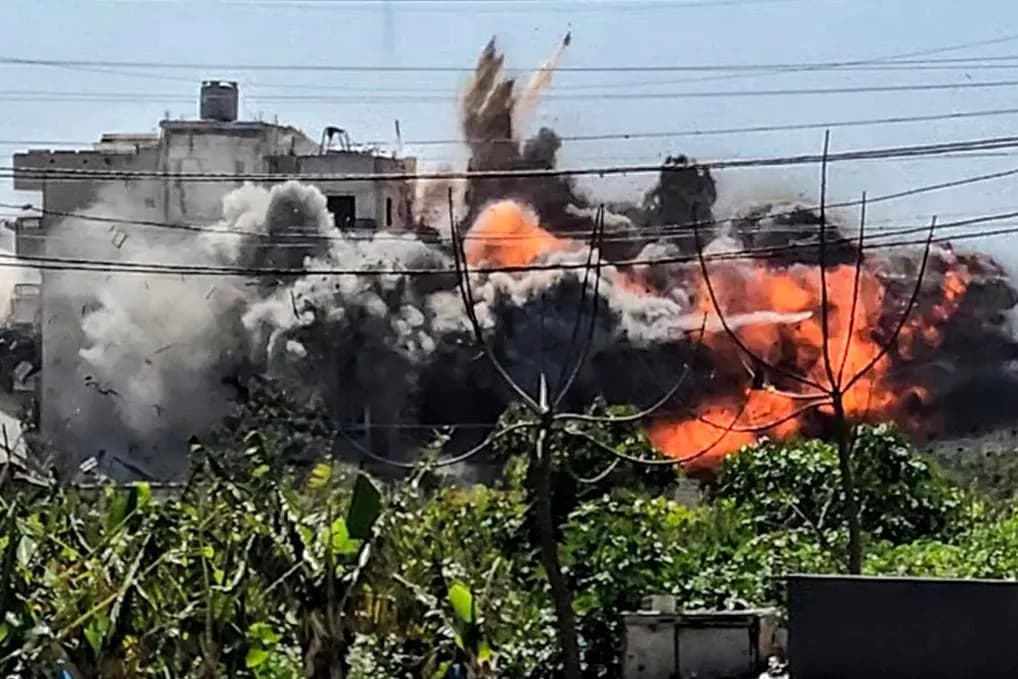
From Washington, U.S. Secretary of Defense Pete Hegseth warned of 'our most intense day of strikes inside Iran,' and the Israeli army announced a new wave of bombings against 'regime targets' in Iran.
The piece states the war began on February 28 with an attack by Israel and the United States.
It cites Reuters figures that about 2,200 people have died in the conflict, 'the vast majority in Iran (more than 1,600) and Lebanon (almost 500),' while noting Reuters has not independently verified those figures.
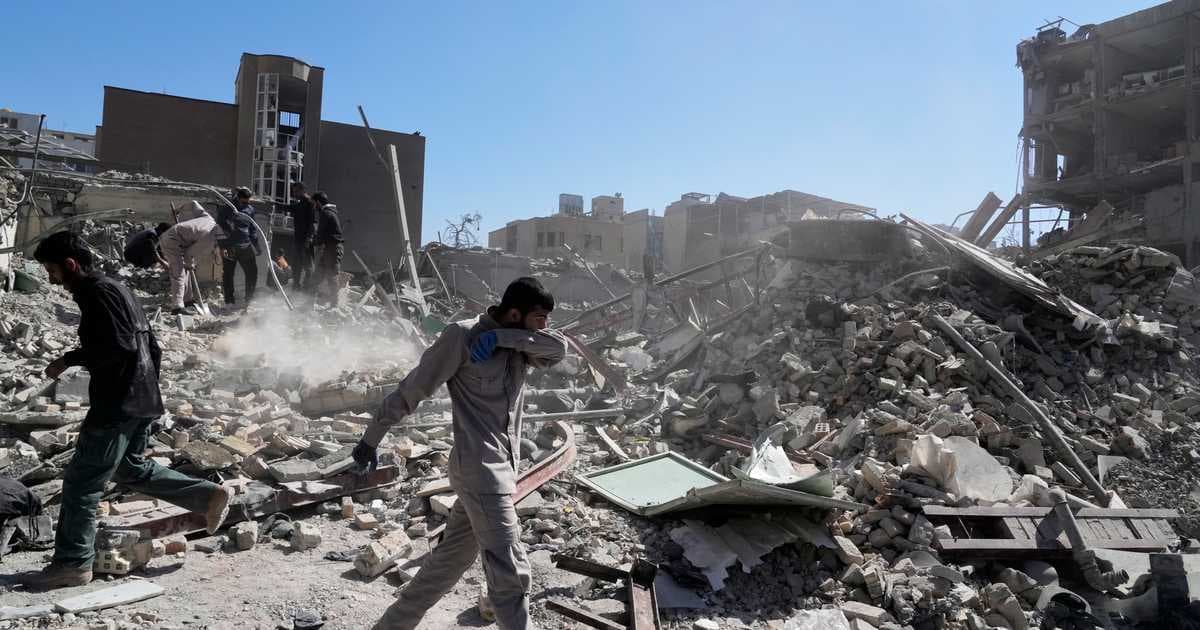
A Reuters breakdown later cited Iran: at least 1,630 dead, including 40 killed in an Israeli attack on a residential area.
Regional conflict and repercussions
The conflict has spread across the region with multiple military, political and economic effects.
Israel says Iran has fired cluster munitions, which AP reports are hard to intercept and can leave unexploded bomblets.
Israel has also bombed southern Beirut suburbs and pushed further into southern Lebanon, actions that the Lebanese Ministry of Health says have killed nearly 500 people, including more than 80 children.
Iranian parliament speaker Mohammad Bagher Ghalibaf warned any attack on Iranian infrastructure would draw a "proportionate and immediate response," writing "eye for an eye, tooth for a tooth" on X.
Iran's Intelligence Ministry told state media it arrested 30 people it accuses of spying and acting as mercenaries.
The official Tasnim agency provided no details on nationalities or detention locations.
Russia's Vladimir Putin spoke by phone with Iranian president Masud Pezeshkian and, the Kremlin said, reaffirmed his stance in favor of rapid de-escalation while Pezeshkian thanked Russia for humanitarian aid.
The Ruwais industrial complex in the UAE suffered a fire after a drone attack on ADNOC facilities.
Ukraine said it will send drone specialists to Gulf states to help shoot down Iranian Shahed drones.
Market and diplomatic fallout
Wall Street opened with modest losses (Dow -0.11%, S&P 500 -0.17%, Nasdaq -0.01%) as investors hesitated after Iran's response to President Trump.
European officials and the G7 discussed measures to stabilize oil prices.
European Commissioner for Energy Dan Jorgensen recommended that member states which can afford it consider reducing energy taxes.
French Economy Minister Roland Lescure said the G7 is ready to act urgently to stabilize markets.
President Trump told Fox News he would consider talking with Iran 'depending on what terms,' insisted the U.S. is 'winning the war,' and repeated Pentagon claims that more than 5,000 targets in Iran have been hit since the offensive began.
Israeli Foreign Minister Gideon Saar said Israel does not seek 'a never-ending war' and that it will end 'in due course' after consultation with the United States.
Where sources conflict or provide limited detail, the article notes uncertainty: Reuters has not independently verified casualty figures, Tehran denies being eager to talk despite President Trump's claim, and Tasnim gave no specifics about the alleged detainees.
More on Iran-Israel

Escalation in Iran Pushes Oil Near $120, Sparks Gas Price Surge in Los Angeles
10 sources compared
U.S. Intercepts Iran Message Activating Sleeper Cells After U.S.-Israel Strike Kills Khamenei
14 sources compared

Iran Threatens To Confiscate Property Of Iranians Abroad Who Support US And Israel
14 sources compared

Ukraine Sends Drones, Experts to Shield U.S. Bases in Jordan From Iran
16 sources compared