
Iran War Disrupts Global Sulphur and Fertilizer Supplies, Threatening Food Inflation As Planting Begins
Sulphur supply risks to China
The Middle East conflict is tightening sulphur supplies — a critical raw material for fertiliser — at the start of China’s spring planting season, risking immediate pressure on fertiliser production as demand rises.
“Iran war hits China’s sulphur imports as economic fallout from conflict grows Supplies of sulphur – a key fertiliser ingredient – are tightening in China just as the spring planting season begins The escalating conflict in the Middle East is having a direct impact on China’s access to sulphur – a raw material for producing fertiliser – just as the country enters its vital spring planting season”
The South China Morning Post reports that the escalating conflict is directly disrupting China’s access to sulphur at the start of its crucial spring planting season and that supplies are tightening just as demand rises.

The South China Morning Post article also cites a December report by Guosen Securities saying China imports about 47% of its sulphur.
Analysts cited by The Economic Times warn that disruptions tied to a potential Iran war and restrictions on shipping through the Strait of Hormuz are a core channel for this supply shock.
Global fertiliser supply risks
Beyond sulphur, the wider fertiliser complex faces material disruption because Iran is a major producer of urea and an important supplier of ammonia; restrictions on Gulf shipping and broader military escalation could choke exports and push global fertiliser availability lower.
The Economic Times points out that "Iran is the world’s third-largest urea producer and an important ammonia supplier," and warns that export disruptions via the Strait of Hormuz could reduce harvests and "cause reduced harvests and higher global food prices months later."
The South China Morning Post frames this as part of a broader economic risk stemming from tightened raw-material flows into major agricultural economies such as China.
Fertiliser disruption timing risks
Because food systems run on seasonal cycles, analysts say the full consequences of disrupted fertiliser and sulphur flows may not appear immediately but could emerge through 2026 and beyond — a timing problem for planting and import planning windows.
“Iran war hits China’s sulphur imports as economic fallout from conflict grows Supplies of sulphur – a key fertiliser ingredient – are tightening in China just as the spring planting season begins The escalating conflict in the Middle East is having a direct impact on China’s access to sulphur – a raw material for producing fertiliser – just as the country enters its vital spring planting season”
The Economic Times explains that energy markets typically adjust quickly, but food systems work on seasonal cycles that cannot be sped up, so the full effects may not show until 2026 or beyond if Hormuz shipping remains restricted and Gulf fertiliser production is disrupted.
The South China Morning Post’s emphasis on the timing of China’s spring planting underlines how a short-term shipping shock can have multi-season agricultural impacts.
Fertiliser supply risks
India is highlighted as particularly exposed, importing roughly 2 million tonnes of fertiliser monthly and heavily dependent on imports for key nutrients.
Gulf disruptions could raise domestic fertiliser prices, swell subsidy costs and jeopardise the kharif season that begins with the monsoon.
The Economic Times says "India imports about 2 million tonnes of fertiliser monthly, relying almost entirely on imports for muriate of potash and up to 60% for DAP," and warns that disrupted supplies "could push fertiliser prices up, raising India’s subsidy bill and threatening the kharif season (monsoon crops starting in June)."
The South China Morning Post's reporting on China's sulphur vulnerability underscores a parallel risk for other large importers in Asia.
Food inflation risks from shortages
Analysts warn a chain reaction from sulphur and fertiliser shortages to higher input costs would widen food inflation and could hit staples like bread, eggs, pork and poultry if the Strait of Hormuz remains constrained.
“Iran war hits China’s sulphur imports as economic fallout from conflict grows Supplies of sulphur – a key fertiliser ingredient – are tightening in China just as the spring planting season begins The escalating conflict in the Middle East is having a direct impact on China’s access to sulphur – a raw material for producing fertiliser – just as the country enters its vital spring planting season”
The Economic Times warns such disruptions 'could cause reduced harvests and higher global food prices months later, hitting staples such as bread, eggs, pork and poultry' and cautions the scale 'could rival or exceed the 2022 food shock from Russia’s invasion of Ukraine'.
The South China Morning Post focuses on immediate raw-material shortfalls for China, adding urgency to the prospect of broader price pressures.
Key Takeaways
- Iran war is disrupting sulphur, ammonia and urea supplies
- Supplies are tightening just as the spring planting season begins
- Disruptions threaten to ripple through global agriculture and raise food inflation
More on China

President Xi Jinping Rubber-Stamps $30 Trillion Five-Year Plan To Weaponize PLA And Boost Growth
12 sources compared

German Chancellor Friedrich Merz Presses President Xi Jinping to Reduce Market Distortions, Urges Chinese Investment
13 sources compared
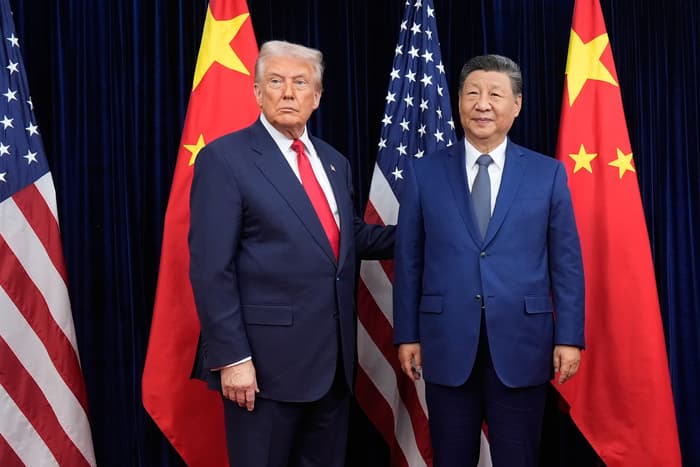
White House Confirms President Donald Trump Will Visit China March 31–April 2 To Meet Xi Jinping
17 sources compared

Beijing Uses National Security Law to Jail Pro-Democracy Media Mogul Jimmy Lai for 20 Years
118 sources compared