
Iran warns UAE ports host American hideouts; evacuations ordered amid Kharg Island strikes.
Key Takeaways
- Iran warns UAE ports and US-linked hideouts as targets.
- Iran urges citizens to evacuate UAE ports amid strikes.
- U.S. strikes Kharg Island targeting military sites; oil infrastructure spared.
UAE Evacuation Warning
Iran has issued an unprecedented warning to residents of the United Arab Emirates, urging civilians to evacuate major ports and facilities.
The Islamic Revolutionary Guard Corps (IRGC) declared that US 'hideouts' in UAE ports, docks, and military areas are now 'legitimate targets' for potential retaliation.
This dramatic escalation marks the first time Iran has explicitly threatened infrastructure in a neighboring Gulf state.
The IRGC statement, carried by Iran's semi-official Mehr news agency, called on UAE residents to stay away from areas where US forces are allegedly positioned.
Tehran describes this as its 'legitimate right' to defend national sovereignty against what it claims are US missile launches from UAE territory.
Kharg Island Strikes
The warning came directly after the United States conducted large-scale precision strikes on Iran's Kharg Island, the country's primary oil export terminal.
US Central Command reported that more than 90 Iranian military targets were hit, including naval mine storage facilities and missile storage bunkers.
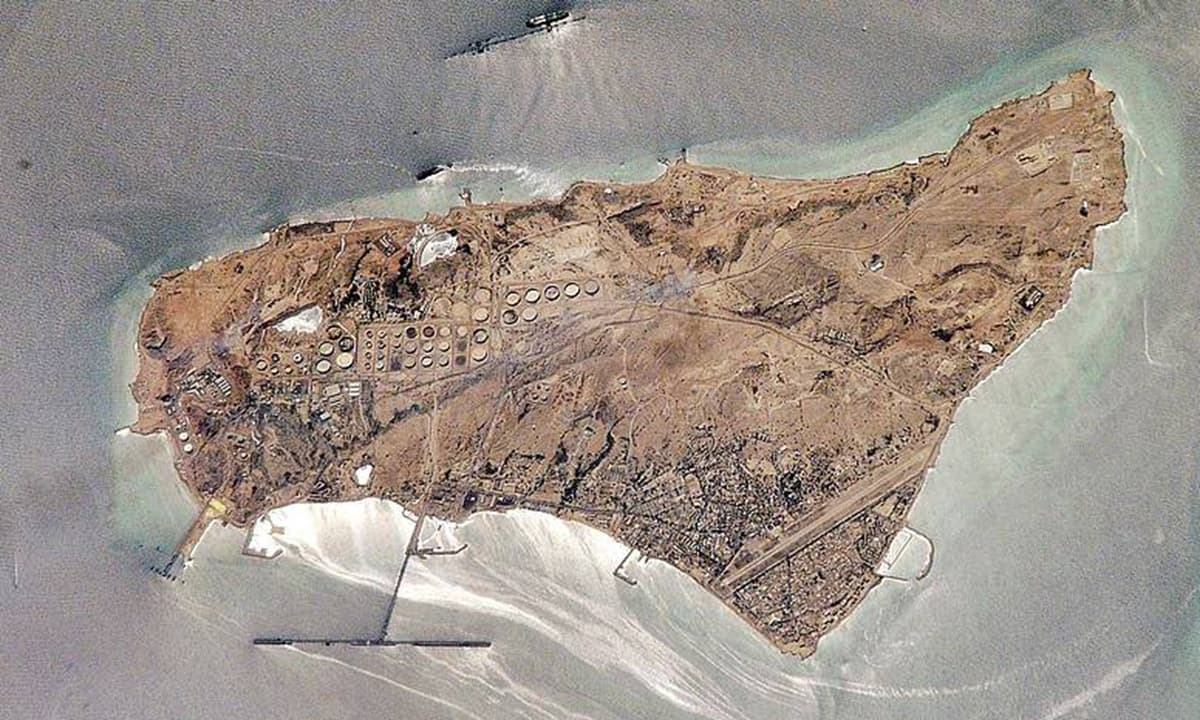
President Donald Trump announced the operation on Truth Social, claiming it was 'one of the most powerful bombing raids in the History of the Middle East'.
Trump stated the strikes had 'totally obliterated every MILITARY target' on the strategic island while preserving oil infrastructure.
He emphasized he had chosen not to target the oil infrastructure 'for reasons of decency' but warned this could change if Iran interfered with shipping through the Strait of Hormuz.
Gulf Infrastructure Under Threat
The escalating tensions manifested in physical attacks across the Gulf region, with debris from an intercepted Iranian drone causing a large fire at the UAE's Port of Fujairah.
No casualties were reported, but some oil-loading operations were temporarily suspended at the facility that handles approximately 1 million barrels per day.
The incident occurred hours after Iran's military warning to evacuate port areas, suggesting either a coordinated attack or direct response.
Smoke was seen rising from the US Embassy compound in Baghdad after a missile strike, prompting the State Department to warn American citizens to leave immediately.
These incidents demonstrate how the conflict has spread beyond direct military exchanges to affect civilian infrastructure and diplomatic facilities across the region.
Global Economic Impact
The global economic implications of the intensifying conflict have become increasingly severe, with oil prices surging to over $100 per barrel.
Iran effectively blocks shipping through the Strait of Hormuz, a critical waterway through which 20% of the world's oil passes.
The International Energy Agency described this as 'the biggest oil supply disruption in history,' prompting discussions about releasing emergency reserves.
US President Trump has called on multiple countries to send naval forces to help secure the strait, suggesting the US may not be able to reopen it alone.
Iran's Foreign Minister Abbas Araghchi mocked Trump's requests as 'begging' while insisting the Strait remains open to most international shipping.
This economic warfare has created ripple effects with shipping insurance premiums for Persian Gulf transit tripling and global market concerns.
Military Buildup & Diplomacy
Military deployments and diplomatic efforts have intensified as the conflict enters its third week.
“Embassy in Baghdad, two security officials said”
The United States has ordered 2,500 additional Marines and the amphibious assault ship USS Tripoli to the Middle East.

Officials emphasized this deployment doesn't necessarily indicate a ground operation is imminent.
The Marine Expeditionary Unit specializes in embassy security, civilian evacuations, and disaster relief.
French President Emmanuel Macron has offered to host direct talks between Israel and Lebanon.
Macron urged both sides to halt escalatory actions and prevent Lebanon from 'sliding into chaos'.
The humanitarian crisis deepens with Lebanon reporting over 800 killed and 850,000 displaced from Israeli strikes against Hezbollah.
Humanitarian Crisis
The civilian humanitarian impact of the rapidly escalating conflict has become increasingly apparent across the region.
In Iran, the UN estimates 3.2 million people have been displaced by the fighting, though relatively few have chosen to flee the country.
Only about 1,300 Iranians cross into Turkey daily since the war began, according to UN estimates.
The situation is particularly dire in Lebanon, where over 100 children have been killed in Israeli airstrikes.
Thirty-one paramedics were among those killed when a healthcare center was struck, according to Lebanese health authorities.
In the UAE, reports emerged of pets being abandoned as residents flee the country amid escalating conflict.
Hundreds of merchant vessels with thousands of crew members remain trapped in the Strait of Hormuz, unable to return home while facing ongoing hostilities.
More on Business

Iran Drone Attack Hits UAE Fujairah Port, Halting Oil Loading
11 sources compared

Senate Passes Bipartisan Housing Bill Banning Institutional Investors From Buying Single-Family Homes
19 sources compared
Senate Passes Bipartisan Housing Bill Banning Institutional Investors From Buying Single-Family Homes
29 sources compared

Lucid Group Reveals Cosmos and Earth Midsize EVs Starting Under $50,000
10 sources compared