
Iran’s IRGC Media Proposes Fees and Monitoring for Strait of Hormuz Internet Cables
Key Takeaways
- IRGC-linked media call to impose fees on Hormuz cables.
- Hormuz cables tied to global digital infrastructure risk.
- Move framed as geopolitical brinkmanship with Western powers.
Hormuz cable fees
Iranian state-linked media and IRGC-linked outlets have floated a plan to impose fees on submarine fibre-optic cables running through the Strait of Hormuz and to monitor global data traffic as a new pressure point against the West.
“For decades, the strategic importance of the Hormuz Strait and the Middle East's sea lanes tied to oil flows and energy supplies”
Euronews reported that Tasnim News Agency proposed Iran charge transit fees to international consortia that own and operate the cables and offer maintenance services, and that Mostafa Taheri put potential revenues at "up to $15 billion."

The Asian outlet Outlook Business said Iran’s comments expose a web of "more than 500 undersea cables" that carries "more than 95% of international data traffic," with several cables carrying critical internet traffic between India, Europe and West Asia.
Outlook Business also warned that cable disruptions could slow internet, cloud services and financial systems across India, including buffering videos, disrupted video calls and lag in cloud services.
Euronews added that Tasnim claimed at least seven major communication cables serving Gulf countries pass through the strait, including the FALCON, GBI and Gulf-TGN systems.
Legal fight and monitoring
Euronews said the legal basis for the cable-fee proposals is weak, with Iranian outlets citing the UN Convention on the Law of the Sea while UNCLOS also includes a transit passage principle protecting uninterrupted flow of international navigation and communications.
Euronews reported that Iran has signed UNCLOS but never ratified it, and that submarine cables are owned by international consortia, meaning any attempt to impose fees or monitor them would face international legal and political resistance.
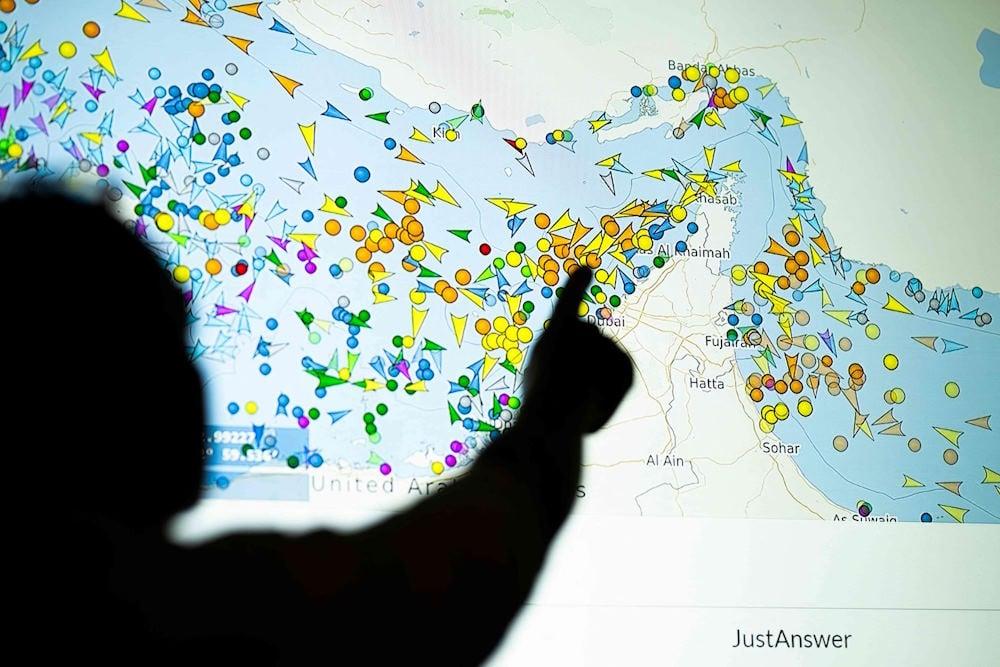
Al-Jazeera Net framed the threat as a way Iran could "gain control of Internet cables and charging operators as leverage," describing it as sensitive because it could disrupt navigation and trade through the Strait.
Al-Jazeera Net also said an Iranian media escalation included a 24 April Fars article describing underwater cables at the depth of the Strait as hidden infrastructure that could become a strategic weak point, alongside Tasnim presenting a legal angle for regulating passage and maintenance and charging fees.
The same Al-Jazeera Net account warned that striking fibre optic cables in Hormuz could cripple oil production and exports and disrupt financial and monetary markets of Gulf states.
Risks, outages, and escalation
Al-Jazeera Net described fragility of alternatives by citing researcher Meredith Bremrose Jones, who argued the network relies on physical infrastructure of "more than 500 submarine cables" carrying "over 95% of international data traffic," and that the figure rises to about 99% according to ITU estimates reported by Reuters.
Al-Jazeera Net said experts cited by Reuters warned satellite systems like Starlink do not offer a practical substitute for submarine cables in terms of cost and capacity, and it added that the US–Iranian clash has already delayed the construction of new cables.
The outlet also reported that submarine cables are subject to roughly "150 to 200 outages annually" worldwide, with about "70 to 80 percent" due to incidental human activity such as fishing and dragging anchors, making intent difficult to prove.
Al-Jazeera Net quoted Alan Mauldin, director of research at TeleGeography, saying one of the biggest problems in repairs is obtaining entry permits to the waters where the damage occurred, which "can take a long time."
It further warned that beyond deliberate cuts, Iran could delay granting passage to maintenance ships, turning an outage into a long-term crisis without firing a shot, as the same account described a double-edged weapon because Iran itself is connected through a GBI cable system.
More on Iran
Russia Presses Toward Kharkiv as Vovchansk Fighting Continues, BBC Reports
12 sources compared

Mahmoud Abbas Casts Ballot in Fatah Leadership Elections in Ramallah, Gaza, Cairo, and Beirut
16 sources compared
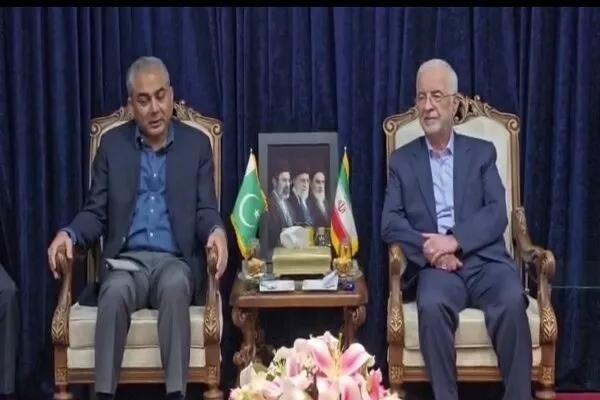
Iran And Pakistan Interior Ministers Meet In Tehran To Restart U.S.-Iran Peace Talks
12 sources compared

United States and Israel Prepare Renewed Strikes Against Iran As Early As Next Week
13 sources compared