Other · 15 March, 2026 · 5 min read
Iraq's Sudani: War decisions rest with state institutions; attacks on embassies risk dangerous consequences.
Decisions on war and peace rest solely with Iraqi state institutions. The regional war has expanded and now threatens Iraq's infrastructure and energy.
Internal security developments and external strikes tied to the same crisis.
1 of 2 outlets skipped it: the U.S. Embassy compound in Baghdad's Green Zone was struck early Saturday, with thick smoke rising from the compound..
2outlets compared
Same story, two versions
tap a side to read it in full
Kurdistan24
“Commenting on developments in Lebanon, Sudani said Israeli actions had worsened the regional crisis, pointing to the displacement of around 900,000 Lebanese civilians.”Read the original ↗
964media
“The war has expanded and all parties are now facing an imminent danger, Sudani said during a meeting with Shia and Sunni religious figures, adding that Iraq faces “major challenges” his government is working to address.”Read the original ↗
Shows different focal points within the same event: one outlet highlights humanitarian impact in Lebanon, the other emphasizes the broader threat to Iraq and the authority of the state in decisions about war.
State War Authority
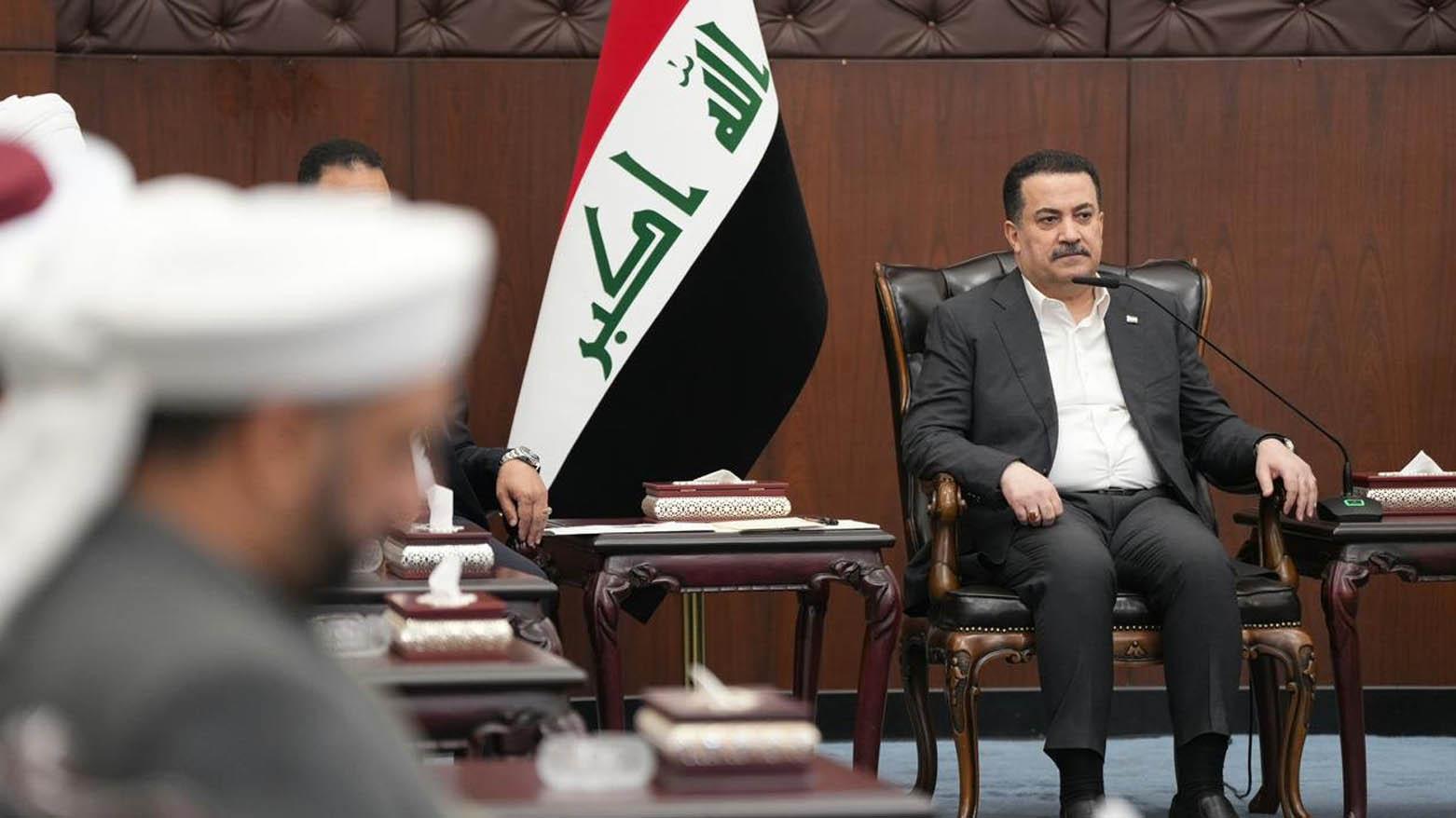
Iraqi Prime Minister Mohammed Shia al-Sudani has firmly asserted that decisions regarding war and military escalation fall exclusively under the authority of the state and its official institutions. During a meeting with religious leaders in Baghdad on Saturday, Sudani emphasized that only state institutions possess the legitimate authority to make decisions about war and peace. This stance represents a significant assertion of Iraqi governmental control amid escalating regional tensions that threaten the country's stability and infrastructure.
The Prime Minister's declaration comes as regional conflicts have expanded to directly impact Iraq's security and economic interests. Sudani specifically warned that the current war situation poses imminent dangers to Iraq's infrastructure, energy supplies, and supply chains.
His remarks reflect a strong constitutional position that Iraq's constitutional institutions are the sole legitimate authorities for determining military engagement, rather than armed factions or external actors. This assertion of state authority comes amid increasing concerns about the fragmentation of decision-making power within Iraq's complex political landscape.
Regional Threat Escalation
The regional conflict has escalated to a point where it directly threatens Iraq's national interests and security infrastructure, according to Sudani's assessment. The Prime Minister characterized the situation as having expanded beyond initial boundaries, with all parties now facing imminent danger. This expanded conflict environment has already resulted in significant security incidents, including drone and rocket attacks targeting various locations across federal Iraq, the Kurdistan Region, and other regional areas.
These attacks have demonstrated the porous nature of Iraq's borders and the challenges the government faces in maintaining territorial integrity during times of heightened regional tensions. Sudani specifically identified infrastructure vulnerabilities as a major concern, indicating that energy supplies and supply chains are particularly at risk from the ongoing regional hostilities.
The Prime Minister's warnings suggest a growing recognition that Iraq cannot remain insulated from regional conflicts when they directly impact critical national infrastructure. The involvement of Iran-aligned armed groups, some formally incorporated into Iraq's security forces, has complicated the government's efforts to maintain control over security decisions.
Diplomatic Attacks Condemned
Specific attacks on diplomatic missions have drawn particularly strong condemnation from Sudani, who warned that such assaults expose Iraq to 'serious consequences' and 'dangerous consequences.'
“Sudani condemned attacks on diplomatic missions and coalition forces headquarters in Iraq, warning they expose the country to 'serious consequences.'”
The U.S. Embassy compound in Baghdad's Green Zone was struck early Saturday, with thick smoke observed rising from the compound, indicating either a successful attack or a thwarted attempt.
In a separate incident, the UAE Consulate General in Erbil was attacked, marking the second such attack on the diplomatic facility within a week.
This second attack resulted in injuries to two security guards, demonstrating the real human cost of these diplomatic security breaches.
The frequency and coordination of these attacks suggest a deliberate strategy to target Western and allied diplomatic presence in Iraq, which Sudani has characterized as both condemned and rejected.
The attacks on diplomatic missions represent a direct challenge to Iraq's international relations and sovereignty.
Sudani specifically condemned attacks targeting coalition forces headquarters in addition to diplomatic missions.
The human toll of these attacks includes injuries to security personnel protecting diplomatic facilities.
The pattern of attacks suggests coordinated efforts to undermine Iraq's diplomatic relationships with international partners.
State Accountability Response
Sudani has committed the Iraqi state to pursuing legal and security responses to attacks on diplomatic missions, emphasizing that constitutional institutions will hold perpetrators accountable. The Prime Minister stated that 'the state, through its constitutional institutions, will continue pursuing those involved in this condemned and rejected act,' signaling a firm government response to security breaches. This commitment to accountability comes amid concerns about the capacity of Iraqi security forces to effectively protect diplomatic missions and maintain order amidst the complex security environment.
Sudani's reference to 'constitutional institutions' suggests he intends to work through established legal and governmental frameworks rather than resorting to extra-legal measures or military responses that could further escalate tensions. The Prime Minister's emphasis on constitutional processes indicates a preference for legal accountability over military responses. Sudani's statement suggests the government recognizes both the security and legal dimensions of the diplomatic attack problem.
The commitment to pursuing perpetrators represents an attempt to reassert state authority in areas where it has been challenged. This approach balances the need for security with respect for Iraq's constitutional governance structures.
Sovereignty Implications
The broader implications of Sudani's statements extend beyond immediate security concerns to touch upon fundamental questions of Iraqi sovereignty and governance in an increasingly complex regional environment. By asserting that war decisions rest exclusively with state institutions, Sudani is attempting to navigate a delicate balance between asserting Iraqi independence while managing the influence of various internal and external actors. The Prime Minister's warnings about 'dangerous consequences' suggest he recognizes that failure to maintain control over security decisions could lead to international reactions, further internal fragmentation, or both.
This situation places Iraq at a critical juncture where the ability of its central government to assert authority and maintain constitutional order will be severely tested by the overlapping pressures of regional conflicts, internal political dynamics, and international expectations. Sudani's emphasis on state authority represents an attempt to centralize decision-making in a country with complex power structures. The warnings about consequences suggest recognition of potential international repercussions for failed security governance.
Iraq's position at this juncture tests the capacity of its central government to navigate multiple overlapping pressures. The Prime Minister's statements reflect both immediate security concerns and longer-term questions of national sovereignty and governance.
Strategic Assessment
In conclusion, Iraqi Prime Minister Mohammed Shia al-Sudani has articulated a comprehensive approach to managing Iraq's security challenges during a period of heightened regional conflict. His dual emphasis on state authority over war decisions and condemnation of attacks on diplomatic missions represents an attempt to reassert central government control in a complex security environment. The Prime Minister's warnings about 'serious consequences' and 'dangerous consequences' underscore the gravity of the situation, suggesting that Iraq faces critical choices about its future path.
By invoking constitutional institutions and legal processes, Sudani is attempting to navigate these challenges while maintaining Iraq's international standing and internal stability. The effectiveness of this approach will depend on the government's capacity to actually implement the security measures and legal processes it has promised, as well as its ability to manage the competing interests of various internal and external stakeholders who all seek influence over Iraq's security trajectory. Sudani's approach represents both an immediate security response and a longer-term governance strategy.
The invocation of constitutional processes suggests an attempt to maintain legitimacy while addressing security challenges. The effectiveness of Sudani's approach will depend on implementation capacity and stakeholder management. Iraq's future security trajectory will be shaped by how successfully the government can balance these competing demands.