@globaltimesnews
No title found
 aapnews.aap.au
Trump to troops: fear a strong motivator in Iran talks
 Aerospace Global News
What has Trump sent to the Middle East? Inside the US military build-up so far
 Al Jazeera
Trump orders second aircraft carrier to Middle East
 Al Jazeera
Trump says US will send second aircraft carrier to Middle East ‘very soon’
 Al Jazeera
US readying another aircraft carrier for deployment amid Iran tensions
 Al-Jazeera Net
New U.S. threat to strike Iran; Trump raises the option of regime change
 AL-Monitor
Trump sending second aircraft carrier to pile pressure on Iran
 Algemeiner
Trump Tells Soldiers ‘Fear’ Is Powerful Motivator in Iran Talks as US Moves Second Carrier to Middle East
 AP News
Trump says change in power in Iran ‘would be the best thing that could happen’
 AsiaOne
Trump says Iran regime change could be 'best thing' as second carrier heads to Middle East, World News
 BBC
BBCTrump: Iran regime change 'would be the best thing to ever happen'
 bgnes
bgnesTrump: Regime Change in Iran Would Be the Best Thing That Could Happen
 Boston Herald
Trump says he’s sending second aircraft carrier to the Mideast as he seeks Iran deal
 Business Standard
Another US' aircraft carrier likely being sent to Middle East amid tensions
 Capitalfm.co.ke
Pentagon ready to deploy 2nd aircraft carrier to Middle East: report – China Daily
 Caspian Post
Second US Aircraft Carrier Deployed to Middle East Amid Rising Iran Tensions
 Castanet
Second US aircraft carrier is being sent to the Middle East, AP source says
 Castanet Kamloops
Second US aircraft carrier is being sent to the Middle East, AP source says
 CBC
CBCTrump says regime change 'seems' to be 'best thing that could happen' for Iran
 CBS News
Second U.S. aircraft carrier expected to head to Middle East, officials say, amid Iran tensions
 chinadailyasia
US media: 2nd US aircraft carrier sent to Mideast
 CNA
CNASecond US aircraft carrier is being sent to the Middle East: Source
 CNN
CNNUS sending second aircraft carrier group to Middle East, sources say
 Daily Express US
Iran war fears rise as Trump masses forces in Middle East
 Daily Sabah
Trump orders 2nd aircraft carrier to Mideast amid Iran nuclear push | Daily Sabah
 Daily Tribune
Second U.S. aircraft carrier deploys
to Middle East
 dailycaller
Trump Cranks Up Pressure On Iran With Second Aircraft Carrier Deployment
 Deccan Chronicle
US Is Deploying Second Aircraft Carrier To West Asia, Amid Iran Tensions
 Devdiscourse
Second US aircraft carrier being sent to Middle East, AP source says
 Devdiscourse
Trump's Military Moves and Diplomatic Maneuvers in the Middle East
 Devdiscourse
Tensions Rise: US Sends USS Ford to Middle East Amid Iran Talks
 Dialogue Pakistan
US sends 2nd aircraft carrier to Middle East following tensions with Iran
 DNA India
Donald Trump confirms second US aircraft carrier headed to Middle East amid Iran tensions: 'We'll need..'
 Dunya News
Second US aircraft carrier is being sent to the Middle East, AP source says, as Iran tensions high
 DW
DWUS orders another aircraft carrier to the Middle East
 Euronews
US orders second aircraft carrier to Middle East as Iran tensions grow
 Folha de S.Paulo
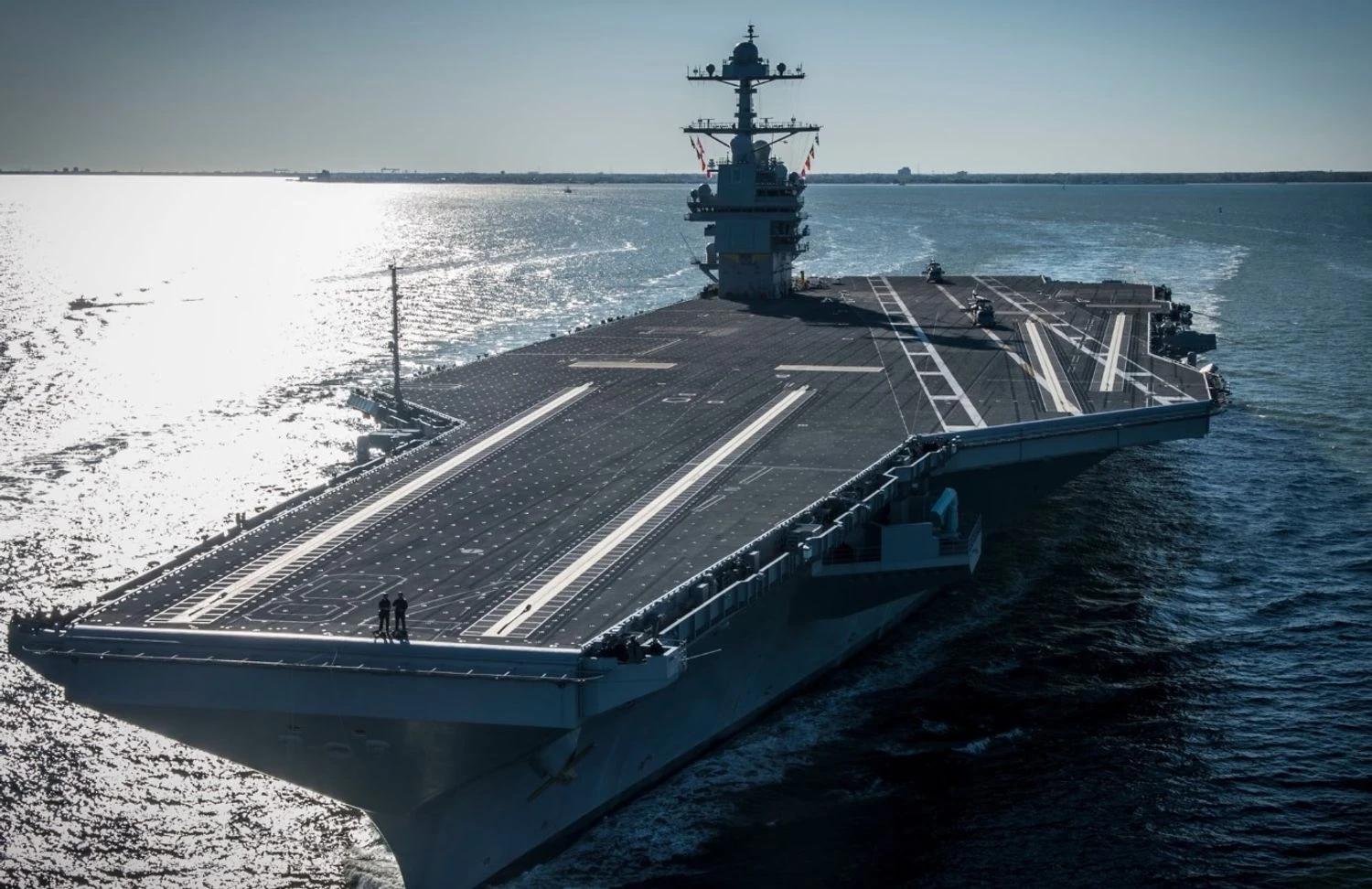
Trump sends another aircraft carrier, the largest in the world, against Iran.
 Forces News
Second US carrier en route to Middle East as tensions with Iran continue to run hot
 Fox News
USS Ford ordered to the Middle East, the second aircraft carrier being sent to the region
 GMA Network
US moving second carrier to Middle East as Iran tensions build
 Gulf News
Second US aircraft carrier sent to the Middle East amid rising tensions
 Haberler
Trump: The best scenario would be a change of regime in Iran.
 Heraldo USA
US Orders USS Gerald R. Ford to Move from the Caribbean to the Middle East Amid Tensions with Iran
 Hindustan Times
'We'll need it if…': Donald Trump sends second aircraft carrier amid tension with Iran | World News
 HuffPost
Second U.S. Aircraft Carrier Is Being Sent To The Middle East, AP Source Says
 India Today
Best thing that could happen: Trump floats Iran regime change amid tensions
 Inquirer
A second U.S. aircraft carrier is being sent to the Middle East, an AP source said, as Iran tensions grow
 Israel National News
Message to Iran: USS Gerald R. Ford redeployed to Middle East
 KOMO
KOMOSecond US aircraft carrier being sent to to Middle East amid nuclear deal talks with Iran
 kurdistan24.net
Trump Sends Second Aircraft Carrier to Middle East, Warns Iran of "Very Bad Day" if Nuclear Talks failed
 legalinsurrection
USS Gerald Ford Heads to Middle East as Iran Stalls on Nuclear Talks
 Local 3 News
Second US aircraft carrier is being sent to the Middle East, AP source says, as Iran tensions high
 Mathrubhumi English
World’s largest warship USS Gerald R. Ford heads to Middle East amid Trump’s Iran nuclear push
 Mid-day
Trump says he's sending second aircraft carrier to Mideast as he seeks Iran deal
 Military
Second US Aircraft Carrier Is Being Sent to the Middle East, Source Says, as Iran Tensions High
 Mint
MintTrouble mounting for Iran? Second US aircraft carrier dispatched by Trump admin to Middle East: Report
 Moneycontrol
Second US supercarrier headed to Persian Gulf after Trump signals 'something very tough' on Iran
 myMotherLode
Second US aircraft carrier is being sent to the Middle East, AP source says
 NBC News
Second U.S. aircraft carrier is being sent to the Middle East as Iran tensions remain high
 New York Post
Second US aircraft carrier is being sent to the Middle East: report
 News Ghana
Trump Orders Second Aircraft Carrier To Middle East Amid Iran Nuclear Talks
 Newsradio 95 WXTK
US Deploys World's Largest Aircraft Carrier To Middle East
 Newsweek
Second US Aircraft Carrier Going To Middle East
 NTD News
Trump Appears to Confirm 2nd Aircraft Carrier Being Prepared for Middle East Deployment
 Oman Observer
Second US aircraft carrier to deploy to the Middle East: reports
 Open Magazine
US Deploys Second Aircraft Carrier USS Gerald R. Ford To West Asia Amid Iran Tensions
 RNZ
RNZSecond US aircraft carrier to deploy to Middle East: reports
 Roya News
Iran government change “best thing that could happen,” says Trump
 Roya News
Trump confirms second aircraft carrier to head to Middle East
 Rural Radio Network
KTIC 840 AM/98.3 FM/98.7 FM - Trump says USS Gerald R. Ford aircraft carrier headed to Middle East to pressure Iran
 Rural Radio Network
Trump says USS Gerald R. Ford aircraft carrier headed to Middle East to pressure Iran
 Scripps News
Trump warns of 'very traumatic' outcome for Iran if no nuclear deal is reached
 Sky News Australia
Trump administration orders second aircraft carrier to the Middle East
 South China Morning Post
US is sending second aircraft carrier to the Middle East to coerce Iran
 Stroud News and Journal
Second US aircraft carrier heading to Middle East amid Iran tensions
 Task & Purpose
US sends Ford aircraft carrier, fresh off Venezuela operations, to the Middle East
 Telangana Today
US prepares to send second aircraft carrier to Middle East
 Telegraph India
Second US aircraft carrier being sent to Middle East as tensions with Iran escalate
 The Arab Weekly
US moves second carrier to Middle East while Trump backs regime change in Iran
 The Guardian
Trump sends second aircraft carrier to Middle East in effort to increase pressure on Iran
 The Independent
Second US aircraft carrier is being sent to the Middle East, AP source says
 The Mirror
Trump piles pressure on Iran as US sends world's largest warship to join armada
 The Straits Times
Second US aircraft carrier to head to Middle East amid Iran tensions, US media reports
 The Straits Times
US military preparing for potentially weeks-long Iran operations, as second carrier heads to Middle East
 The Sunday Guardian
‘Regime Change’ in Iran Would Be Best, Trump Deploys USS Gerald R. Ford to Middle East Region
 The Telegraph
Trump sends world’s largest aircraft carrier to Middle East
 The Times of India
JD Vance defends Trump's racist Obama video, says it's 'not a real controversy'
 the-sun
Trump sends world’s largest aircraft carrier to join armada in Middle East
 themorningnews
Trump Sends Second Aircraft Carrier to Middle East to Pressure Iran
 thenationalnews
Iran deal 'should happen quickly', says Trump, as second US aircraft carrier set to sail to region
 Times Now
'In Case We Don't Make a Deal We'll Need It': Trump on 2nd Carrier Strike Group Heading Towards Iran
 Times of India
US preparing for weeks-long Iran operations as another carrier heads to Middle East
 Toronto Star
Second US aircraft carrier is being sent to the Middle East, AP source says, as Iran tensions grow
 Türkiye Today
Trump warns of ‘very big force’ if Iran talks fail
 WION
WIONUSS Gerald R Ford enroute Middle East? Trump deploys world’s largest aircraft carrier
 WKMG
WKMGSecond US aircraft carrier is being sent to the Middle East, AP source says
 WKZO
WKZOSecond US aircraft carrier to head to Middle East amid Iran tensions, US media reports
 WPDE
WPDESecond US aircraft carrier being sent to to Middle East amid nuclear deal talks with Iran
 www.israelhayom
USS Ford Heads to Persian Gulf Amid Iran Tensions
 www.israelhayom
Trump: Regime change in Iran best thing that could happen
 Українські Національні Новини
Trump sent world's largest aircraft carrier to Middle East to increase pressure on Iran - The Guardian