Ourmissionistoholdvectorsofpowertoaccountbyquantifyingandevidencingmedia bias,andtoputthetoolsofaccountabilitydirectlyinthepublic’shands.
We count what the press does to a story, publish the evidence, and help you take it to someone who has to answer.
On the record
- Founded
- February 2024, United Kingdom
- Grew out of
- The Tech for Palestine coalition
- Regulated by
- IMPRESS, the independent press regulator
- Complaints
- complaints@newscord.org
We started because of how the press reported a genocide.
NewsCord grew out of the Tech for Palestine coalition in the months after October 2023, and was incorporated in the United Kingdom in February 2024.
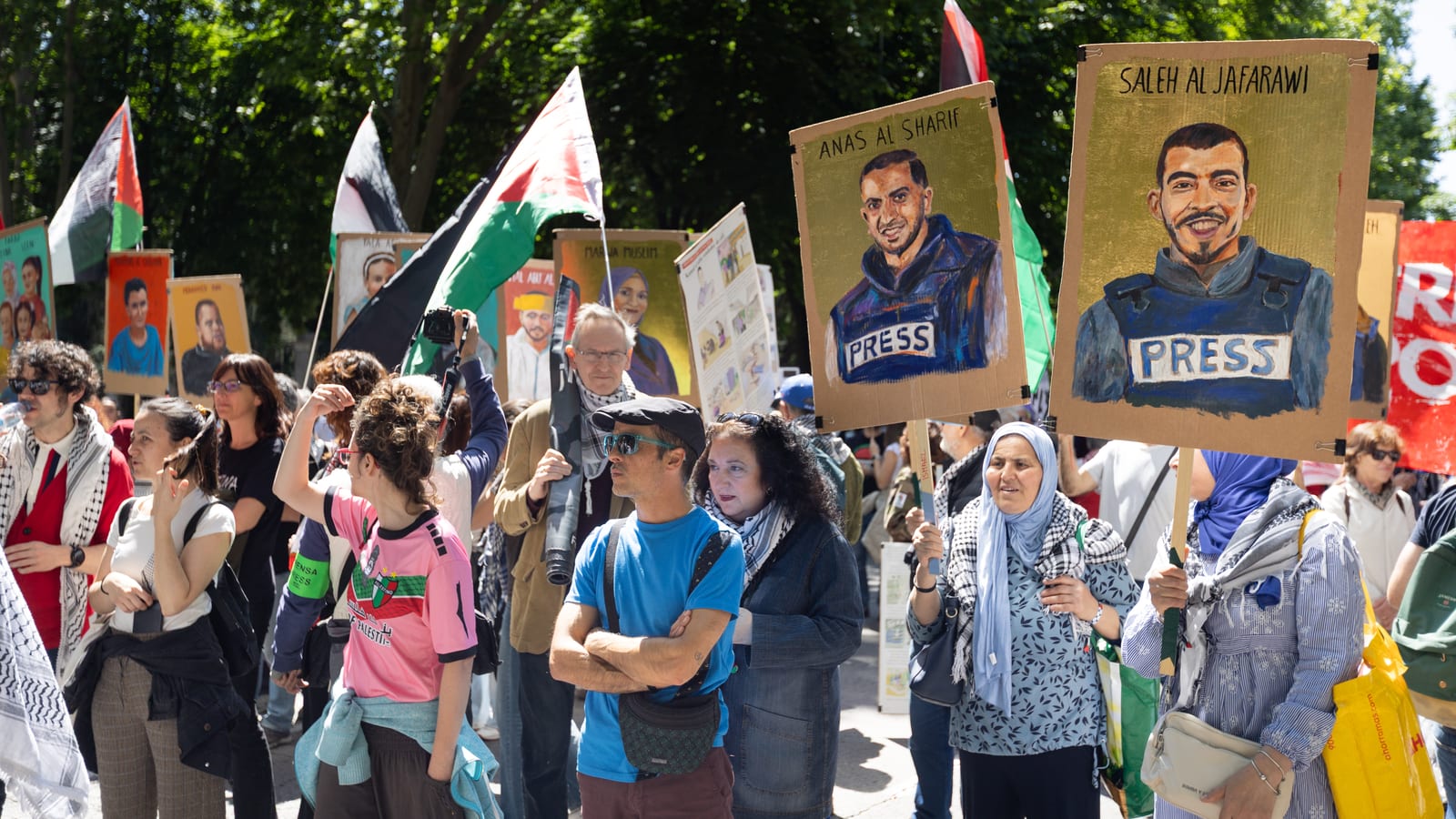
We started it because of how the mainstream press reported Israel’s genocide in Gaza. Headlines left out who did the killing. Palestinian deaths were reported as a claim and Israeli deaths as a fact. The UN Commission of Inquiry has since concluded that it is a genocide.
It was never only Gaza. The same tricks turn up wherever the people in the story have the least power to answer back: Muslims in Britain, people crossing the Channel in small boats, Black academics, protesters.
One sentence like that is easy to deny. Thousands of them are a pattern, and a pattern can be counted.
You can see it in a single sentence.
Three examples from this year. Each one is quoted from the outlet, and each one became a complaint.
The killer goes missing
BBC News, 21 July 2026
“The brother of Firas al-Masri told the BBC that he had been burnt to death along with his wife, Salsabeel, and their three daughters and son, Faryal, Salma, Amira and Naim.”
BBC News, the same passage
“Four Israeli soldiers have been killed in Palestinian attacks in Gaza”
Half the quote is cut
Prince Harry, in the New Statesman, 13 May 2026
“We must stand against both anti-Semitism and anti-Muslim hate.”
LBC’s headline
“Harry hits out at deeply troubling rise in antisemitic attacks in UK”
Occupied land is filed under Israel
BBC Radio 4, From Our Own Correspondent, 27 June 2026
“Today, we're in Israel where the status quo at Jerusalem's holiest site is under threat from Israeli nationalists.”
From one bad sentence to a public answer.
Our work runs in one line, and each step feeds the next.
01
Compare
Every big story, side by side.
We gather each major story from the outlets that covered it and show where they split: who said what, and what each one left out. We quote the outlets’ own words, so you can check them.
3,578 outlets in our source registryRead today’s stories02
Measure
The Watchdog scores the outlets.
It reads articles from 73 outlets on Gaza, Lebanon, Iran, the West Bank, UK politics and climate, and scores each one against published measures. Every finding quotes the article. You can look up any outlet’s record, and any reporter’s.
73 outlets, 6 subjectsOpen the Watchdog03
Investigate
Investigations with the evidence on the page.
Our editorials count the coverage, read the documents and put the outlets’ own words in front of you. When we call something a smear, the evidence sits beside the word.
04
Act
Then you take it to someone who has to answer.
Each campaign sends a complaint or a letter to the body that can act on it: IPSO, Ofcom, the BBC, your MP, your councillors, your NHS trust, foreign ministries and the Charity Commission. Every campaign shows you the letter before it goes out in your name.
9,300,244+ actions sentTake action05
Answer
Every answer goes on the record.
When an institution replies, we publish what it said, refusals included, and we tell the people who took part.
49 replies from 20 institutionsRead the replies
What our campaigns have won.
These are the replies where an institution did what a campaign asked. Most still say no: 34 of the 49 replies on our record reject the complaint outright. We publish those too.
- 28 Sep 2026Article correctedThe IndependentTelegraph ran Reform-funded polls as its own. No correction.
- 26 Aug 2026Not planning to screen itPicturehouse CinemasSacha Baron Cohen retired Ali G. Amazon revived the caricature. Cinemas can refuse it.
- 2 Jul 2026Label removedRoyal MailRoyal Mail Lists Gaza and the West Bank as Israel. Tell Them to Correct It.
- 1 Jul 2026First demand metCommittee to Protect Journalists (CPJ)Restore CPJ's Definition of a Journalist, and Remove the Board Chair Who Rewrote It.
- 2 Jul 2026Error admitted and removedBBCAl-Aqsa Is in Occupied East Jerusalem, Not 'in Israel'. File a BBC Accuracy Complaint About From Our Own Correspondent.
- 25 Jun 2026Article amendedBBCBBC, Sky, CNN, The Times, Reuters, ITV, LBC & The Guardian Cut 'Anti-Muslim Hate' From Prince Harry's Headlines
Headless by NewsCord
The same engine, for other organisations.
Other organisations run their own campaigns on Headless, under their own name, through the same channels our campaigns use.
We are not neutral about genocide. We are exact about the facts.
The standard we keepA publisher can take a side. It cannot bend the facts to fit it. So we hold ourselves to the rules we ask the press to follow.
- Rule 01
Regulated by IMPRESS
We are a regulated member of IMPRESS, the independent press regulator. Complain to us and we acknowledge it within 7 days and send a decision within 21.
How to complain - Rule 02
Corrections in public
When we get something significant wrong, we correct it and list it on our corrections page.
Corrections - Rule 03
Methods in public
The Watchdog’s measures, what each one counts and how much it weighs, are published in full.
Methodology - Rule 04
No quote, no finding
Every Watchdog finding quotes the article it comes from. If the words are not on the page, there is no finding.
- Rule 05
Every number has a source
Every figure we publish traces back to a named primary source.
- Rule 06
We only claim what we won
We publish the outcomes we can show, and the refusals next to them.
Every reply
We ask the press to meet a standard. We meet it first.