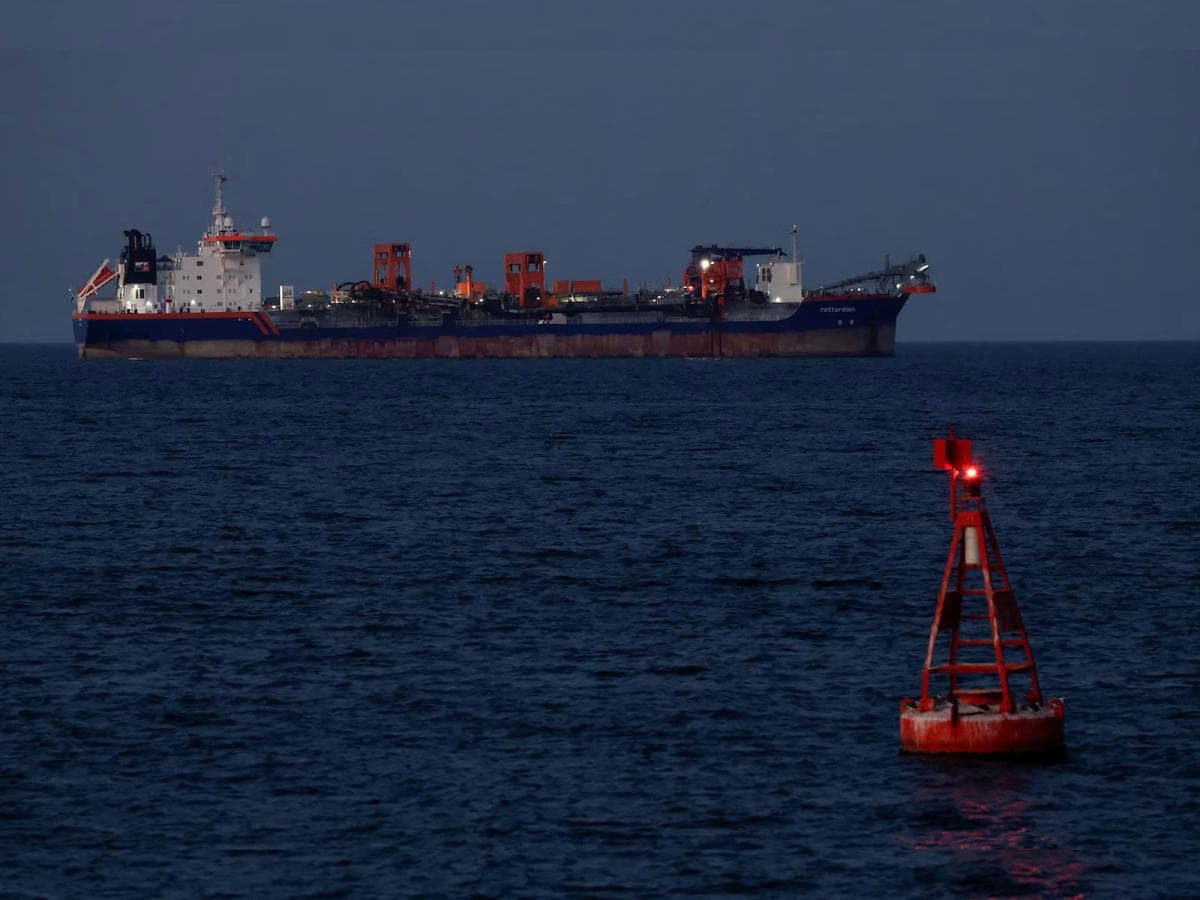
IRGC Enforces Lethal No‑Move Zone, Halts Tanker Traffic Through Strait of Hormuz
Key Takeaways
- IRGC intensified a maritime blockade in the Strait of Hormuz
- IRGC said it has targeted numerous international vessels enforcing the blockade
- Press TV posted a field documentary and warned, 'Remain silent or be targeted'
No-move zone declared
Iran's Islamic Revolutionary Guard Corps (IRGC) has sharply intensified a maritime blockade in the Persian Gulf, announcing and enforcing a strict "no-move" zone in the Strait of Hormuz that it says will leave vessels vulnerable if they change position without Iranian permission.
“ANI |Updated:Mar 12, 2026 11:02 IST Tehran [Iran], March 12 (ANI): The Iranian Revolutionary Guard Corps (IRGC) has intensified its maritime blockade in the Persian Gulf, claiming to have already targeted numerous international vessels while enforcing a strict "no-move" zone in the strategic waterway”
State media footage shared from the area — described as a field documentary from the "heart of the Persian Gulf and the Strait of Hormuz" — shows tankers immobilised and IRGC forces warning that ships that "remain silent" can still be targeted "if they shift even a few meters."

The coverage frames this campaign as a formalised control of passage in the strategic waterway, with Iranian authorities asserting de facto authority over ships transiting the channel.
Claims of tanker strikes
Iranian officials and state-run outlets claim the IRGC has already struck numerous international vessels as part of the blockade, saying the force "has claimed to hit 14 oil tankers, including two American tankers."
Tehran also singled out two recent incidents, stating the Express Rome and Mayuree Naree were targeted after allegedly ignoring Iranian warnings — incidents the IRGC frames as enforcement of its new maritime rule set rather than indiscriminate attacks.
Commander's public warning
IRGC Naval Force commander Rear Admiral Alireza Tangsiri has publicly framed the blockade as a matter of Iranian authority and national security, warning that any ship seeking to transit the Strait must obtain Iran's approval or risk becoming a target.
“ANI |Updated:Mar 12, 2026 11:02 IST Tehran [Iran], March 12 (ANI): The Iranian Revolutionary Guard Corps (IRGC) has intensified its maritime blockade in the Persian Gulf, claiming to have already targeted numerous international vessels while enforcing a strict "no-move" zone in the strategic waterway”
State coverage quoted him directly: "Any vessel intending to pass must obtain permission from Iran," and described an IRGC-declared sea "space" where even small movements — "moving a few dozen meters" — could invite strikes, with drones singled out as a key attack means.
Tactics shown in footage
The state footage highlights IRGC-affiliated speedboat units identified as "Basij guys from Bandar Abbas" operating as "Defenders of the Persian Gulf," and the documentary captures overhead drones, coastlines such as Hormuz Island and Larak Island, and crews warned to move away when drones are spotted.
That material is used to portray a layered enforcement posture — small, fast attack craft backed by aerial surveillance and strike-capable drones — intended to immobilise and monitor commercial traffic inside the designated zone.
Global economic fallout
The blockade has immediate global economic implications, with the reporting emphasising that more than 20 million barrels of crude oil — roughly a fifth of global consumption — transit the Strait daily.
“ANI |Updated:Mar 12, 2026 11:02 IST Tehran [Iran], March 12 (ANI): The Iranian Revolutionary Guard Corps (IRGC) has intensified its maritime blockade in the Persian Gulf, claiming to have already targeted numerous international vessels while enforcing a strict "no-move" zone in the strategic waterway”
Iranian state coverage and the ANI dispatch link the intensified restrictions to regional strikes: shipping has been described as effectively paralysed since 28 February after US and Israeli air strikes, and the United States Department of Energy announced plans to release 172 million barrels from the Strategic Petroleum Reserve, a distribution the department said would "take approximately 120 days to deliver based on planned discharge rates."
More on Iran
Trump Says U.S. Bombed Military Sites on Kharg Island, Iran's Oil Hub
14 sources compared
FBI Warns of Iranian Drone Plot Based on Unverified Tip; California Says No Credible Threat
10 sources compared

White House Demands ABC Retract Report Claiming Iran Sought To Launch Drone Attacks On California
11 sources compared

Iranian Proxy Claims It Shot Down US Refueling Plane in Iraq; US Military Says Otherwise
17 sources compared