
IRGC Threatens To Burn U.S. Navy Warships At Sea Near Strait Of Hormuz
Key Takeaways
- IRGC warns it will burn U.S. warships and mobilize the Resistance Front.
- Threats tied to U.S. blockade risk a renewed Hormuz confrontation.
- Attacks and ship seizures near Hormuz escalate tensions and potential clashes.
IRGC Threats at Sea
Iran’s Islamic Revolutionary Guard Corps issued warnings to the United States about potential military action targeting American naval assets in the region, with the IRGC saying it would deploy the full capabilities of what it calls the “resistance front.”
Mid-day reported that the IRGC cautioned against any potential military action targeting American naval assets and declared it was prepared to target large naval vessels if tensions intensify.

Marine Insight similarly described an IRGC warning to the U.S. Navy, quoting the IRGC Navy’s political deputy saying, “If America miscalculates again, we will burn its giant ships at sea,” and adding that any response would involve “surprises and new capabilities”.
PressTV carried a separate IRGC warning in which an IRGC commander said, “You have seen the fate of your bases in the region; you will also see the fate of your warships,” and warned that American naval vessels would share the fate of US military bases in the region.
DW’s account of the same broader standoff included maritime incidents near the Strait of Hormuz, including a second attack on a ship near the Strait of Hormuz, with UKMTO saying an unknown projectile struck a container ship 25 nautical miles (46 km) northeast of Oman.
In parallel, DW also reported that British military said Iranian boats fired on an oil tanker in the Strait of Hormuz, and that UKMTO later reported a third incident about three nautical miles east of Oman.
Hormuz, Blockade, and Negotiations
The warnings were issued as the standoff around the Strait of Hormuz and the U.S.-Iran negotiation track remained active, with multiple outlets describing competing moves and conditions.
DW wrote that Iran said that if the United States continues the blockade, it will shut the Strait of Hormuz again, and it also described that Iran announced it would reopen this strategic waterway before later closing it again.

DW further reported that the Iranian leader warned that his country’s navy is ready to defeat US forces, quoting Mojtaba Khamenei saying, “Iran’s navy is brave and ready to make the enemies taste the bitter defeat again.”
Marine Insight said Iran offered to reopen Hormuz completely, “given that the U.S. lifts its blockade and ends the war,” while also stating that issues like Iran’s nuclear programme, missile development and sanctions could be discussed later.
Marine Insight also described President Donald Trump expressing dissatisfaction with Tehran’s latest proposal, saying Washington does not want to move forward without addressing the nuclear issue.
Fraro’s account tied the negotiation dynamics to a ceasefire extension, stating that Trump’s unilateral extension of the ceasefire “effectively showed that he himself needs open channels for dialogue more than Tehran does,” and it said Trump told Fox News that there is no time pressure to establish a ceasefire or to set a new timeline for negotiations with Iran.
Diplomacy and Regional Mediation
Alongside the threats, DW described diplomatic efforts involving regional partners and senior officials, including Egypt’s foreign minister and Pakistan, Turkey, and Saudi Arabia.
DW reported that Badr Abdel-Aty, a senior Egyptian diplomat, said on Saturday at Antalya that Cairo and Islamabad are “very hard” at work to reach a “final agreement between the United States and Iran,” adding that “not only in our region, but the whole world suffers from the continuation of this war.”
DW also said Abdel-Aty noted that “Egypt, Turkey, Pakistan, and Saudi Arabia are coordinating a broader regional effort” focused on preventing renewed tensions and smoothing the path for a security agreement after the war.
The same DW update described Iran’s Foreign Minister Abbas Araghchi engaging regional and global partners, stating that he made multiple visits to Islamabad and travelled to St Petersburg, where he met Russian President Vladimir Putin.
Marine Insight similarly said Abbas Araghchi was engaging regional and global partners, and it placed his travel in the context of the broader friction between Washington and Tehran.
Fraro added that Pakistan’s last-minute intervention in ensuring the extension of the ceasefire was decisive, quoting Maliha Lodhi telling Al Jazeera that Pakistan’s senior leadership conveyed to Washington the need to extend the ceasefire to open a window for pursuing diplomacy.
Competing Narratives and Claims
Different outlets framed the same maritime and negotiation developments through sharply different lenses, including how they described attacks, the status of talks, and the credibility of claims about military capabilities.
DW’s update emphasized specific incidents and official channels, stating that UKMTO reported a second attack near the Strait of Hormuz and that British military said Iranian boats fired on an oil tanker in the Strait of Hormuz, while also describing UNIFIL reporting “light weapon fire” from non-state actors in southern Lebanon.

In contrast, PressTV presented the IRGC warnings as part of a broader narrative of retaliation and operational readiness, quoting General Mousavi’s warning that “With painful, prolonged, and far-reaching strikes, we will respond to the enemy's operations—even if they are swift and brief—by the grace of God,” and it described a U.S. two-week ceasefire on April 8 that it said allowed negotiations in Islamabad.
Fraro, meanwhile, focused on negotiation timing and messaging, saying there is “no fixed timetable for war” and that reports of a three- to five-day deadline are incorrect, while also citing claims that the Pentagon told Congress clearing the Strait of Hormuz of mines could take six months.
Marine Insight described U.S. concerns about nuclear ambitions and said the U.S. Administration reiterated global risks posed by Iran’s nuclear ambitions, stating that if Iran were to acquire these weapons, “the entire world could be held hostage.”
Tabnak’s account diverged further by linking the crisis to a broader sequence of alleged planning and strikes, including claims about Israel’s planning after a “12‑day war in June 2025,” and it also asserted that Russia condemned an attack on the Bushehr nuclear power plant.
Risks, Escalation, and Next Steps
The sources describe a high-risk environment in which maritime traffic, regional security, and military posture remain central to the next phase.
DW said the update included reports that Iran’s airspace had been partially reopened to international flights and that Iran announced it would reopen the strategic waterway before later closing it again, and it also described the British military reporting Iranian boats fired on a tanker in the Strait of Hormuz.
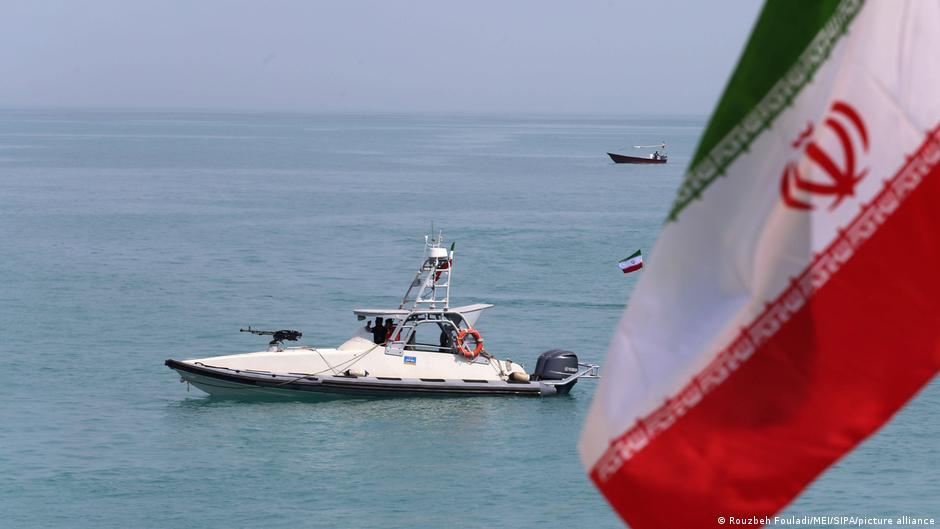
Marine Insight said Iran threatened retaliation against U.S naval assets and a broader response if America intensifies its military aggression against Iran, while also stating that Trump said Iran had communicated with Washington, saying it was in a state of collapse and is seeking to reopen Hormuz as soon as possible.
PressTV framed the risk as a direct consequence of U.S. “naval blockade” and “maritime piracy,” quoting a high-ranking security source from the Khatam al-Anbiya Headquarters saying that “The continued American maritime piracy and banditry in the form of a so-called ‘naval blockade’ will soon be met with practical and unprecedented action,” and it added that Tehran’s patience was wearing thin.
Fraro added that the Pentagon told Congress clearing the Strait of Hormuz of mines could take six months, while also reporting that Al Jazeera said the aircraft carrier USS Bush is moving toward the Middle East but has not yet reached the CENTCOM area of operations.
DW’s diplomatic thread also tied next steps to preventing renewed tensions and smoothing the path for a security agreement after the war, with Abdel-Aty describing coordination among Egypt, Turkey, Pakistan, and Saudi Arabia.
More on Iran
US Economy Grows 2% in January-March as Iran War Clouds Outlook
12 sources compared
U.S.-Iran War Stalemate Drives Oil Prices Above $126 and Gas to $4.30
16 sources compared
Trump Says U.S. Naval Blockade Will Keep Pressure on Iran After Rejecting Deal Proposal
16 sources compared
Donald Trump Renames Strait of Hormuz ‘Strait of Trump’ Amid US-Iran Naval Blockade
17 sources compared