Full story
Project Freedom and threats
President Donald Trump threatened that Iran will be “blown off the face of the Earth” if it attacks US vessels trying to reopen a route through the strait of Hormuz, as the US launched “Project Freedom” on Monday to help hundreds of ships trapped with their crews in the Gulf.
“blown off the face of the Earth”
The Guardian reported that Tehran sought to reassert its blockade on the strait, while the US military claimed it had destroyed six Iranian small boats and intercepted both Iranian cruise missiles and drones, a claim Tehran denied.

The Guardian also said earlier that Iran’s military central command warned it would strike any US naval vessel approaching the strait and claimed it had struck a US frigate with two missiles, which US Central Command denied, saying no US Navy ships had been struck and that US forces were continuing to enforce the naval blockade on Iranian ports.
CNN described the ceasefire between the US and Iran as being “tested” after both sides fired shots in the Strait of Hormuz, prompting Trump to decline to say if the truce remains in place.
CNN added that Trump declined to say if the fragile ceasefire is still in effect during an interview with radio host Hugh Hewitt, telling him, “Well, I can’t tell you that.”
The same CNN live update said the US military “blew up” six small Iranian boats in the Strait of Hormuz on Monday, and that Trump later said the US shot down “seven small” Iranian boats.
In parallel, CBS News said Iran launched its first missile and drone attack on the United Arab Emirates since a ceasefire with the U.S. took effect on April 8, and fired two drones at a ship in the Strait of Hormuz.
Fujairah fire and ship incidents
As Project Freedom unfolded, the conflict spilled into the United Arab Emirates and into shipping in the Strait of Hormuz, with multiple reports describing fires and injuries tied to drone and missile attacks.
The Guardian said the United Arab Emirates defence ministry reported that its air defences engaged 15 Iranian missiles and four drones in a fresh barrage on Monday, and that Fujairah had also said earlier that a fire broke out at the Fujairah Oil Industry Zone, the largest oil storage zone in the UAE, following what they described as a drone attack originating from Iran.

CNN likewise said the UAE’s air defenses “engaged” 19 Iranian missiles and drones and that a drone attack caused a fire at an oil port in the Fujairah region.
Fox News reported that the UAE said Monday that more than a dozen Iranian missiles and drones were launched, leaving three people injured, while an Iranian drone strike sparked a fire at an oil facility that wounded three Indian nationals.
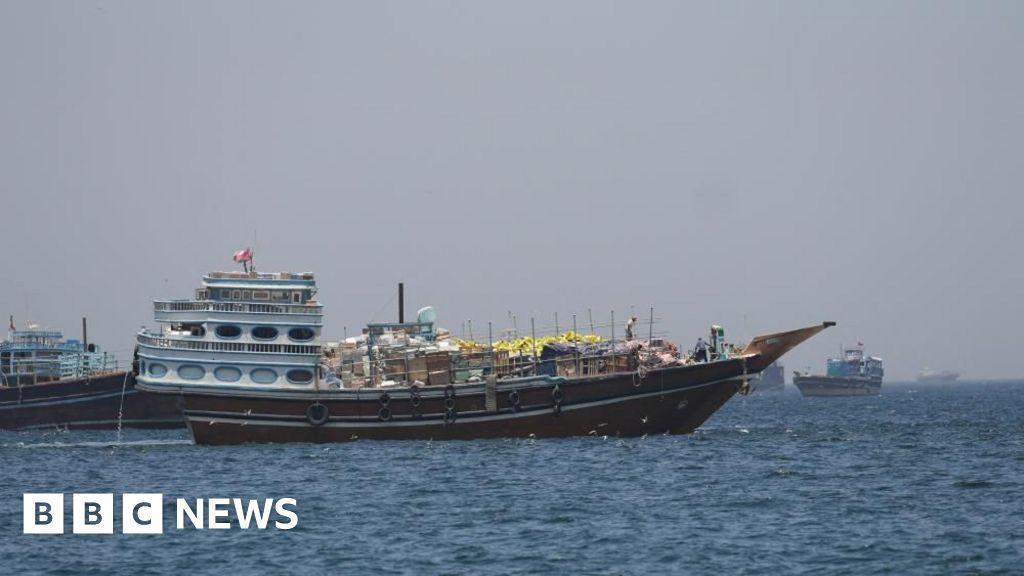
Reuters was cited by The Guardian in relation to a separate incident: the blaze on the South Korean-operated vessel HMM Namu, described as a Panama-flagged cargo ship with 24 crew members onboard including six Korean nationals, with an HMM spokesperson saying the cause of the blaze was unclear and being investigated.
The Guardian said the fire broke out in the engine room of the Panama-flagged cargo ship, and that the blaze had now been extinguished, with surveillance camera footage showing it could take several days to tow the vessel to Dubai.
CNN reported that Trump said “no damage” has been incurred as a result of the Iranian strikes, other than to a South Korean vessel, and that the fire on the HMM Namu had been extinguished.
CBS News added that two U.S. Navy destroyers transited the Strait of Hormuz and entered the Persian Gulf after navigating an Iranian barrage, and that neither U.S. vessel was struck, with officials saying no projectiles launched reached the ships.
Iran’s response and US posture
Iran’s response to Project Freedom and the US effort to guide ships was described in multiple ways, including threats of strikes and statements about coordination with Iranian forces.
“any foreign armed force”
The BBC reported that Iran’s central command said it would attack “any foreign armed force” that tried to approach or enter the Strait, “especially, the aggressive US army,” and that Maj Gen Ali Abdollahi said safe passage through it must be co-ordinated with Iran “under all circumstances.”
The BBC also said Trump’s announcement appeared mild compared to previous statements, but that it even made it sound like Iran was a party to the operation, while Iran insisted it was not.
Al Jazeera described Trump’s confidence message, saying “I have all the cards,” posted by the White House on its X account, and it linked that post to Trump’s announcement that the US military would begin guiding ships stranded around the Strait of Hormuz.
Al Jazeera quoted Trump saying, “We have told these countries that we will guide their ships safely out of these restricted waterways, so that they can freely and ably get on with their business,” and it also quoted Trump dubbing the campaign “Project Freedom.”
Al Jazeera then described the Iranian reaction through the IRGC, saying the IRGC warned that ships deemed to be in breach of its rules in the Strait of Hormuz “will be stopped by force,” and that spokesperson Sardar Mohebbi said there had been “no change in the management process of the Strait of Hormuz.”
In the same Al Jazeera account, Mohebbi said vessels that comply with the “transit protocols issued by the IRGC Navy” will be “safe and secure,” while “Violating vessels will be stopped by force,” and it said the IRGC issued a new map with boundaries extending further east.
Fox News described the US posture in operational terms, quoting a U.S. defense official saying the commander can strike “if US forces see missile launchers moving or identity missiles being put on the rails or identify targets of opportunity that threaten commercial shipping.”
Fox News also said there were “no orders to end the ceasefire” and that the U.S. military “stands ready to respond,” while emphasizing that “No orders have been received to restart the bombing campaign.”
What Project Freedom includes
The sources describe Project Freedom as a mix of guidance, defensive measures, and readiness to strike threats, while also emphasizing that it is not being framed as full-fledged escorting.
The BBC said Trump announced the US will help “guide” ships that have been stranded by Iran’s closure of the Strait of Hormuz, and it quoted Trump saying the US would “guide their Ships safely out of these restricted Waterways.”

The BBC also said the US Central Command announced that “guided-missile destroyers, over 100 land and sea-based aircraft, multi-domain unmanned platforms, and 15,000 service members” would be used to support the operation.
In the BBC’s account, CENTCOM commander Adm Brad Cooper said some attack helicopters supporting the mission were used to sink six small Iranian boats targeting civilian vessels, and Cooper said, “we will shoot” at any Iranian vessels deemed to be interfering with the broader effort.
Axios described the operational concept as advising ships on how to avoid mines and standing ready to intervene if Iran attacks them, adding that U.S. officials said there was “no current plan for full-fledged naval escorts.”
Axios also said U.S. military support to “Project Freedom” would include guided-missile destroyers, drones, over 100 land and sea-based aircraft and 15,000 troops, citing CENTCOM, and it said rules of engagement had been changed to authorize strikes against immediate threats like IRGC fast boats or Iranian missile positions.
CNN similarly described the US approach as a “much broader defensive package” rather than “escorts,” saying there are no “escorts” of commercial ships by the US Navy according to CNN’s report of CENTCOM chief Adm. Bradley Cooper’s comments.
CBS News added that CENTCOM provided more details on aircraft being used to support Project Freedom, including U.S. Navy F/A-18 Super Hornets launching from USS Abraham Lincoln and helicopters and Apache helicopters used to eliminate Iranian small boats threatening commercial shipping.
In the BBC’s framing, the operation’s success depended on whether ships would trust the ability to get through without being attacked, and it noted that the US guidance could be of little help given Iran’s threats to attack them.
Diplomacy, markets, and legal stakes
The sources also connect the Hormuz escalation to diplomacy, market impacts, and the legal and political stakes around ceasefire durability and potential broader conflict.
“could reach $5 a gallon”
CNN said oil prices rose and stocks fell on concerns about the safety of transiting the critical waterway, and it reported that average US gas prices could reach $5 a gallon if the strait remains closed, citing an oil market expert.
The same CNN live update quoted Iranian Foreign Minister Abbas Araghchi warning the United States and United Arab Emirates against getting drawn into a “quagmire,” saying that recent “events in (the Strait of) Hormuz make clear that there’s no military solution to a political crisis,” and it quoted Araghchi dismissing Washington’s “Project Freedom” plan as “Project Deadlock.”
The Guardian reported that Keir Starmer condemned Iran’s drone and missile strikes targeting the United Arab Emirates and called on Iran to engage in diplomacy to prevent further escalation, quoting Starmer: “We stand in solidarity with the UAE and will continue to support the defence of our partners in the Gulf. This escalation must cease.”
It also said Saudi Arabia denounced Iran’s attacks on the UAE and called for de-escalation, quoting the Saudi foreign ministry statement posted on X that it affirmed solidarity with the UAE and called on Iran to stop the attacks and “respect the principles of good neighborliness”.
Fox News described US political and operational framing, saying senior officials told Jennifer Griffin that the U.S. was edging closer to restarting major combat operations against Iran, with the final decision resting with President Donald Trump and Tehran’s new leadership, while also saying “No orders to end the ceasefire have been given.”
DW’s report focused on the War Powers Act legal issue, saying the 60-day deadline for war will not apply if a ceasefire is in place, and it quoted the U.S. Secretary of Defense stressing that the ceasefire established since April 8 means the government does not presently need authorization.
DW also said the War Powers Act limits the duration of military operations without congressional authorization to 60 days and that if fighting continues after this period, the president would be required to obtain formal congressional authorization.
In addition, Al Jazeera described the White House post “I have all the cards” and Iran’s counter-post from its Consulate General in Hyderabad, India, saying “Yes, we have less cards,” as part of the messaging around leverage and next steps.