
Israel and the United States strike Iran's Isfahan factory, killing 15
Key Takeaways
- At least 15 people were killed in the Isfahan factory strike.
- Israel and the United States conducted the attack.
- Missile strike hit Isfahan's industrial area, targeting a factory.
Isfahan Factory Strike
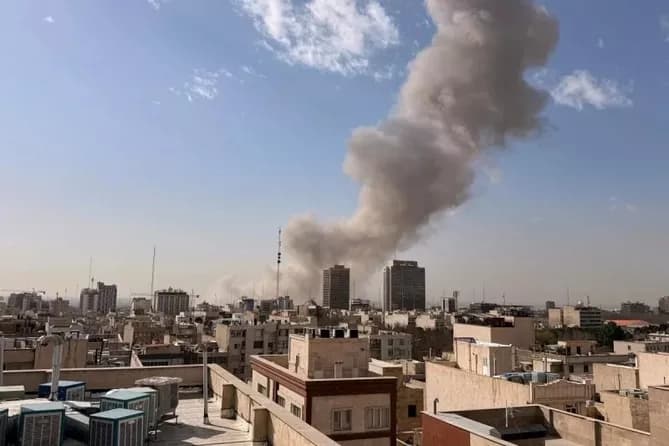
The United States and Israel jointly carried out a missile strike on Iran's Isfahan city.
“The United States and Israel carried out attacks on Iran’s Isfahan city in the early hours of Sunday, killing at least 15 people, as the conflict entered its 16th day”
The attack hit a factory that produced heaters and refrigerators and killed at least 15 people.
The attack occurred during the early hours of Sunday as the conflict entered its 16th day.
Iranian media immediately blamed the 'American-Zionist criminal regime' for the 'terrorist and anti-human act.'
The factory was targeted while workers were inside, resulting in significant casualties.
Iranian Military Response
Iran responded to the Isfahan strike with intensified military operations.
The Islamic Revolutionary Guard Corps launched its '50th wave' of attacks against US bases across the Middle East.
IRGC targeted facilities in the United Arab Emirates, Bahrain, and Kuwait.
Iranian authorities also reported attacks on residential areas in Shiraz.
Tehran's response was accompanied by heightened security measures.
Twenty individuals were arrested in northwestern Iran for cooperating with Israel.
International Reactions
US President Donald Trump responded to the escalating conflict by claiming that Tehran 'wants to make a deal'.
“15 killed in strike on factory in Iran's Isfahan, Tehran blames Israel The Iranian side blamed the attack on the "American-Zionist (Israeli) enemy," adding that it was caused by a missile”
Trump simultaneously called for a multinational naval coalition to help keep the Strait of Hormuz open.
Iranian Foreign Minister Abbas Araghchi countered by stating that the US used cruise missiles launched from the UAE near Dubai.
Araghchi warned that Tehran could retaliate and that such actions would be dangerous for the region.
The Iranian government clarified there was 'no problem' with the new supreme leader Mojtaba Khamenei.
Civilian Impact
The human cost of the escalating conflict became increasingly apparent with the confirmed deaths of at least 15 civilian workers.
Iranian authorities reported that hundreds more civilians had been affected by ongoing strikes.
Tehran's governor reported that at least 10,000 residential homes were 'damaged or completely destroyed'.
The widespread impact affected civilian infrastructure and livelihoods.
The IRGC warned the US to move its industries out of the Middle East.
Iranian citizens were urged to stay away from factories with US company shares.
Regional Security Impact
The conflict has significantly impacted regional security dynamics.
“The United States and Israel carried out attacks on Iran’s Isfahan city in the early hours of Sunday, killing at least 15 people, as the conflict entered its 16th day”
Iran's IRGC navy commander Alireza Tangsiri stated that while the Strait of Hormuz has not yet been closed, it is 'only being controlled' by Iranian forces.
The strategic waterway crucial for global energy supplies has become a focal point of tensions.
Trump's call for a naval coalition aimed at ensuring its continued free passage.
Iranian media has framed the conflict as part of a broader 'Zionist-American criminal regime' campaign.
Independently confirmed details about many aspects of the attacks remain pending.
More on Iran

Epstein network plots 9/11-style attack to blame Iran, Ali Larijani says
11 sources compared

Iran Drone Attack Hits UAE Fujairah Port, Halting Oil Loading
11 sources compared

FCC chair Brendan Carr Threatens Broadcasters' Licenses Over Iran War Coverage
18 sources compared

US-Israeli strike pounds Iranian city of Hamadan
11 sources compared